
In senior living, staying engaged isn’t optional; it’s essential. The right easy crafts for seniors add a bit of color and often enough to shift their mood. What was quiet suddenly became active. Conversations start. Seniors lean in, share, react, and engage.
Especially in a structured care environment, these moments make a change. They help keep the mind active, support emotional expression, and add a sense of purpose to everyday routine.
Here’s the thing about crafting stuff. It doesn’t take much effort, yet it does a lot. Simple to start, welcoming for anyone, while quietly helping older adults stay active, linked, and part of something hour by hour.
These easy crafts for seniors in nursing homes are designed to be enjoyable, simple to follow, and adaptable to different physical and cognitive abilities.
Emotional Benefits
Creative activities aren’t just about staying occupied. They offer a way for seniors to express what they might not always say out loud.
Some feelings are hard to explain directly. But when there’s something to do, like painting, shaping, or creating, those emotions tend to surface more naturally. Memories come back. Thoughts settle. There’s a quiet kind of expression that doesn’t feel forced.
There’s also something simple but powerful about finishing a task. Even a small one. It brings a sense of completion, reduces restlessness, and adds a bit of structure to the day.
Social Benefits
Things feel different when they’re done together.
Creative activities make interaction easier. There’s no pressure to “socialize”; it just happens. Someone asks a doubt, someone clears that doubt, and slowly that conversation builds.
Little by little, these brief instances pile up. From there, an ordinary habit quietly builds a deeper bond among everyone. Let’s learn some craft ideas for seniors that make them feel better.
18 Easy Crafts For Seniors In Nursing Homes and Summer Crafts for Seniors
The following easy crafts for seniors in nursing homes require minimal supplies, encourage creativity, and can easily be completed as individual or group activities.
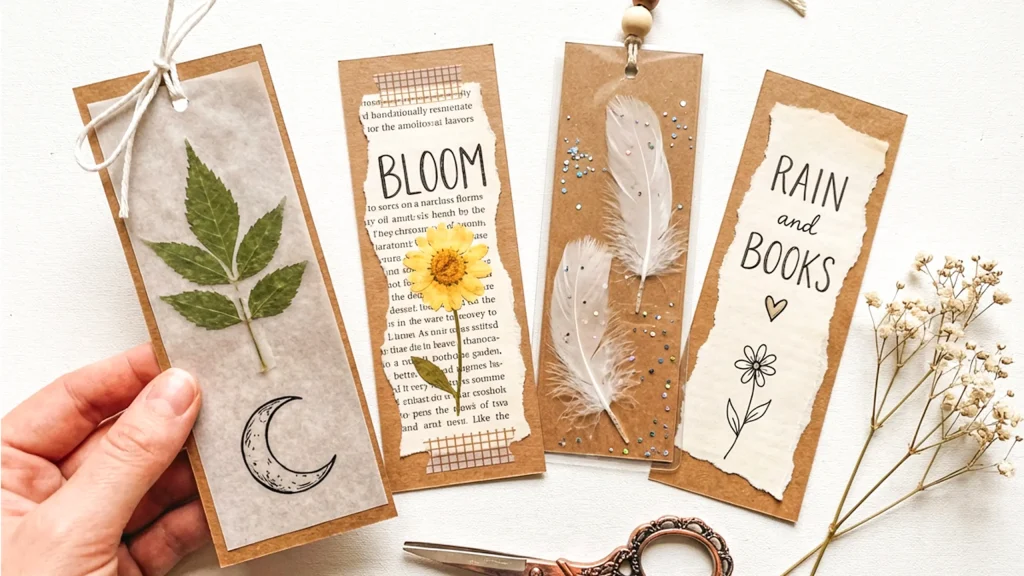
1. Bookmark Making
Step-by-Step Guide
- Prepare a thick table with cardstock sheets, kids’ scissors, glue, markers, stickers, ribbons, and laminating sheets (optional).
- Assist elderly people in measuring and marking a bookmark (about 2 x 6 inches).
- Help them cut along the indicated lines thereof carefully.
- Ask them to select a topic – favorite quote, floral design, inspirational message, or abstract art.
- Ornament with markers, colored pencils, pressed flowers, or cut-outs from magazines.
- Bore a hole on the top and attach a ribbon to make it complete.
- Cover or stick both sides with transparent tape to make it last.
How does this help seniors?
Enhances hand precision, cutting coordination, and innovativeness. Memory and language recall are stimulated by writing quotes.
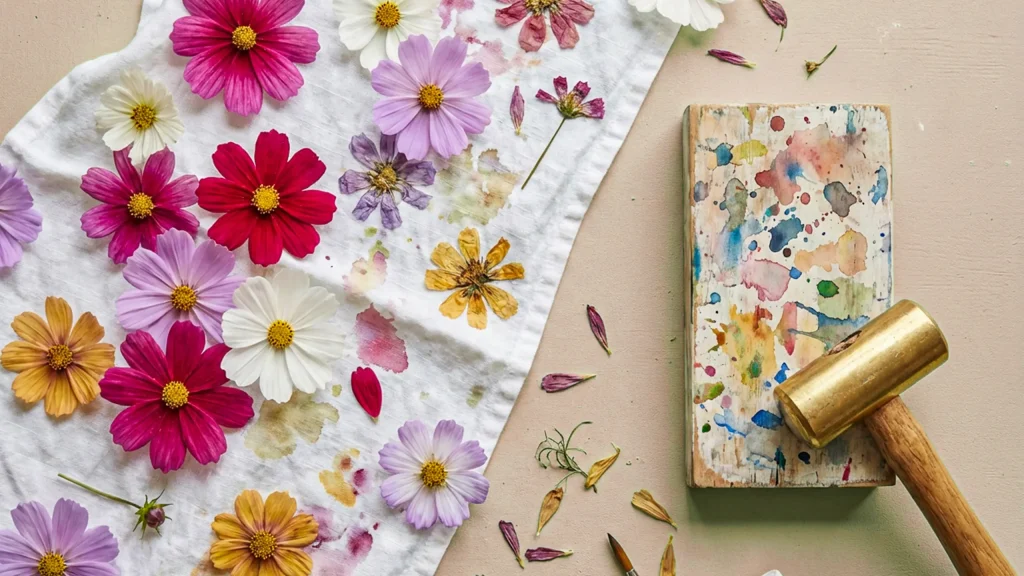
2. Flower Fabric Pounding
Step-by-Step Guide
- Give the seniors a plain cotton fabric piece, which has been washed and ironed.
- Gather new pigmented flowers and leaves.
- Place a piece of cardboard between the materials to avoid bleeding.
- Help seniors to lay the flowers on the fabric face down in the patterns they want.
- Lay over with parchment or wax paper.
- Instruct the seniors to slowly track the flowers using a small rubber mallet or a wooden hammer.
- Remove the flower from its place.
- Do not dry fabric in the dry cleaner.
- Lightly iron to set the print with your supervision.
How does this help seniors?
Improves the sensory involvement and coordination. The activity based on nature enhances emotional relaxation.
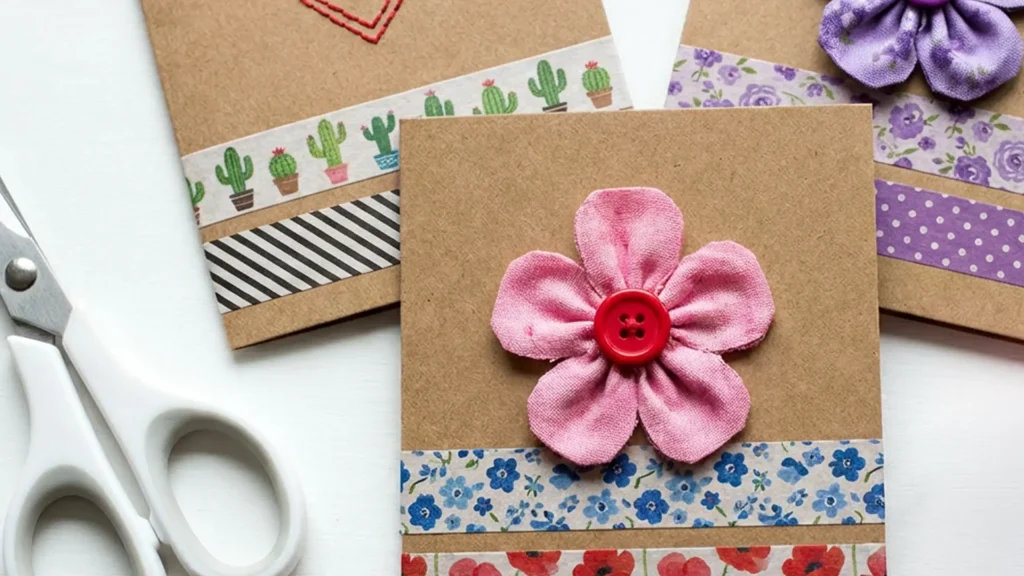
3. Greeting Cards for a Cause
One of the best paper crafting tips for retirees is to use thicker cardstock, pre-cut decorative pieces, and easy-grip scissors to make crafting more comfortable and enjoyable.
Step-by-Step Guide
- Give seniors pre-folded cardstock.
- Show plain layout concepts (front design + inner message).
- Assist the seniors in drawing light pencil sketches, followed by coloring.
- Provide stickers, lace, or cut-outs and ornament the card.
- Write short, touching messages with them.
- Check spelling where necessary and help with writing in an orderly manner.
- Put the finished cards inside an envelope and deliver them to their loved ones.
How does this help seniors?
Promotes empathy, motor skills, and cognitive language expression. Donation increases emotional satisfaction.
4. Popsicle Stick Art
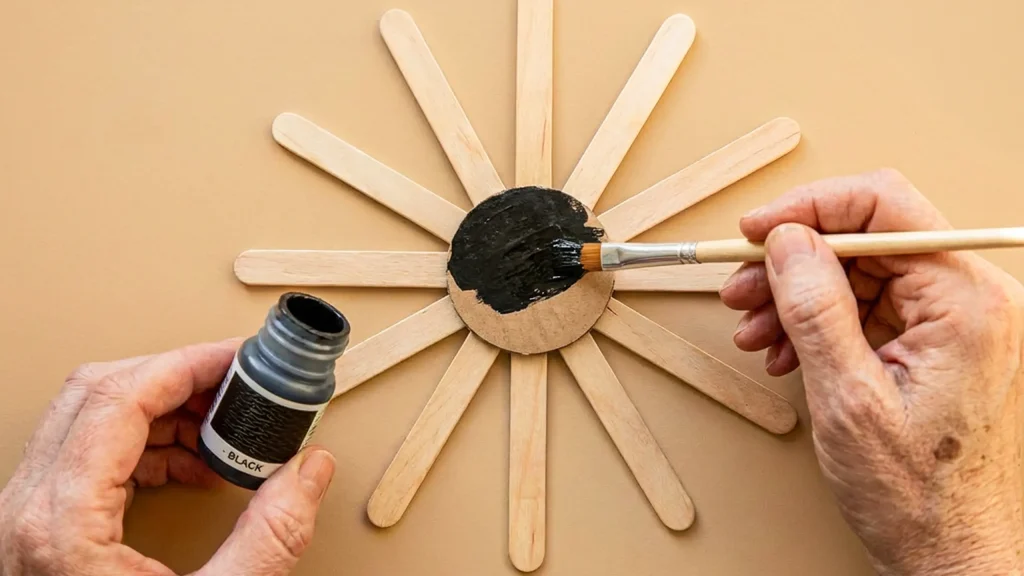
Step-by-Step Guide
- Prepare popsicle sticks, glue, paint, and safe scissors.
- Show simple models (house frame, flower, fence, star).
- Ask the seniors to place the sticks flat and then glue them.
- Help them to use glue where connections take place and a stamp.
- Let the structure dry thoroughly.
- Provide ornaments and paint to decorate the structure and finish it.
How does this help seniors?
Enhances spatial-visual and hand-eye coordination. Promotes preparation and innovation.
5. Scrapbook Creation
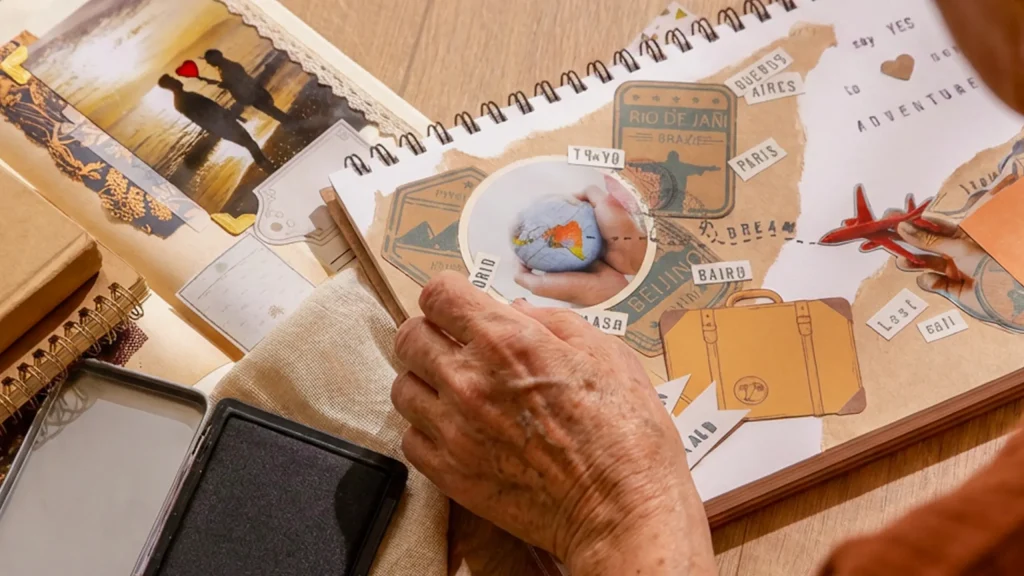
Step-by-Step Guide
- Provide blank notebooks or binders.
- Ask the seniors to bring personal photographs or pick printed photographs.
- Separate pages by theme (family, hobbies, travel, favorite celebrities).
- Guide them to bond pictures together.
- Encourage them to include captions, dates, and brief memories.
- Provide printed border or coloured paper.
- Invite seniors to share scrapbook pages with the group.
How does this help seniors?
Sparks the memory and narration. Promotes affective reactions and cognitive activities.
6. Clay Art

Step-by-Step Guide
- Provide soft, air-dry clay for the activity.
- Demonstrate clay kneading to the seniors.
- Help them divide the clay into small portions.
- Roll with rolling pins.
- Imprint design by pressing it into the clay with leaves or textured items.
- Assist them in trimming the edges with sharp sculpting tools.
- Allow it to air dry completely.
- Optional: Help them paint once dried.
How does this help seniors?
Enhances the grip strength, flexibility, and sensory stimulation. Improves the expression of creativity.
7. Floral Tote Bag Painting
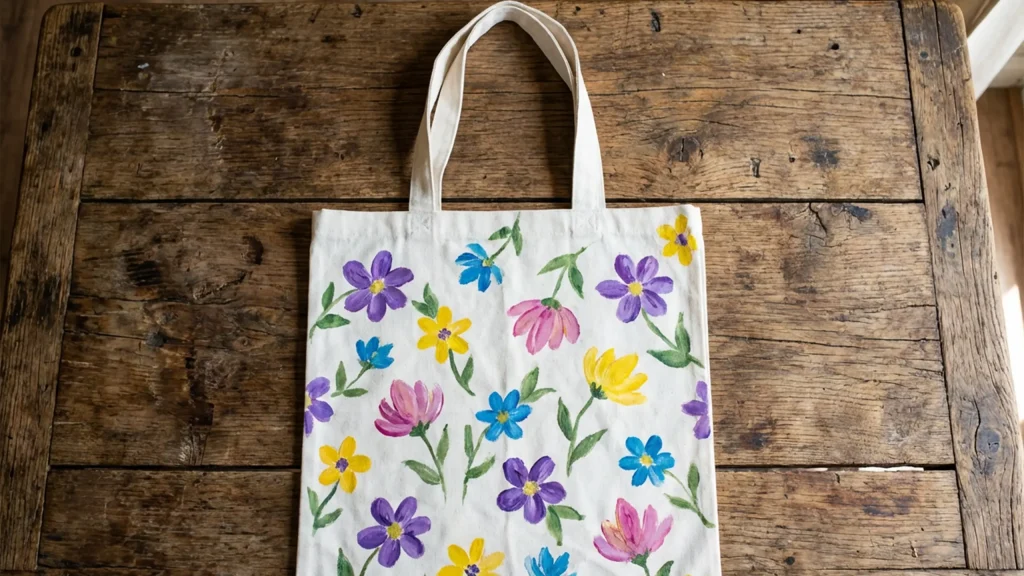
Step-by-Step Guide
- Place cardboard in the tote bag to ensure that the paint does not bleed.
- Help seniors draw floral sketches with a pencil.
- Provide cloth paint and different-sized brushes.
- Encourage them to apply base colors and allow drying.
- Assist them in adding details and underlinings.
- Allow the bag to dry for 24 hours.
- Iron in case the fabric needs ironing.
How does this help seniors?
Enhances brush management and coordination. Gives courage by wearing the jewelry.
8. Easy Landscape Painting

Step-by-Step Guide
- Sit in an open space and in a shaded place.
- Equip seniors with canvases, water cups, paint palettes, and aprons.
- Promote interest in watching trees, sky, and surroundings.
- Guide them to begin with background colours (sky and ground).
- Assist them in including features of the middle ground, such as trees or houses.
- Help them to finish the small details.
- Post pieces of art in public spaces.
How does this help seniors?
Improves observation, attention capacity, and emotional attachment to the environment. Outdoor air improves mood and makes it ideal for summer crafts for seniors.
9. Mummy Jar Lanterns
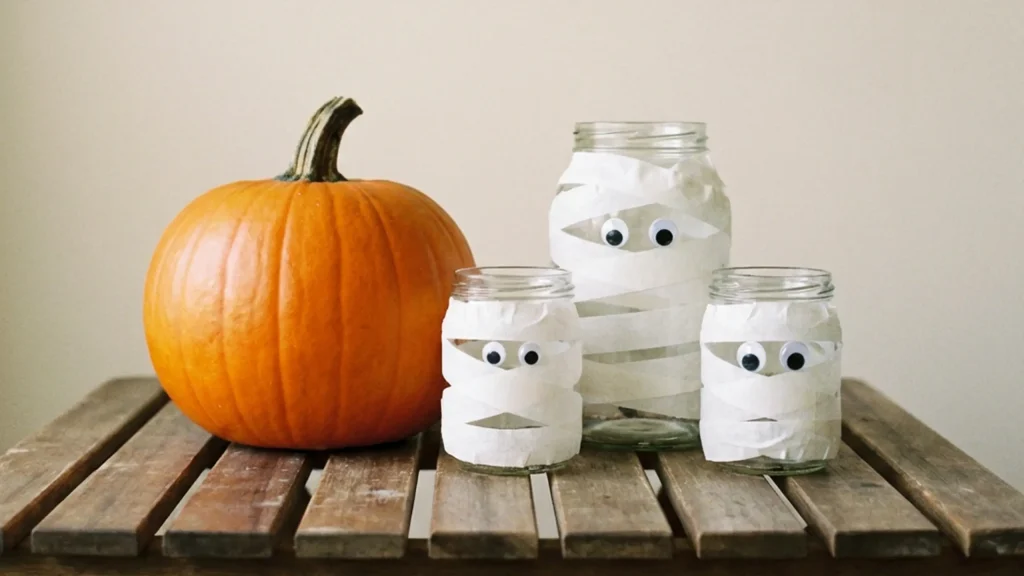
Step-by-Step Guide
- Provide clean, dry glass jars.
- Help them add battery-operated string lights.
- Prepare strips of gauze in small sizes.
- Guide them to cover the jar with a wrap of gauze and fasten it using glue.
- Ask them to attach googly eyes.
- Turn on the lights so they glow.
How does this help seniors?
Enhances the ability to use the hands. Brings about some Christmas cheer and neighbourliness.
10. Gratitude Tree
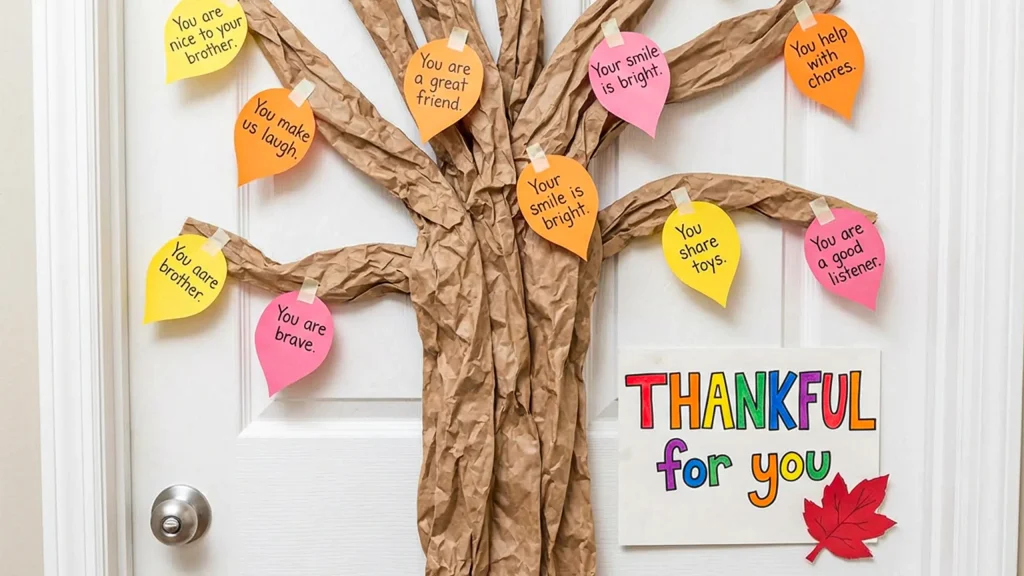
Step-by-Step Guide
- Prepare a big tree trunk with a brown chart paper on a wall.
- Cut shapes of leaves from many colors of paper.
- Distribute leaves and pens to the seniors.
- Ask the seniors to compose one or multiple things they are thankful for.
- Help the seniors with a writing problem.
- Encourage them to attach leaves to branches.
- Read out some thank-you notes during group time.
How does this help seniors?
Promotes emotional thought and emotion. Enhances social attachment and interaction.
11. Tissue Paper Flowers
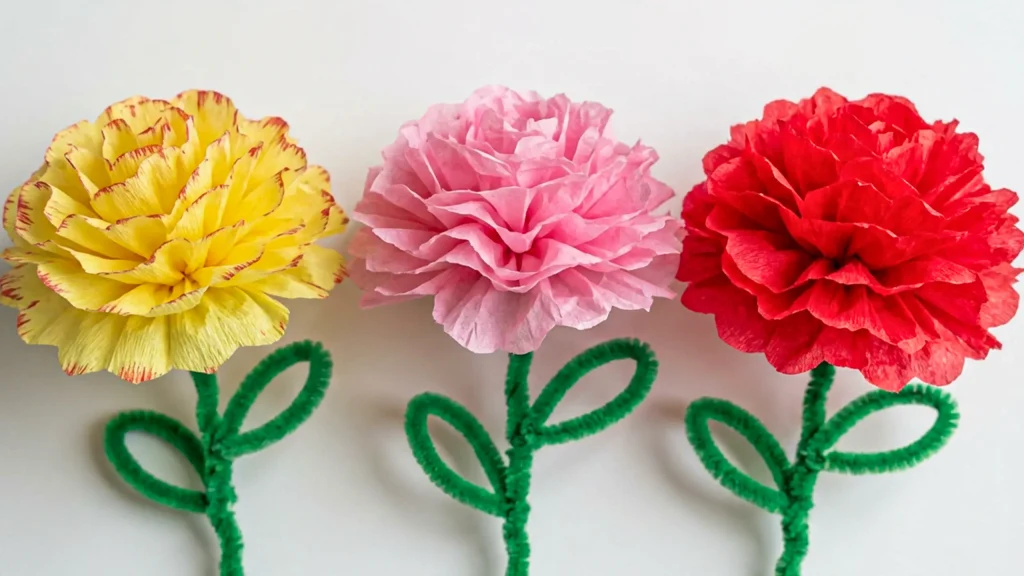
Step‑by‑Step guide:
- Distribute colored tissue paper, scissors, a pipe cleaner or floral wire, and glue.
- Help seniors to lay 4-6 sheets together, fold and glue them into an accordion-style (approximately 1 inch per fold).
- Help them connect the wire or pipe cleaner to the center of the folded stack. This becomes the stem.
- Then help them to make the petals by folding the edges and trimming them into rounded or pointed forms.
- Guide them to slowly pick up each layer of tissue. The flower will appear fluffy and plump.
- Ask them to rearrange until the flower appears even.
- Encourage them to prepare the completed flowers into a bouquet or a show.
How does this help seniors?
The exercise develops coordination and finger dexterity by folding and separating sheets of paper. It also creates creativity in the use of color and design.
These simple projects also highlight practical paper crafting tips for retirees, such as choosing lightweight materials, working on a flat surface, and taking breaks to avoid hand fatigue.
12. Wooden Spoon Scarecrow
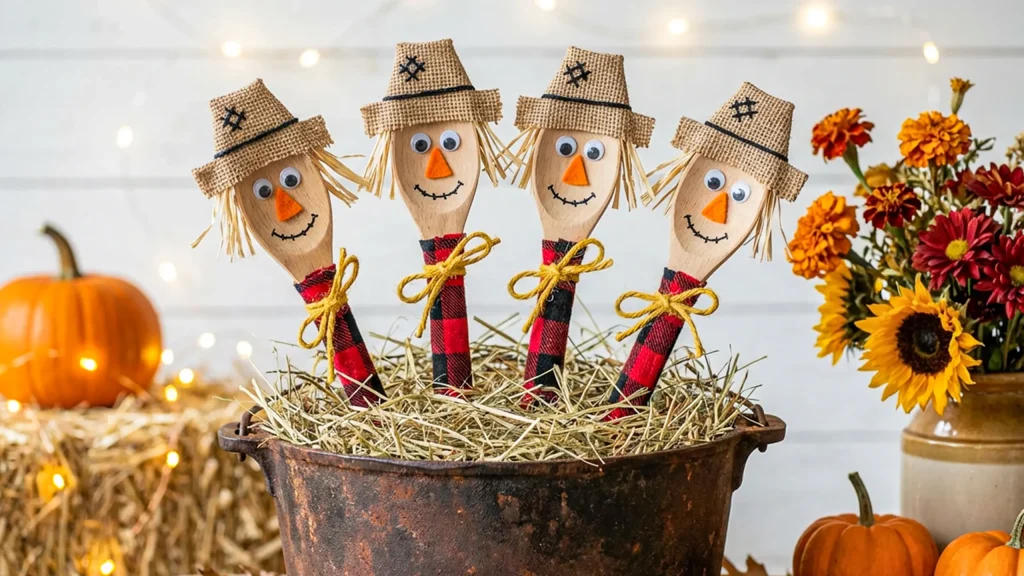
Step‑by‑Step guide:
- Offer wooden spoons, markers, glue, pieces of fabric, straw, and googly eyes.
- Ask them to use paint or markers to draw a face on the back of the spoon.
- Help them to stick on some googly eyes, a small triangle nose, and draw a smile.
- Hair can be made by tying strands of straw or yarn to the top of the spoon.
- Guide them to take pieces of the fabric that can be tied around the handle and create a little scarecrow outfit.
- Fasten the cloth using a twine or ribbon.
- Allow the craft to dry, then hang it as a decorative display during their favourite season.
How does this help seniors?
The craft promotes fantasy and creative imagination. Fine motor skills and hand-eye coordination are enhanced by working with small materials.
13. Windchimes
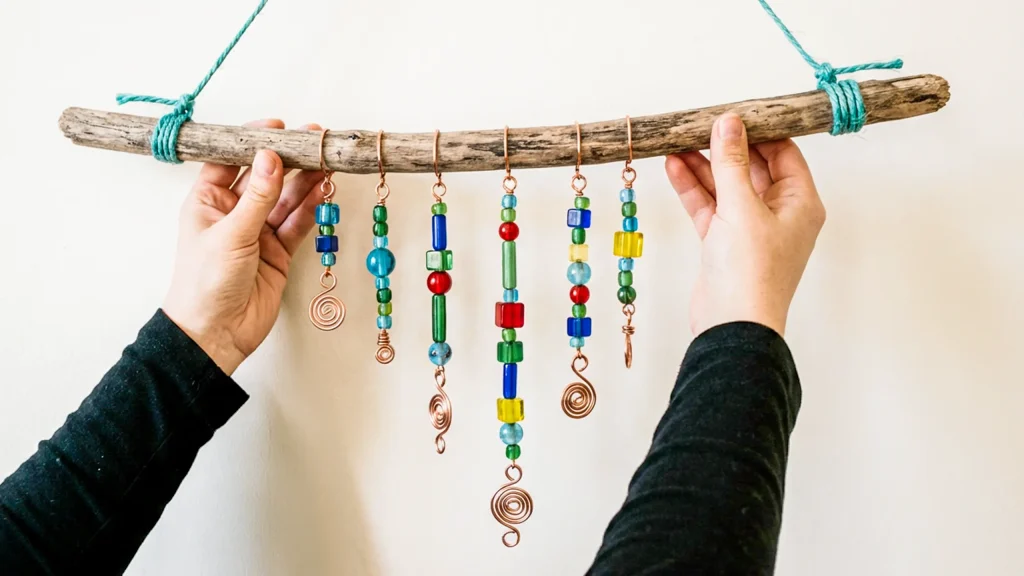
Step‑by‑Step guide:
- Offer wood sticks, beads, metal, shells, or recycled products to the seniors.
- Provide them with a few strands of string or rope in a few lengths.
- Help them insert beads or embellishments on the strings at varying points.
- Assist them in tying the strings to a stick, branch, or ring.
- Ask them to attach another string to the top, with which to hang the windchime.
- Help them arrange the items so they lightly touch to produce sound.
- Hang the windchime on the outside or in front of a window.
How does this help seniors?
The windchime provides relaxation and satisfaction through the sound and movement of the pieces, as well as coordination through tying and arrangement.
14. Sock Worms
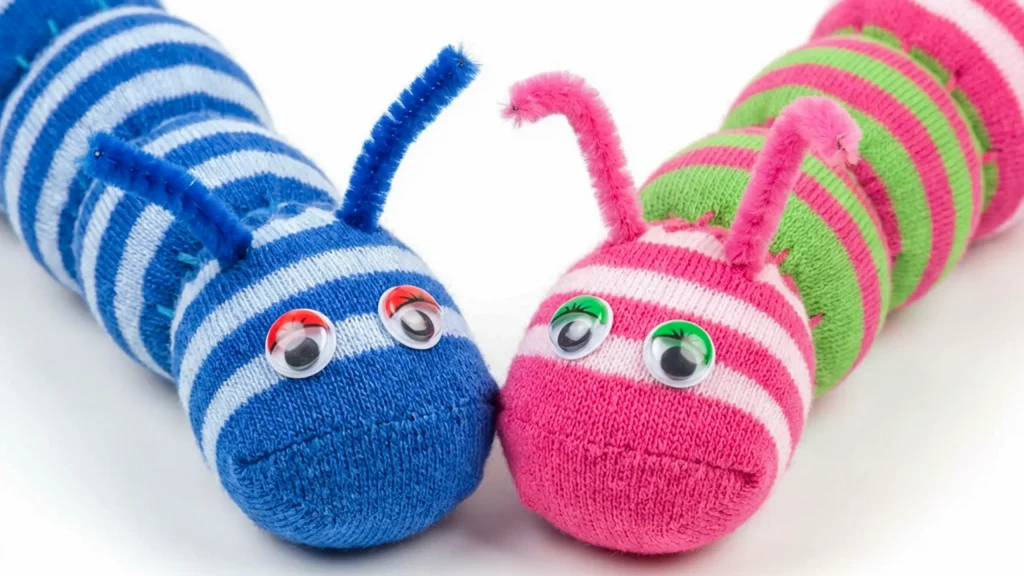
Step‑by‑Step guide:
- Provide clean, colored socks and rice or soft stuffing.
- Ask the seniors to stuff the sock with rice or stuffing in order to form a long worm.
- Help them tie the sock into small segments using rubber bands or string.
- Guide them to paste or apply sticky eyes on the front part.
- Help them to insert small felt tongues or buttons as decoration.
- Let the glue dry.
How does this help seniors?
The stuffing and tying is a good exercise for the fingers and promotes imaginative and playful activity.
15. Flowers with Cotton Swabs
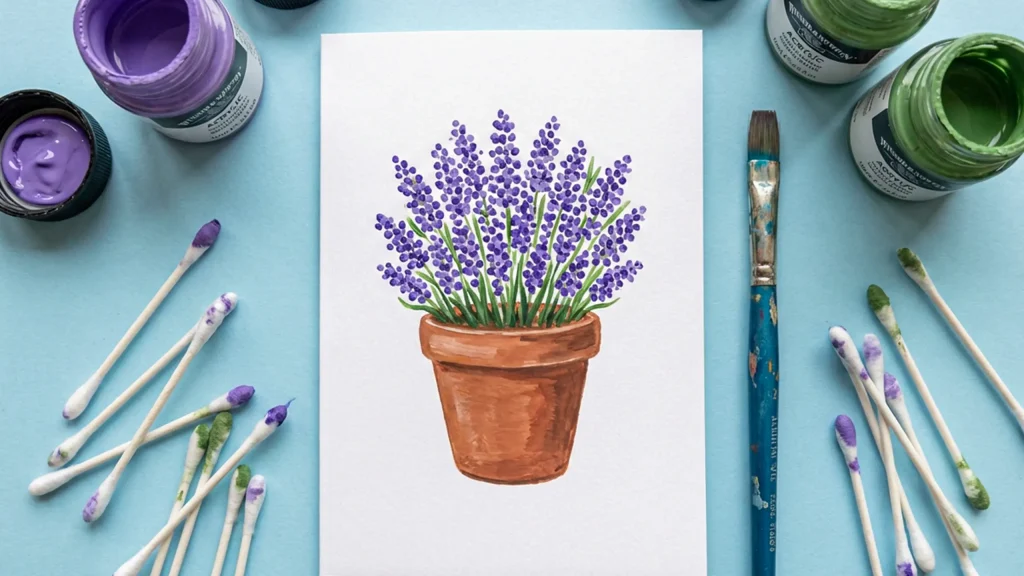
Step‑by‑Step guide:
- Prepare cotton swabs, paint, glue, and colored paper.
- Encourage them to paint by putting the ends of cotton tips on the paper to create small dots of petals on paper.
- Help seniors draw the pattern of dots twice around a center to create a flower.
- Guide them to trace in stems and leaves in green paint or marker.
- Allow the painting to dry out.
- Put the completed picture on the wall or the refrigerator.
How does this help seniors?
Precise hand movements enhance control, and the repetitive dot painting relaxes and brings in focus.
16. Tissue Paper Pom Poms
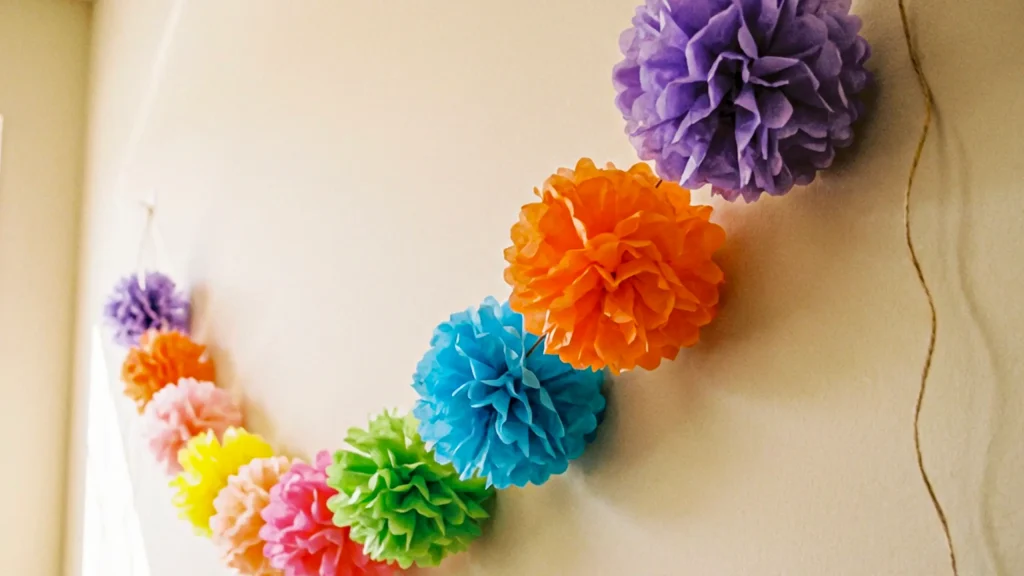
Step‑by‑Step guide:
- Give out tissue paper sheets, scissors, and string/pipe cleaners.
- Help seniors glue a few sheets together.
- Guide them to fold the tissues in accordion-style up to the other end.
- Help them wrap up the center using a string or a pipe cleaner.
- Assist them in cutting the edges in rounded forms.
- Encourage them to gently tear apart every layer of the tissues to make a fluffy pom pom.
- Hang them as decorations in the activity rooms or the common areas.
How does this help seniors?
The activity enhances hand dexterity and coordination, and the aesthetic outcome provides satisfaction and stimulates ornamentation.
17. Pinecone Bird Feeder

Step‑by‑Step guide:
- Prepare clean pinecones, seed butter or peanut butter, birdseed, and string.
- Help the seniors attach a string firmly to the top of the pinecone.
- Ask them to squeeze peanut butter all over the pinecone using a knife.
- Then instruct them to roll the pinecone in bird food until it becomes covered.
- Allow the feeder to dry for a few minutes.
- Let them, or help them, hang it on a tree branch outside a window or in a garden.
- Ask seniors to serve as watchers for visiting birds.
How does this help seniors?
The sports activity integrates the seniors with the natural world, and they learn the coordination of their hands and sensory activity brings them fun.
18. Drawstring Pouches

Step‑by‑Step guide:
- Offer little pieces of fabric, safety scissors, string, fabric glue, or basic sewing supplies.
- When the fabric is folded in half, it should form a pouch shape.
- Help the seniors sew or glue the sides, leaving the top open.
- Create a small bend at the top end, then pull the drawstring through the hole.
- Secure knots on each end of the string.
- Encourage them to decorate the pouch with fabric paint, buttons, or patches.
- Let it dry before use.
How does this help seniors?
Hand coordination and patience. The pouch craft requires a lot of patience. The fulfilment of the pouch provides purpose and fulfillment.
Whether they’re completed individually or as a group, easy crafts for elderly in nursing homes help create joyful routines that support emotional wellness and encourage lifelong creativity.
The Lasting Effect of Creative And Easy Crafts For Seniors
The primary way of enhancing the general health of seniors in nursing homes is through creative activities, including dementia patient easy crafts for seniors and arts and crafts for seniors with dementia. Incorporating easy crafts for seniors in nursing homes into weekly activity schedules helps residents stay mentally active while creating opportunities for meaningful social interaction.
Simple crafts will keep the senior citizens active and even sharpen their minds, thereby enhancing emotional well-being and social network
Caregivers and activity coordinators can provide the seniors with an opportunity to have meaningful moments daily by including fun projects like painting, crafting, and nature-based activities. These mini-experiences of creativity promote self-expression, confidence, and a feeling of belongingness to the community.
Above all, these activities demonstrate to the seniors that they can continue learning, creating, and sharing joy at every stage of life.