
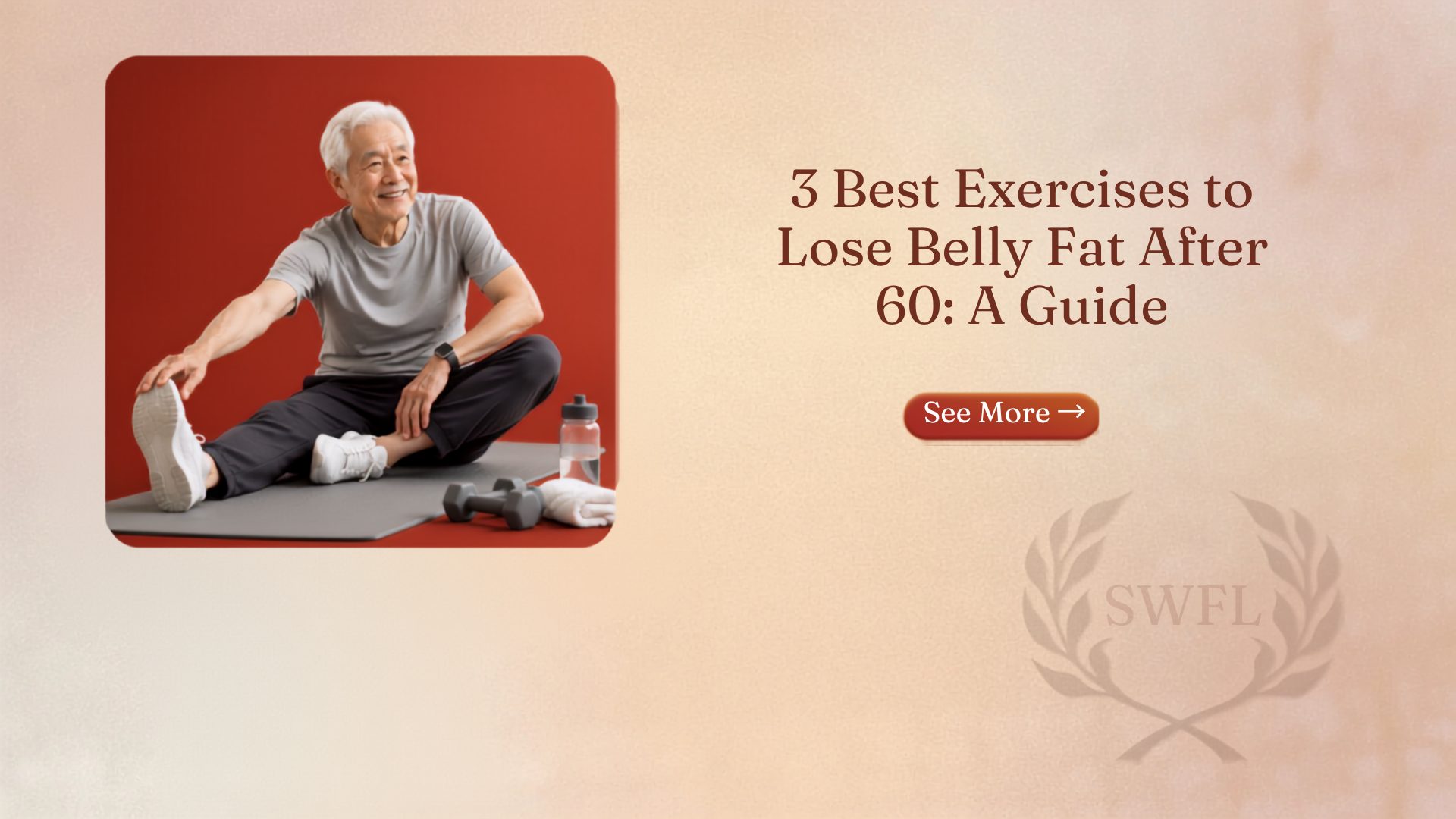
Have you ever looked in the mirror and wondered why your waistline seems to be expanding even though you’re eating roughly the same way you always have?
Most adults find it difficult to reduce belly fat after 60. Not only you! Your favorite trousers that used to fit nicely begin to feel tight. Simple activities become slightly more challenging. And no matter how much effort you put into choosing a suitable diet plan or exercising in the gym, the fat in your midsection remains untouched.
Because older people are usually told by their doctors to “eat less and exercise more.” However, these two elements do not provide a complete picture of the body transformation occurring with age. Loss of muscle mass, slower metabolism, hormonal changes, and reduced physical activity all contribute to the emergence of unwanted fat deposits. Nevertheless, it is important to understand that the problem is solvable!
Belly fat after 60 can be defeated successfully with the proper physical activity strategy. In other words, one will have to forget about numerous sit-ups. Exercises involving major muscle groups, contributing to cardiovascular health, and helping retain muscle mass must be included in an individual’s exercise routine.
If you’re wondering about the 3 best exercises to lose belly fat after 60, this guide will walk you through the most effective options, explain why they work, and show how to incorporate them into a safe and sustainable fitness routine.
Why Belly Fat Increases After Age 60
Before discussing the exercises, it helps to understand why abdominal fat becomes more common with age.
Some factors that promote the accumulation of fat with age include:
- Decreased muscle mass
- Less energy expenditure
- Hormonal changes
- Decrease in physical activity
- Increase in sedentary activities
- Sleep disorders
- Insulin resistance
If muscle mass is decreased, the body will burn fewer calories. If eating patterns have remained constant, one may notice some weight gain. Most of this extra weight is usually deposited in the belly region.
For this reason, it is advisable to use an approach involving the whole body rather than isolating just one body region for effective belly fat loss after 60 years.
Can You Spot Reduce Belly Fat?
One of the biggest fitness myths is that exercising the abdominal muscles directly will eliminate belly fat.
Truth be told, there isn’t an exercise in the world that burns fat in one particular area of the body. Doing hundreds of crunches may give you stronger abs, but that won’t be enough to make the layer of fat on top of your abs disappear.
The way you burn fat in any part of your body is by burning more calories than you eat and keeping your muscles strong.
This explains why exercises that require the involvement of several muscle groups are effective at burning belly fat after 60 years old.
Exercise 1 – Brisk Walking
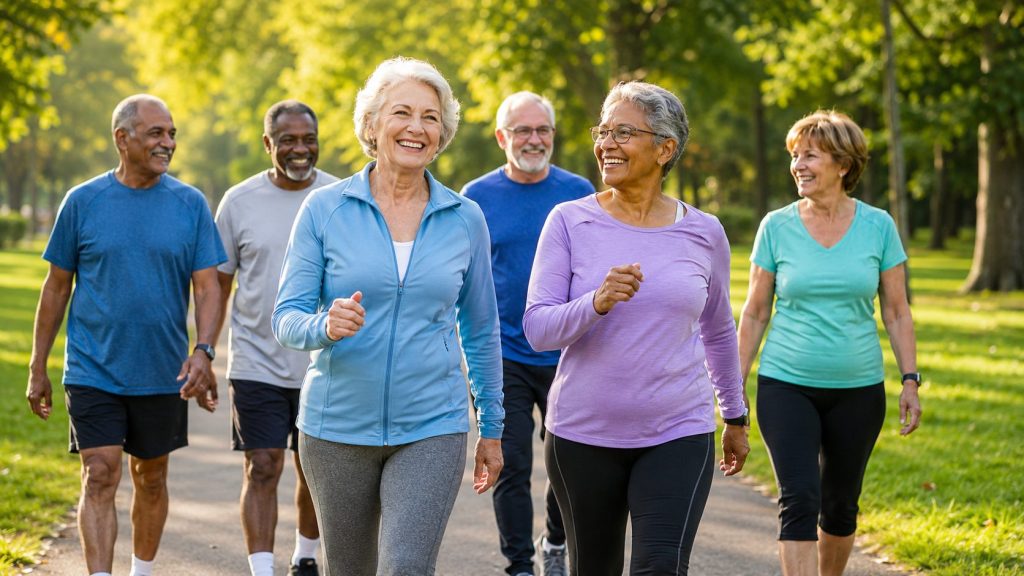
If there is one type of exercise that nearly all seniors could begin doing immediately, it would be walking.
Despite being an extremely basic suggestion, walking continues to be one of the most efficient forms of cardiovascular exercise as well as weight control.
Why Walking Works
As it mobilizes major muscle groups within the legs while being joint-friendly, walking stimulates circulation and endurance as well as increases the number of calories burned each day.
In terms of fitness for older individuals, consistency is far more important than intensity. More often than not, regular walking will yield better results than sporadic intense training sessions.
Walking also helps:
- Control blood sugar
- Maintain a healthy heart
- Lower stress levels
- Boost balance and coordination
- Increase feelings of well-being
Since stress is one factor that contributes to the development of excess belly fat, walking offers advantages other than calorie burning.
How Much Should Seniors Walk?
Aim for:
- 30-45 minutes most days of the week
- A pace that raises breathing somewhat, but still makes conversation easy
- A gradual buildup for those who are currently sedentary
If you find 30 minutes too difficult, begin with 10 minutes and gradually increase.
Ways to Make Walking More Effective
In order to achieve more from walking, try:
- Walking up hills whenever possible
- Picking up the pace intermittently
- Swinging your arms
- Keeping your posture straight
- Adding some periods of faster walking
Many individuals seeking tips on how to lose belly fat at age 60 will find walking is an ideal starting point.
Exercise 2 – Strength Training
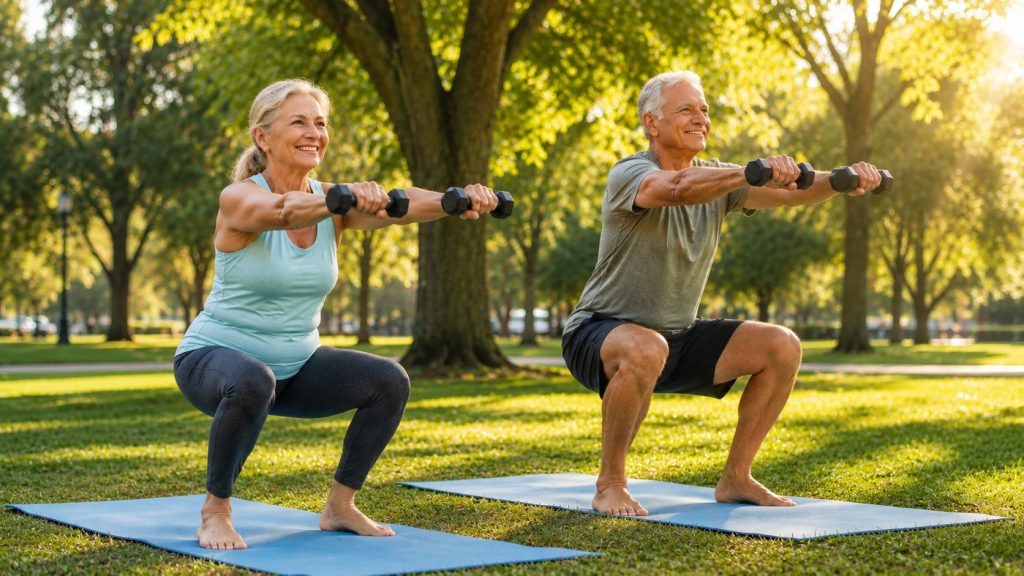
Many people assume cardio is the best way to lose weight. Cardiovascular activity is essential, but strength training could be even more significant after the age of 60.
Muscle maintenance can become the most effective tool in controlling body fat percentage.
Why Strength Training Matters
Muscles begin to atrophy after 30 years. After the age of 60, it can become a more severe problem without strength training.
The lack of muscles leads to:
- Slow metabolism
- Poor muscle strength
- Calorie deficit
- Weight gain risk
Strength training compensates for these issues.
Muscle development and maintenance allow burning more calories even when at rest.
Effective Strength Exercises for Seniors
Some good examples include:
- Chair squats
- Wall push-ups
- Resistance band rows
- Step-ups
- Seated leg extensions
- Shoulder press using dumbbells
Such exercises target larger muscle groups.
Sample Beginner Strength Routine
Try each exercise 10 to 15 times:
- Chair squats
- Wall push-ups
- Resistance band rows
- Seated knee lifts
- Calf raises standing
Repeat the routine twice or thrice.
The Belly Fat Connection
Most older people ignore strength training, which does not burn a significant number of calories.
Nevertheless, having more muscles helps you burn fat effectively thanks to better metabolism. Thus, strength training is one of the most efficient types of exercises against belly fat after 60.
The more powerful your muscles are, the more efficiently your body spends energy.
Exercise 3 – Low-Impact Core and Balance Training
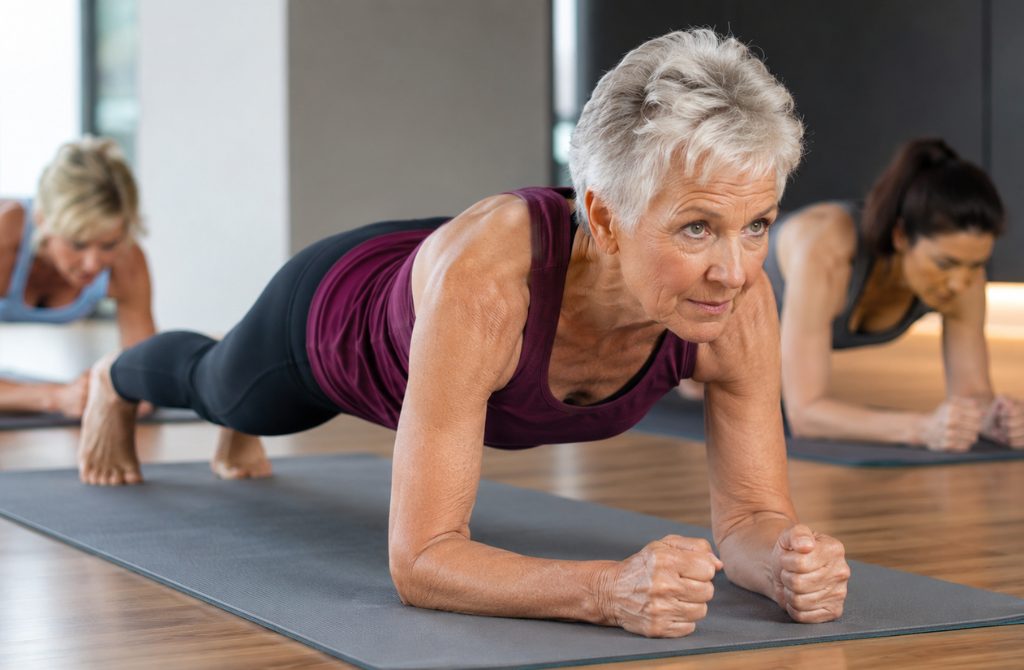
Abdominal exercises are far from being sufficient to get rid of the belly fat; however, training the core area is essential.
Developing the core is crucial to proper posture, balance, stabilization, and even improved efficiency when moving.
Why Core Training Matters
Having weak core muscles leads to such problems as:
- Postural issues
- Pain in the back
- Limited mobility
- Higher risks of falling
Therefore, working the core allows you to have a solid basis for any physical activity.
Senior-Friendly Core Exercises
They include such exercises as:
- Seated marches
- Bird dogs
- Modified planks
- Knee raises standing up
- Pelvic tilts
- Dead bugs
Such exercises involve the abs but not put too much pressure on the spine.
Simple Core Workout Plan
Perform the following exercises:
- Seated marches – 15 repetitions
- Bird dogs – 10 repetitions per side
- Knee raises standing up – 15 repetitions per side
- Modified plank – hold for 20-30 seconds
Do two to three sets.
Beyond Appearance
The reason behind the implementation of core training cannot be simply having a flat tummy.
Benefits of a strong core for seniors include:
- Confidence in movement
- Ability to remain independent
- Better balance
- Lower chance of getting injured
These exercises, along with walking and strength training, will help you develop overall fitness levels and lose belly fat after 60.
Why These Three Exercises Work Better Together
Fitness programs that do not work concentrate only on one type of exercising.
- Walking is effective at burning calories.
- Strength training ensures the preservation of muscles.
- Core exercises boost stability and functionality.
When combined, these three types of exercises offer seniors a well-rounded solution to their problems.
The Role of Nutrition in Belly Fat Reduction
Even the best workout program cannot make up for bad dietary choices.
For those who take the question of how to lose stomach fat over 60 seriously, diet is an essential component.
It is crucial to focus on:
- Protein-rich foods
- Fruits and veggies
- Grains
- Healthy fats
- Sufficient intake of water
Avoid:
- Drinks high in sugar content
- Too many processed products
- Carbohydrates that are highly refined
- Frequent overeating
Protein becomes even more critical as it assists in preserving muscle mass and feeling full.
Unfortunately, people over 60 may unknowingly under-consume proteins due to improper dietary habits.
Common Mistakes Seniors Make When Trying to Lose Belly Fat
Many seniors do work persistently but unknowingly interfere with their own advancement.
Doing Too Much Cardio
Cardio done excessively without any strength exercises could cause muscle loss. It should be noted that the objective is not to burn calories but to keep muscles healthy.
Avoiding Weights
Many seniors are afraid of getting injured or think that only young people can benefit from such exercises. Supervised workouts are generally safe and provide great benefits to older adults.
Following Extreme Diets
Crash dieting leads to a quick reduction in weight, followed by weight gain. Maintaining good habits will help achieve much more in the future.
Experiencing Rapid Results
After age 60, the body starts responding to exercises in a different way. The effects could come more slowly, but it is definitely worth making consistent efforts.
Ignoring Recovery
Older age requires extra rest and recovery days. Sleeping well, staying hydrated, and taking enough breaks can help you lose fat and maintain your muscles.
What Are Good Signs Your Program Is Working?
The scale is not the only yardstick for measuring success.
Good signs are:
- Clothes that fit better
- More energy
- Higher stamina levels
- Strength gain
- Greater ease in movement
- Good posture
- Balance
- Small waist circumference
In some cases, the body composition may change even though there are insignificant fluctuations in weight loss.
This is particularly true when there is an inclusion of strength exercises in the workouts.
How Long Does It Take to See Results?
Among the most frequently asked questions about belly fat loss after the age of 60 is how long the process takes.
There are many different variables involved in that, such as:
- Physical fitness
- Activity regimen
- Dieting practices
- Quality sleep
- Existing health conditions
- Amount of stress
The majority of older individuals start seeing changes in terms of increased energy and mobility in just a few weeks.
Body composition changes will likely take several months of hard work.
A Simple Weekly Exercise Plan for Seniors
To help you get started on the right track, here’s a balanced workout routine:
Monday – 30 minutes brisk walking
Tuesday – Strength training
Wednesday – 30 minutes brisk walking along with core workouts
Thursday – Stretching session/active recovery
Friday – Strength training
Saturday – Long walk/active recreation
Sunday – Core and flexibility workouts
This workout process involves all three best exercises to burn belly fat at age 60.
Safety Tips Before Starting
Before startinng a new workout routine:
- Visit your doctor if you have chronic illnesses.
- Start at a low intensity level and build up gradually.
- Choose shoes that offer sufficient support.
- Drink enough water throughout the day.
- Take breaks when you feel dizzy, chest pains, or other unusual sensations.
- Focus on proper technique over intense exertion.
Keep in mind that the most effective exercise program is the one you can commit to on a consistent basis.
Final Thoughts
So what are the 3 best exercises to reduce belly fat after 60? The good news is that there is a relatively simple answer: brisk walking, strength training, and core exercises with minimal impact.
Such exercises tackle the root cause of weight gain in seniors and dispel numerous fitness myths, helping you keep muscle, burn calories, stay mobile, and improve health.
And perhaps the best part about such an exercise program is its sustainability. It requires no difficult workout regimens or impossible fitness challenges. Small steps taken daily will often yield better results.
So if you’re looking for how to lose belly fat after 60, consider putting in a little effort every day to build a regimen that involves movements, strength training, and balanced nutrition.