

If you have witnessed a family member with dementia exhibiting increasing confusion, restlessness, and even being difficult as daylight begins to fade into the darkness, then you are not alone, and neither are they. Say hello to the world called sundowning. This particular behavior can be unexpected, unwelcome, and exhausting, yet it will be very hard for the patient to avoid.
What complicates matters further? As sundowning is somewhat unpredictable, one moment can appear quite normal, while the next may bring sudden, unwanted changes in behavior. The importance of recognizing and comprehending such behaviors is paramount for family members and caregivers in their interaction with a loved one suffering from dementia.
This guide breaks down everything you need to know, from the sundowner meaning to what causes it, how long it lasts, and most importantly, what you can actually do about it. And yes, we’ll keep it practical, real, and just a little bit light, because if you don’t laugh occasionally, caregiving can feel very heavy.
Sundowning Meaning: Understanding Sundowning Syndrome
First off, let us try to understand the concept behind sundowning. It describes episodes of confusion, agitation, anxiety, or restlessness in people with dementia, which become apparent mainly in the late afternoon or early evening.
Simply put, the sundowning meaning refers to the increase in confusion, anxiety, or agitation that some people with dementia experience during the late afternoon or evening as daylight fades.
The sundowner meaning is tied to the time of day. As daylight fades, some individuals experience a noticeable change in mood and cognition. They may pace, become suspicious, ask repetitive questions, or even become aggressive. It’s not intentional, and it’s definitely not personal; it’s neurological.
What makes sundowning particularly challenging is that it doesn’t look the same for everyone. One person might become quiet and withdrawn, while another may turn restless and noisy. Some may insist on “going home” even if they are already home, while others might feel like they’re late for something important, like a meeting from 1987.
What Is Sundowning and When Does It Occur?
Here’s the honest answer. Sundowning can show up at different stages, but it’s most commonly associated with middle to late stages of dementia. That’s when changes in brain function begin to significantly affect sleep-wake cycles, perception, and emotional regulation.
Initially, one may experience some confusion, mild irritability, and occasional paranoia at nighttime. These signs may not necessarily be attributed to dementia, but with time, they can become more obvious.
Eventually, sundowning may seem to occur every day. The disruption of the brain’s inner clock, otherwise referred to as circadian rhythms, makes it difficult for the individual to recognize day from night. Consequently, the affected person experiences confusion, frustration, and fear in the evening.
Remember, however, that it is not a consistent process. There may be days when everything seems okay, while other days will be filled with unpredictable episodes of confusion. In other cases, the pattern may be well-established before it changes again unexpectedly.
Reasons Behind the Occurrence of Sundowning Syndrome Amongst Seniors
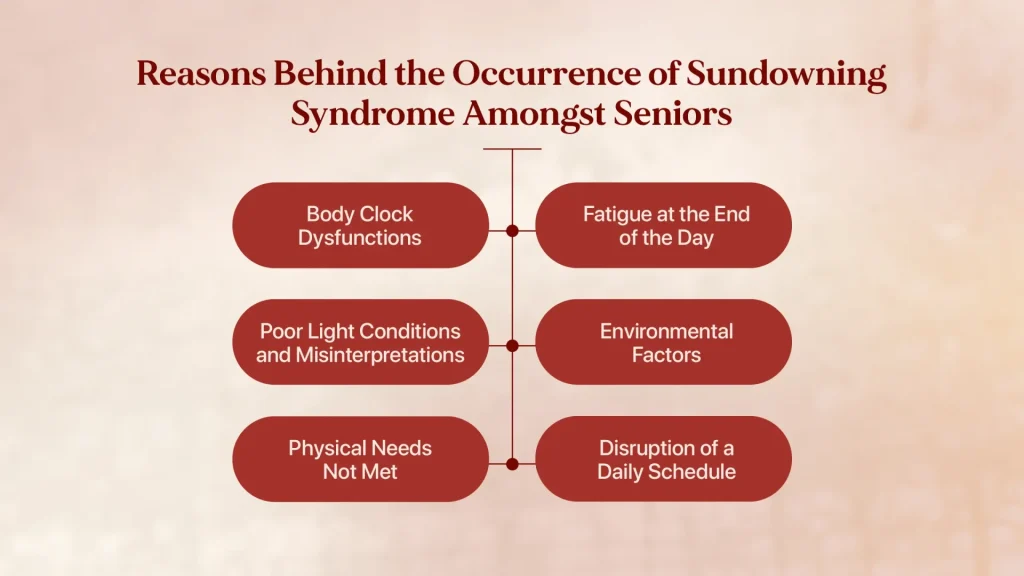
If you’re wondering what is sundowning, it’s a behavioral pattern commonly seen in people with dementia, where symptoms such as confusion, restlessness, and mood changes become more noticeable later in the day.
Now comes the burning question: Why? The truth is that no one really knows the exact reason, but there seem to be multiple overlapping causes behind the phenomenon.
Body Clock Dysfunctions (Circadian Rhythm Disorders)
Dementia disrupts the internal body clock that regulates sleep and wakefulness periods. The brain finds it hard to differentiate between day and night due to disruptions to the circadian rhythm. Confusion and irritation during the evening occur when changes in certain hormone levels, including melatonin, become evident.
Fatigue at the End of the Day
By this point in the day, seniors become tired both physically and mentally. Even simple tasks done during the day are extremely exhausting for those with dementia. This causes confusion and irritability because fatigue negatively impacts people’s capacity to process the information around them effectively.
Poor Light Conditions and Misinterpretations
With decreasing light during the evening, shadows become prominent, causing visual misinterpretations amongst senior citizens who have dementia. Due to poor vision and dementia, objects might look distorted and cause fear in people with this disease.
Environmental Factors
Environmental factors such as noise or clutter can trigger agitation. The home atmosphere being chaotic or noisy, including the sounds from the TV, can be unsettling. However, being in a completely silent environment and lacking physical activity can also cause discomfort. Minor modifications, such as relocating furniture, can disrupt the individual’s feeling of familiarity with their surroundings.
Physical Needs Not Met
The issue may arise due to very basic and easy-to-overlook physical needs not being met. For example, hunger, thirst, pain, or the urge to go to the bathroom may cause discomfort, which cannot be properly conveyed to others by people with dementia.
Disruption of a Daily Schedule
The daily routine plays an important role in providing comfort and security for elderly patients with dementia. Thus, any disruptions to the routine will cause confusion and agitation for them. A delayed mealtime, skipped nap time, or an unplanned visit can disrupt their schedule and result in agitation.
Conditions That Can Make Sundowning Syndrome Worse
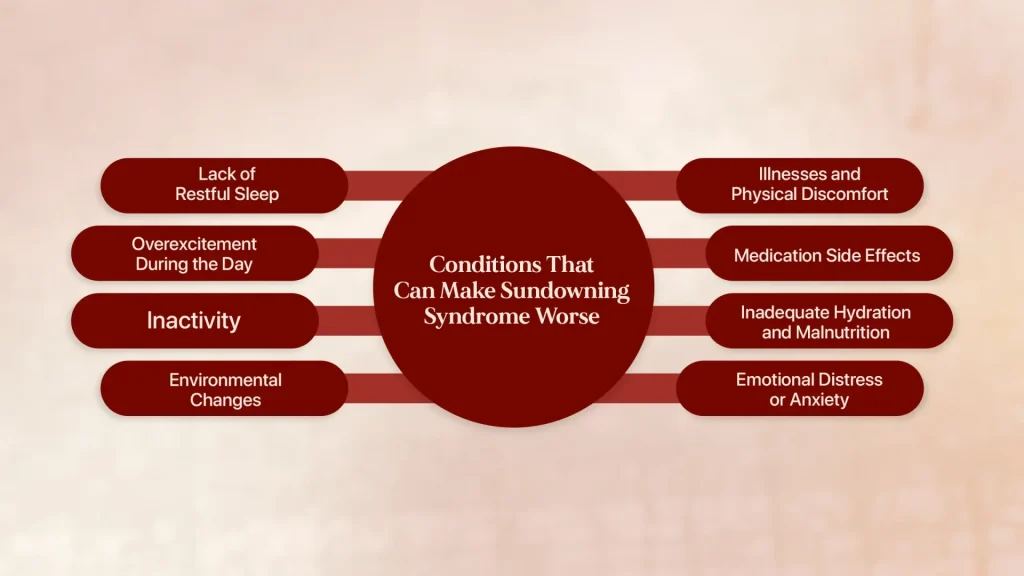
Lack of Restful Sleep
If elderly people do not get sufficient sleep, the brain will feel very tired the next day. Consequently, a senior suffering from dementia will be more vulnerable to experiencing mental confusion due to fatigue. The lack of restful sleep can trigger symptoms of sundowning syndrome, making the condition worse.
Overexcitement During the Day
While it is essential to keep an elderly person occupied with various activities throughout the day, too much noise or engagement can result in extreme weariness. After the lights are turned off in the evening, it is likely that the tired brain will become irritated.
Inactivity
Not having enough to do or being left alone throughout the day can make sundowning syndrome worse. If seniors do not experience any stimuli during daytime hours, they might accumulate a lot of energy. This energy overload can cause agitation in the evenings.
Environmental Changes
Any modifications to a living space or even moving somewhere else can affect one’s perception of the surroundings. As a result, seniors with dementia will start feeling confused in the evening when the light starts fading away.
Illnesses and Physical Discomfort
The presence of underlying illnesses, including infections, chronic pain, and discomfort, increases symptoms associated with sundowner’s syndrome. UTIs, for instance, are highly associated with increased confusion among the elderly. Unresolved physical discomfort manifests itself in agitation.
Medication Side Effects
Some medication side effects include increased disorientation and drowsiness, among others. Changes in medication can also cause distress. The effects of any medication should, therefore, be carefully monitored since it may cause behavioral changes.
Inadequate Hydration and Malnutrition
Sundowner’s syndrome also develops when the elderly do not have adequate nutrition and hydration. Inadequate water supply causes dehydration and malnutrition, which weakens individuals, making it likely for confusion to set in later during the day.
Emotional Distress or Anxiety
Emotional trauma, such as anxiety, fear, or loneliness, may increase the symptoms of sundowning. The elderly with dementia do not communicate emotions effectively, leading to their build-up and later manifestation.
Ways to Reduce and Manage Sundown Syndrome
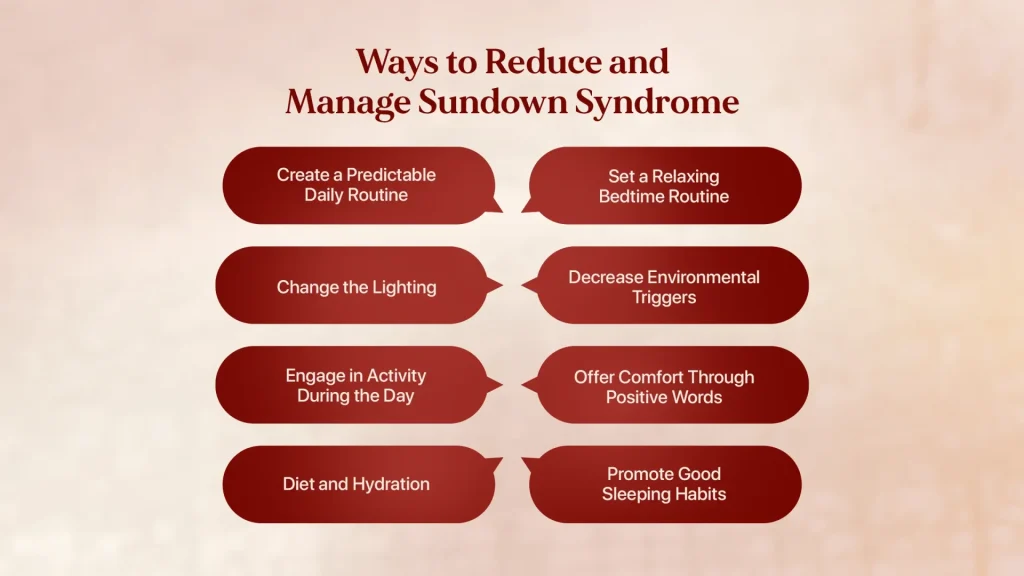
Create a Predictable Daily Routine
Having a predictable daily routine helps to decrease confusion and anxiety. The brain learns to expect certain things to happen at previously set times, which decreases confusion.
Change the Lighting
Lighting can play a huge role in minimizing confusion and disorientation. Turning lights gradually as sundown approaches helps to eliminate any darkness that may be scary for your loved one. Soft, warm lighting and night lights are beneficial.
Engage in Activity During the Day
During the day, you should encourage your loved one to get out and engage in some light activity. Walking, doing housework, or having conversations will ensure their minds remain stimulated. Avoid activities near bedtime that may stimulate and excite your loved one.
Diet and Hydration
It is important not to give your loved one any products that contain caffeine and sugar. Ensure your loved one drinks enough water during the day to stay hydrated.
Set a Relaxing Bedtime Routine
Having a soothing evening ritual can let your senior know it is time to wind down. This may include relaxing activities such as listening to soft music, reading, or watching their favorite shows. It is essential to keep up with the ritual for it to be effective.
Decrease Environmental Triggers
The surrounding environment may contribute to increased disorientation and confusion. It is important to maintain a soothing environment by keeping it silent and orderly. Familiarity is crucial in helping them stay at ease.
Offer Comfort Through Positive Words
In case they become agitated, remaining calm is essential in alleviating their condition. It is advised not to argue or correct the senior but rather soothe them and help divert their thoughts towards something else.
Promote Good Sleeping Habits
Sleep disorders are one of the triggers of sundowning behavior. Avoiding long daytime naps and maintaining good sleeping habits can help reduce the risk of it occurring.
Medication for Sundowning Syndrome
If non-pharmacological intervention is not sufficient in managing this disorder, your health care provider can prescribe medication. But this treatment approach will not always be your first step.
Your health care provider may give you medicines that treat underlying causes associated with sundowning disorder, such as poor sleep patterns, anxiety, or depression. This may include taking melatonin or antidepressant medicines.
Antipsychotics are sometimes recommended for people who pose any danger to themselves or other people, but there might be certain side effects related to these types of medicines.
Discuss carefully with your health care provider any benefits and possible risks associated with taking medicine, since one person’s medication can be different from another person’s.
Do not forget that pharmacological therapy will be less efficient when it does not combine with non-pharmacological interventions at all.
Understanding the Sundowning Phenomenon: How Long Does It Last?
The inevitable question that pops into caregivers’ minds at one point or another: How long does sundowning last?
Well, as frustrating as it may be, it varies from case to case. Some people will experience the effects of sundowning only during a couple of hours at night. Others, however, will be affected by this phenomenon all night, thus interfering with their sleep and making them wander at night.
When speaking about the disorder as a whole, the duration can go anywhere from a few months to a few years. And while the disorder itself is permanent, its intensity may either increase or decrease with time.
And the best way of coping with it is learning how to manage it rather than eradicate it completely.
Although the sundowning phenomenon can vary from person to person, recognizing common triggers and maintaining a consistent routine can help reduce its impact on both seniors and caregivers.
Conclusion
Sundowning syndrome is one of the most difficult issues associated with dementia care, not because it is infrequent, but because it is so unpredictable. It can instantly transform an otherwise peaceful evening into an emotionally charged ordeal for both the caregiver and the patient.
However, comprehending sundowning makes all the difference. Knowing that the symptoms stem from neurophysiological alterations, rather than willful defiance or malice, allows for a more patient and calculated response.
There are countless strategies one can implement to ensure a smoother transition between day and night, ranging from maintaining a consistent schedule to modifying lighting to seeking professional help when needed. Perfection isn’t the goal; improvement is.
And in moments of extreme difficulty, keep this in mind: if you successfully endured the entire sundowning incident without considering “how to relocate to a deserted island right now” via Google, then you’re doing better than you realize.