
When a senior parent is in need of nursing assistance, their loved ones choose a nursing home that can provide the care they would give if they were with them. So what are the major aspects a family member would take into consideration? Location? Amenities? Costs? Or all of these? All these factors are a part of qualified nursing care for seniors. The basic responsibilities of a senior nursing care provider are to be a responsible and respectful caregiver.
You may ask where to find that kind of skilled nursing care for seniors. Let us provide you with a list of factors to consider when choosing a nursing home for your loved ones. Once you find a thing from your list, tick the box.
When do they need skilled nursing care? In case your parents or grandparents require professional help, then senior nursing care would be the best choice. In SWFL Retirement Centres, senior care is considered an important aspect of life among the residents, and medical needs are addressed, while comfort and respect become the primary aspects in daily life.
What is Skilled Nursing Care?
Skilled nursing care is a term that is used to describe medical services provided by professionals. This is not just assistance in the day-to-day commitments. It deals with medical surveillance, administration of treatment, rehabilitation, and arrangements with the physicians. Seniors in the recovery phase of an illness or an operation, or those who have to be observed continuously by the medical personnel, may require a skillied nursing care at home. They may also need qualified nursing care.
9 Reasons Seniors Need Skilled Nursing Care
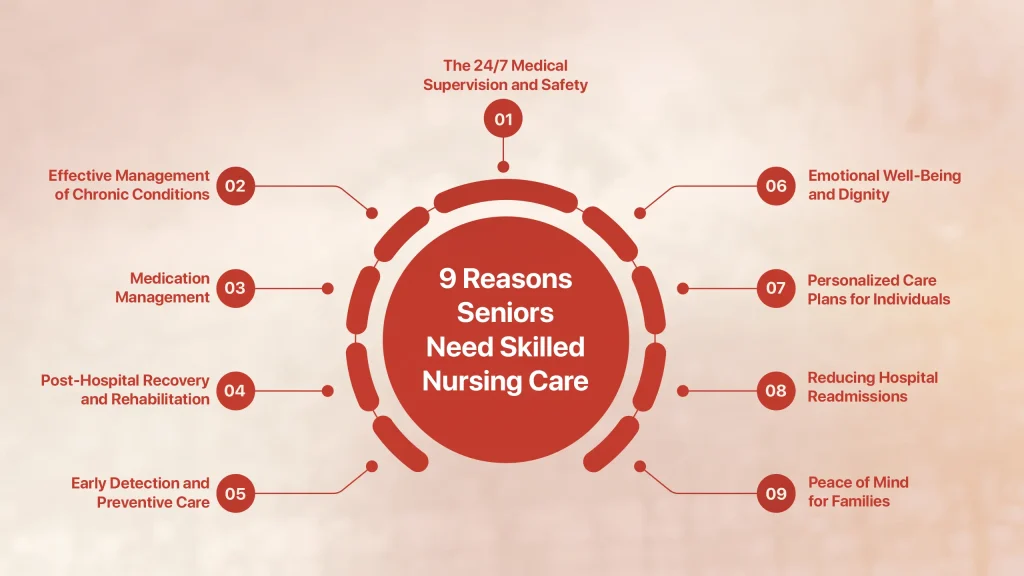
1. The 24/7 Medical Supervision and Safety
One of the major reasons for skilled nursing care is the necessity of constant medical care. The elderly are prone to sudden health complications, infections, falls, and medication reactions. The presence of trained nursing specialists in the 24/7 environment will guarantee the rapid response to crises and the timely treatment in the event of a sensitive health transformation.
The residents in a skilled nursing community are not left to themselves to deal with their health problems. Vital signs, symptoms, and general state monitoring are regular and decrease the chances of hospitalization and the overall long-term outcomes. The presence of qualified professionals is safer and achieves the reduction of the level of anxiety of the residents and their families due to the availability of the qualified professionals at all times.
2. Effective Management of Chronic Conditions
According to 2025 research, nearly all adults aged 65 and older (93%) have at least one condition, and 79% have two or more. The conditions include diabetes, heart disease, arthritis, asthma, or neurological disorders. To prevent complications, those seniors require special care from trained professionals.
Skilled nursing care offers reliable chronic disease management, which is well organised. The nurses will be dealing with the follow-ups of the symptoms, as well as progress checking, administration of treatments, and contacting physicians to modify care plans as needed. It is a combined form of ensuring residents stay put, eliminating flare-ups, and leading a happier life.
Through appropriate nursing care, continuity, accuracy, and accountability, the health of the seniors can be continuously monitored, and care can be provided at the time of necessity in a skilled nursing facility.
3. Medication Management
Medication errors are one of the most common risks of older adults, especially in cases when they are prescribed more than one drug. Poor health may lead to serious health issues, such as wrong doses, drug omission, or drugs that can cause harmful reactions.
Nurses are well-trained to administer and monitor medication. They ensure that drugs are taken at the appropriate time, at the appropriate dose, and at the appropriate route. More importantly, they keep track of the residents in terms of side effects, allergic reactions, or changes in condition that need medical interventions.
The medication management in a skilled nursing facility is very well organized and closely controlled, which reduces the risk and improves the therapeutic outcomes.
4. Post-Hospital Recovery and Rehabilitation
The geriatric population typically requires long or short-term skilled nursing treatment to safely recuperate following a surgical, traumatic, or debilitating illness. This includes wound care, pain management, coordination of physical therapies, mobility assistance, and complications monitoring.
Skilled nursing care plays a role in recovery as it provides well-organized rehabilitation in a home-like setting. The residents will be able to spend their time in a more relaxed environment, but receive professional medical care instead of long hospitalization.
This will promote faster recovery rates and contribute to the reduction of the readmission rate to hospitals, as well as support a smooth transition home to independent or assisted living as much as possible.
5. Early Detection and Preventive Care
The most beneficial and the least recognized benefit of skilled nursing care is its early recognition. A trained nurse will be competent in detecting even the slight changes in behavior and appetite, mobility, or changes in cognitive states that may indicate underlying health issues.
Timely intervention of infection, dehydration, pressure ulcers, and cognitive impairment can be addressed in time under the supervision of registered nurses. Prevention medicine, regular check-ups, and health education could enhance the lives of seniors.
6. Emotional Well-Being and Dignity
Skilled nursing care is an important aspect in both emotional and psychological life, beyond being limited to medical activity. The aged with health complications are likely to develop fear, frustration, or a lack of confidence. Nurse compassion can provide calmness, stability, and emotional comfort.
This trust creates a certain sense of stability and pride such that the seniors do not feel dependent but feel respected.
7. Personalized Care Plans for Individuals
All seniors possess varied medical histories, lifestyles, and preferences. Skilled nursing care offers a chance to create a personal care plan that is changed with time in relation to the emerging needs. This personalized attention will ensure that the 55+ seniors receive the right level of attention without necessarily losing their autonomy or identity. Flexibility and responsiveness are significant benefits that come with nursing care, which you can offer to your parents.
8. Reducing Hospital Readmissions
The frequent transportation to hospitals may be both physically and emotionally draining. Skilled nursing can help you to respond and attend to the health-related elements of seniors on demand, thus significantly reducing the need of hispitalizaion.
Clinical supervision service, rehabilitation services, and frequent monitoring with quality skilled care programs will help to maintain the stability and comfort. Such continuity of care leads to better outcomes and a more favorable aging process.
9. Peace of Mind for Families
Families also show emotion in transitioning a loved one to a nursing home. The availability of skilled nursing services on a 24/7 basis gives one the feeling of certainty that medical services will never be put on the back burner.
The experienced nurses also act as a buffer between the family and the physician, where the loved ones are informed and involved in the process of making the care decisions. Open communication and professional supervision foster trust and confidence in the care setup.
For families, it is a sign that their loved one is not only making a safe living but also living with dignity and professional guidance.
Skilled Nursing as an Excellence Standard
The quality of the skilled nursing services is what makes the nursing homes a preferred choice for many seniors.
SWFL retirement centres have interwoven skilled nursing care within an overall concept of senior living based on a philosophy of independence, wellness, and full purpose lives, whereby medical needs are addressed in an expert and caring way.
The role of skilled nursing care in nursing homes will keep on being very significant as the elderly age, and their health requirements become more complicated. The communities, which focus on skilled nursing, are more likely to adjust to new medical issues, and the quality of life will be preserved.
Skilled nursing is not the process of taking away their control- it is the process of empowering the seniors to live comfortably knowing that they can always call on the services of a professional.
SWFL Retirement Centers
Skilled nursing care plays a vital role in nursing facilities as it protects wellness, promotes recovery, deals with chronic illnesses, and maintains dignity. It guarantees that elderly people can access professional medical assistance in a timely manner and at the same time have a friendly residential setting.
Skilled nursing care should be a priority for families interested in a nursing home that offers good clinical excellence and compassion. It is a pillar of trust, safety, and resident-centred living at SWFL Retirement Centres as seniors are not only taken care of in regard to their medical needs, but holistically as well.