

A 7-day meal plan for the elderly isn’t just about what’s on the plate. It’s about how someone feels after eating it. A balanced meal plan for elderly adults focuses on nourishing the body with foods that are simple, enjoyable, and easy to digest.
That feeling builds over time. Energy becomes more stable. Mood feels more balanced. Digestion improves without constant discomfort. Even sleep can get better when meals are lighter, consistent, and well-timed. Food quietly influences all of this in the background.
As the body ages, it becomes less forgiving. Skipping meals or eating randomly doesn’t work the way it used to. A missed breakfast can lead to fatigue that lasts all day. Eating too little can reduce strength. Heavy or late meals can disrupt sleep and digestion.
Appetite also tends to decrease. Seniors may rely on quick, repetitive foods like toast or tea because they’re easy. But over time, this leads to nutrient gaps. Those gaps show up as low energy, slower recovery, and reduced overall well-being.
A structured weekly meal plan for the elderly removes that uncertainty. Meals are planned, balanced, and easy to prepare. There’s no stress about what to eat next. Just simple, consistent nutrition that supports daily life.
Let’s not ignore the emotional side. The food is familiar. Food is comfort. Food is memory. A warm bowl of soup… A soft pancake breakfast… A cup of tea with something sweet. These things matter. A thoughtful geriatric diet chart doesn’t just feed the body. It supports independence.
Because when meals are easy and enjoyable… life feels a little easier too.
Day-by-Day Breakdown: Tasty and Healthy Dishes
This is where things actually come together. Not theory. Not nutrition charts. Real food.
This 7-day meal plan for elderly is designed for how seniors in the US actually eat. Familiar meals. Simple prep. No complicated ingredients.
And most importantly, food that doesn’t feel like “diet food.”
Everything here is built around:
- Soft textures
- Easy digestion
- Balanced nutrition
- Low-effort cooking
Because let’s be honest. If it’s hard to cook or hard to chew… It’s not getting eaten.
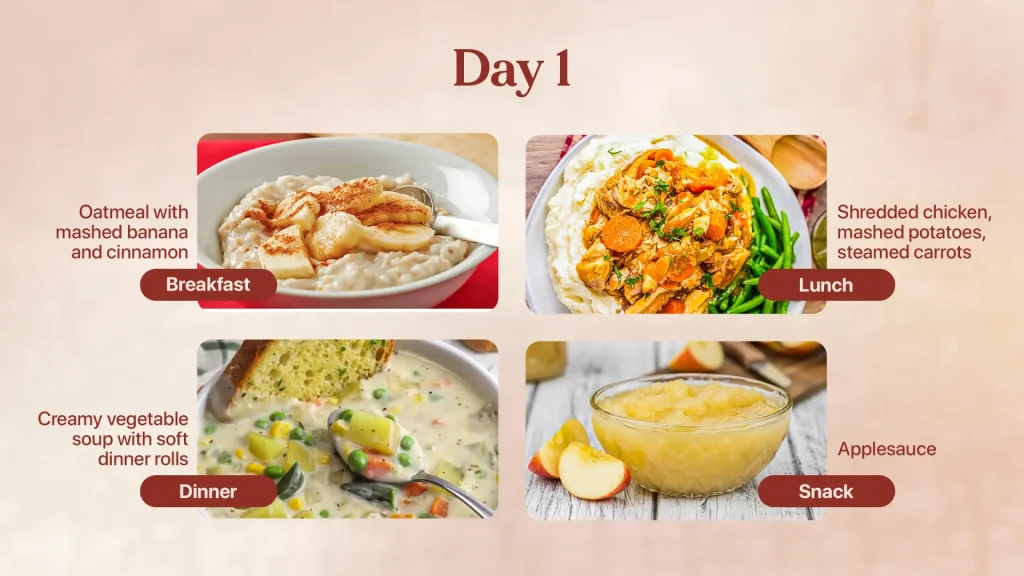
Day 1
Breakfast:
Oatmeal with mashed banana and cinnamon
This is one of the easiest ways to start the day. Warm. Soft. Naturally sweet.
- Oats provide fiber that supports digestion
- Banana adds potassium and natural sweetness
- Cinnamon adds flavor without sugar
Extra tip: Add a splash of milk or almond milk to make it creamier and easier to swallow.
Lunch:
Shredded chicken, mashed potatoes, steamed carrots
This is comfort food, but made easier.
- Chicken is shredded, so it’s easier to chew
- Mashed potatoes provide energy and are very soft
- Carrots are cooked until tender, not crunchy
This combination works well because it’s balanced without being heavy.
Dinner:
Creamy vegetable soup with soft dinner rolls
Dinner should be lighter. This does exactly that.
- Soup provides hydration and nutrients
- Soft vegetables are easy on the stomach
- Dinner rolls help make it filling without effort
Tip: Blend the soup slightly if chewing is an issue.
Snack:
Applesauce
Simple. Reliable. Effective.
- No chewing required
- Easy on digestion
- Naturally sweet without added sugar
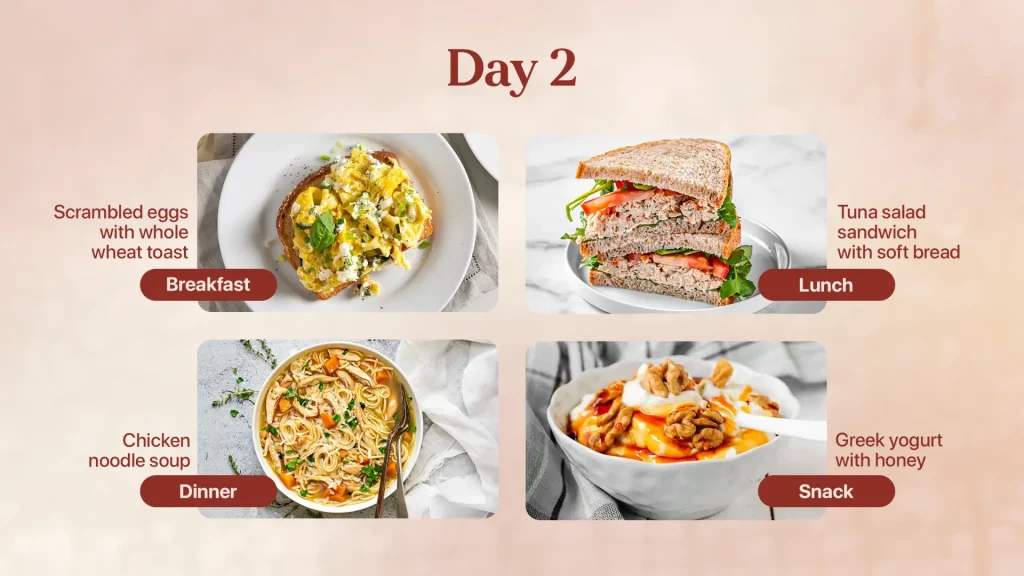
Day 2
Breakfast:
Scrambled eggs with whole wheat toast
A protein-focused start to the day.
- Eggs are soft and easy to eat
- Toast should be lightly toasted, not crispy
- Add a little butter or avocado for moisture
Lunch:
Tuna salad sandwich with soft bread
This is quick and familiar.
- Tuna is mashed for easy chewing
- Mayo keeps it soft and moist
- Soft bread prevents strain while eating
Tip: Remove crusts if needed. Small change, big difference.
Dinner:
Chicken noodle soup
There’s a reason this is a go-to.
- Warm and comforting
- Easy-to-digest meals like this reduce stomach strain
- Noodles and vegetables are soft
It’s light, but still satisfying.
Snack:
Greek yogurt with honey
Smooth. Creamy. Filling.
- High in protein
- Supports gut health
- Requires no prep
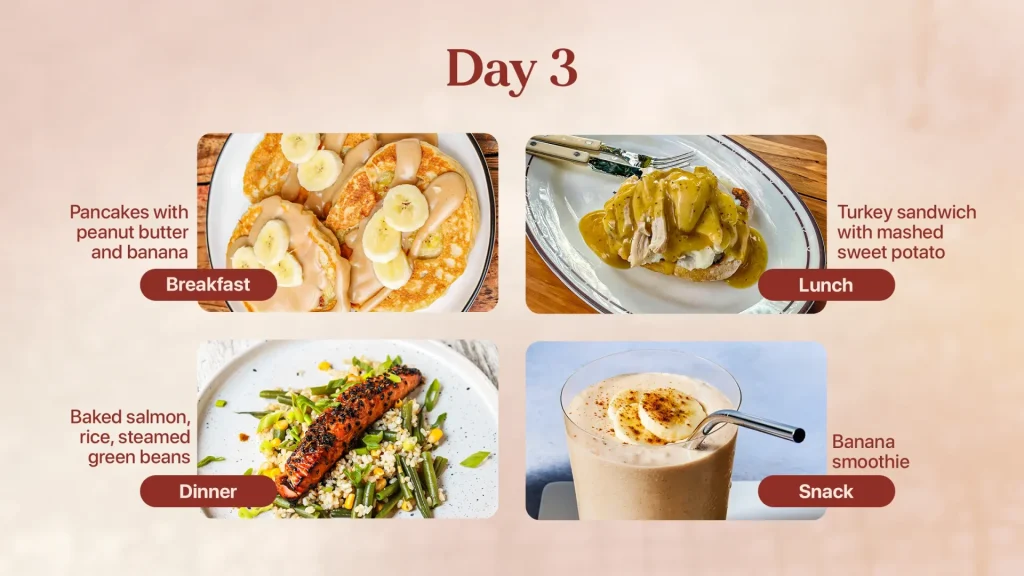
Day 3
Breakfast:
Pancakes with peanut butter and banana
A slightly indulgent old people’s breakfast, but still balanced.
- Pancakes are soft and easy to chew
- Peanut butter adds protein and healthy fats
- Banana keeps it naturally sweet
Lunch:
Turkey sandwich with mashed sweet potato
A simple, balanced meal.
- Turkey provides lean protein
- Sweet potato is soft and rich in fiber
- A sandwich uses soft bread for easy chewing and digestion
Dinner:
Baked salmon, rice, steamed green beans
This is one of the most nutrient-dense meals of the week.
- Salmon provides omega-3 fatty acids
- Rice is easy to digest
- Green beans should be cooked until soft
Tip: Flake the salmon to make it easier to eat.
Snack:
Banana smoothie
Perfect for low appetite days.
- No chewing required
- High in calories and nutrients
- Easy to prepare
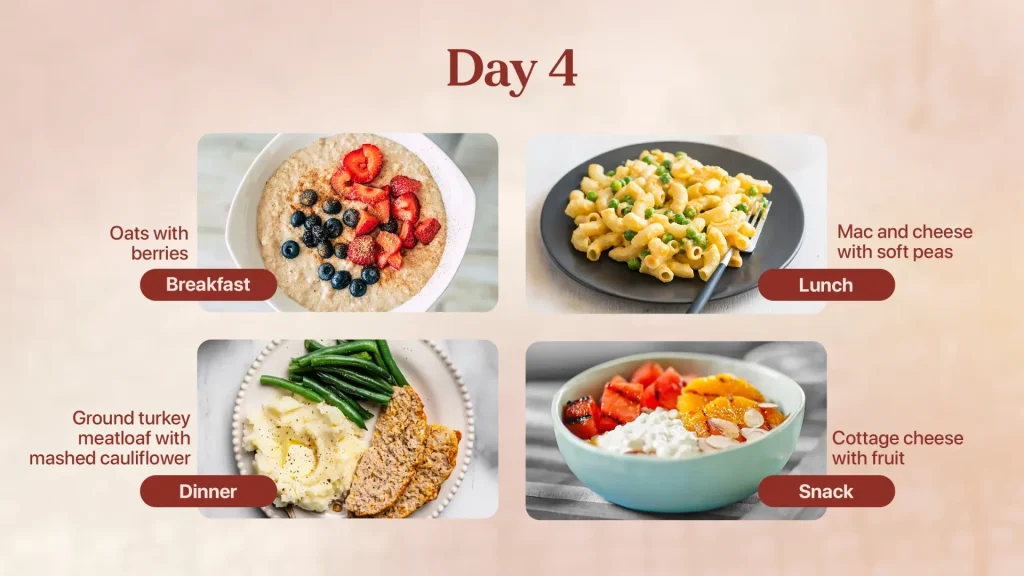
Day 4
Breakfast:
Oats with berries
Smooth and warm.
- Easy on digestion
- Provides steady energy
- Berries add antioxidants
Lunch:
Mac and cheese with soft peas
Comfort food that works well for seniors.
- Soft texture
- Easy to swallow
- Peas add fiber and nutrients
Tip: Keep portions moderate to avoid heaviness.
Dinner:
Ground turkey meatloaf with mashed cauliflower
A lighter version of a classic.
- Ground turkey is easier to chew than beef
- Mashed cauliflower is soft and lower in carbs
- Add gravy for moisture
Snack:
Cottage cheese with fruit
Light but satisfying.
- Provides high protein
- Easy to eat (Melts in the mouth)
- Natural sweetness
Day 5
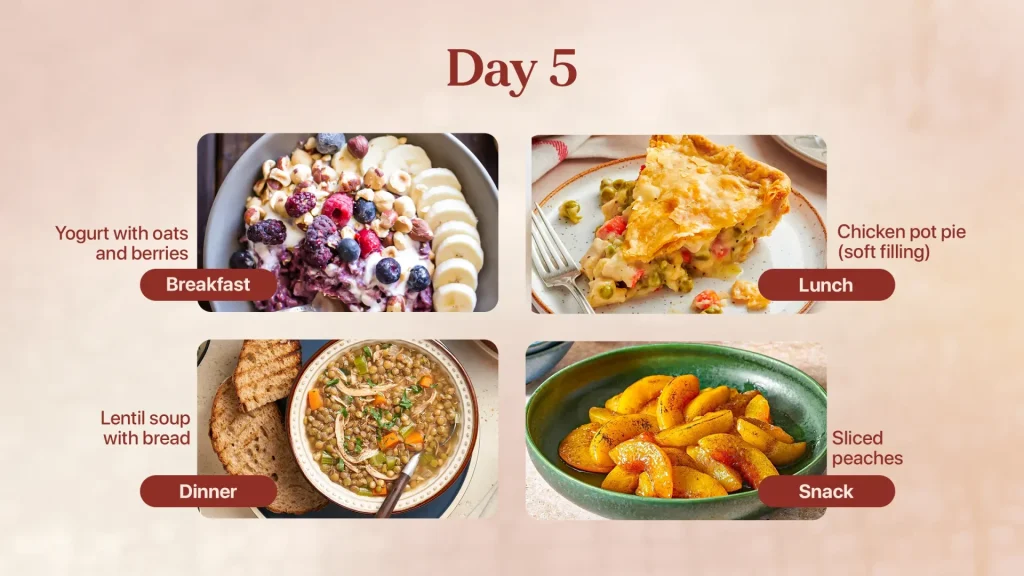
Breakfast:
Yogurt with oats and berries
Quick and balanced.
- Protein + fiber combination
- No cooking required
- Easy to customize
Lunch:
Chicken pot pie (soft filling)
This is comfort in a bowl.
- Warm and filling
- Vegetables and protein in one dish
- Soft texture when properly cooked
Dinner:
Lentil soup with bread
A great plant-based option.
- Fiber-rich meals support digestion
- Lentils provide protein
- Soup keeps hydration levels up
Snack:
Sliced peaches
Light and refreshing.
- Soft texture
- Easy to chew
- Naturally hydrating
Day 6
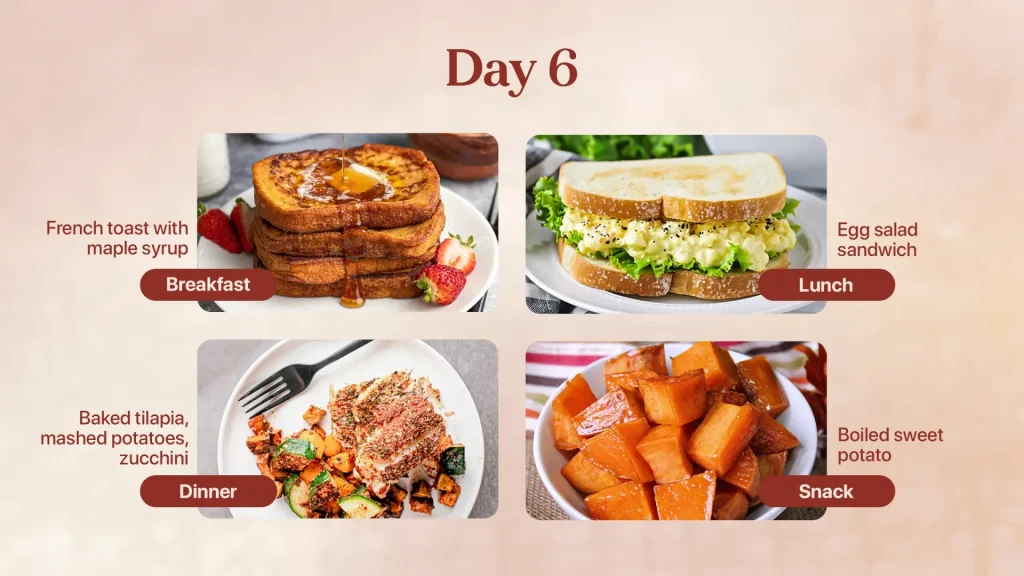
Breakfast:
French toast with maple syrup
Slightly sweet, very soft.
- Easy to chew
- Good energy source
- Can be paired with fruit
Lunch:
Egg salad sandwich
Simple and effective.
- High protein
- Soft texture
- Minimal prep
Dinner:
Baked tilapia, mashed potatoes, zucchini
Light and well-balanced.
- Tilapia is soft and flaky
- Mashed potatoes add comfort
- Zucchini is easy to digest when cooked well
Snack:
Boiled sweet potato
Simple but powerful.
- Provides energy
- Supports digestion
- Easy to eat
Day 7
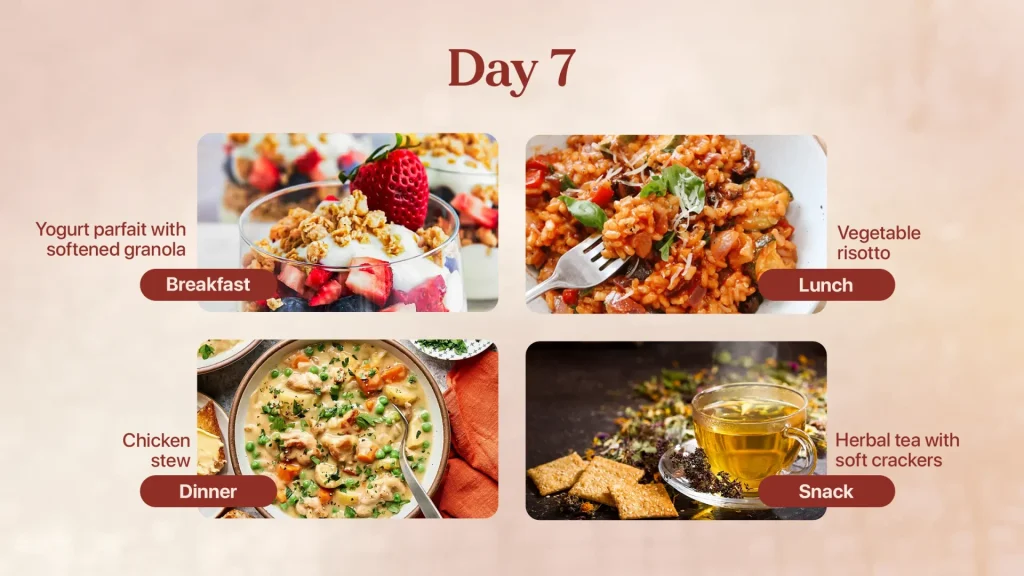
Breakfast:
Yogurt parfait with softened granola
Slight texture variation, but still manageable.
- Creamy base
- Granola can be softened with milk
- Adds variety to the week
Lunch:
Vegetable risotto
Soft, creamy, and easy to eat.
- Rice is cooked until very soft
- Vegetables are blended or finely chopped
- Mild flavors make it easy on the stomach
Dinner:
Chicken stew
A perfect end to the week.
- Warm and comforting
- Balanced nutrients
- Easy-to-digest
Snack:
Herbal tea with soft crackers
Light and calming.
- Helps hydration
- Easy evening option
- Gentle on digestion
Here’s a geriatric diet chart for the seniors.
| Day | Breakfast | Lunch | Dinner | Snacks |
|---|---|---|---|---|
| Sunday | Oatmeal with mashed banana and cinnamon | Shredded chicken, mashed potatoes, steamed carrots | Creamy vegetable soup with soft dinner rolls | Applesauce |
| Monday | Scrambles eggs with whole wheat toast | Tuna salad sandwich | Chicken noodle soup | Greek yogurt with honey |
| Tuesday | Pancakes with peanut butter and banana | Turkey sandwich with mashed sweet potato | Baked salmon, rice, soft green beans | Banana smoothie |
| Wednesday | Oats with berries | Mac and cheese with soft peas | Ground turkey meatloaf with mashed cauliflower | Cottage cheese with fruit |
| Thursday | Yogurt with oats and berries | Chicken pot pie | Lentil soup with bread | Sliced peaches |
| Friday | French toast with maple syrup | Egg salad sandwich | Baked tilapia, mashed potatoes, zucchini | Boiled sweet potato |
| Saturday | Yogurt parfait with softened granola | Vegetable risotto | Chicken stew | Herbal tea with soft crackers |
Quick Adjustments That Make a Big Difference
Even the best weekly meal plan for seniors needs to be flexible. Small changes can make meals much easier to eat and enjoy.Every meal plan for elderly individuals should be flexible enough to accommodate changes in appetite, chewing ability, and medical conditions.
- Add gravy, broth, or sauce to soften food
- Cut food into bite-sized pieces
- Avoid dry or crunchy textures
- Use slow cooking methods for tenderness
- Keep flavors mild but enjoyable
- Serve food warm, not too hot, not too cold
This approach keeps the 7-day meal plan for the elderly practical.
Nutrients Seniors Actually Need
Food isn’t just about taste anymore. It’s about function. Every meal should do something useful. Support strength. Improve digestion. Maintain energy.
A well-balanced geriatric diet chart focuses on nutrients that aging bodies actually need, not trends, not restrictions, just practical nutrition that works.
Protein
Muscle loss speeds up after 65. And once it’s gone, it’s harder to rebuild.
Protein helps slow that process down.
Include:
- Eggs
- Yogurt
- Chicken
- Fish
- Beans
Why it matters:
- Helps maintain muscle mass, which supports balance and reduces fall risk.
- Improves strength for daily activities like walking, climbing stairs, or even getting up from a chair.
- Supports recovery from illness, injury, or surgery.
- Keeps energy levels stable instead of crashing mid-day.
Calcium
Bones don’t stay as strong as they used to. They become more fragile over time.
Calcium helps protect that structure.
Sources:
- Milk
- Cheese
- Yogurt
- Fortified plant milk
Why it matters:
- Helps maintain bone density and reduces the risk of fractures.
- Supports proper muscle function, including heart muscles.
- Works with Vitamin D to keep bones strong and stable.
- Reduces the likelihood of injuries that can affect independence.
Fiber
Digestion slows down with age. And when fiber is missing, the body notices quickly.
Fiber keeps everything moving the way it should.
Sources:
- Oatmeal
- Fruits
- Vegetables
- Whole grains
Why it matters:
- Prevents constipation, which is very common in seniors.
- Supports gut health and improves overall digestion.
- Helps regulate blood sugar levels.
- Keeps you feeling full longer, reducing unnecessary snacking.
Healthy Fats
Fats aren’t the enemy. The right ones actually help the body function better.
Sources:
- Avocado
- Olive oil
- Nuts
- Fish
Why it matters:
- Supports brain health and memory function.
- Helps absorb important vitamins like A, D, E, and K.
- Provides steady, long-lasting energy.
- Supports heart health when used in moderation.
Vitamins
These work quietly in the background. But without them, things start to feel off.
- Vitamin D → bones
- Vitamin B12 → nerves
- Vitamin C → immunity
Why it matters:
- Vitamin D helps the body absorb calcium, strengthening bones.
- Vitamin B12 supports nerve health and prevents fatigue or confusion.
- Vitamin C boosts immunity and helps the body heal faster.
- Overall, vitamins help maintain daily body functions without strain.
Hydration
This is the most overlooked part of any diet plan for people above 65.
Seniors often don’t feel thirsty. But the body still needs fluids.
Tips:
- Sip water regularly
- Include soups
- Eat water-rich foods
Why it matters:
- Prevents dehydration, which can cause dizziness and confusion.
- Supports digestion and prevents constipation.
- Helps maintain energy levels throughout the day.
- Reduces risk of headaches, fatigue, and even falls.
When all these nutrients come together, the result is simple. Meals stop being just meals. They become support systems.
That’s what makes a 7-day meal plan for the elderly actually effective.
Snacks and Sips: Keeping Energy Up Without the Fuss
Three meals are not enough. Snacks fill the gaps. But not just any snacks. Smart ones.
Healthy Snacks For Seniors
- Yogurt with fruit
- Applesauce
- Peanut butter toast
- Boiled eggs
- Soft fruits
Old People Snacks That Actually Work
- Easy to chew
- Light on the stomach
- Quick to prepare
Easy Smoothie Recipes
- Banana + milk + peanut butter
- Berry + yogurt
- Apple + oats + milk
Hydration Snacks
- Watermelon
- Oranges
- Cucumber
Light Bites For Energy
- Soft sandwiches
- Cottage cheese
- Sweet potato
Clever Tips to Customize the 7 Day Meal Plan Without Turning Your Kitchen Into a Science Lab
No two seniors eat the same way. Some eat less. Some are picky. Some need modifications. For example, a 7-day meal plan for an elderly female can be adjusted based on activity level, appetite, and individual nutritional needs while still following the same simple meal structure.
So this 7-day meal plan for the elderly should be flexible.
For Picky Eaters
- Stick to foods you know
- Make small changes
- Avoid big changes
For People With Low Appetite
- Smaller portions
- More meals
- Smoothies
For People Who Have Trouble Chewing
- Choose soft foods
- Use mashed textures
- Avoid hard or dry foods
For Medical Needs
- Low sodium for blood pressure
- Low sugar for diabetes
- Follow your doctor’s advice
For Kitchen Hacks
- Batch cook meals
- Use frozen veggies
- Keep prep simple
Pro Tips
- Make food appealing
- Add color
- Serve warm
Keep the meals simple but nice. Not hard but healthy food for seniors that is difficult for them to chew.
Conclusion: Because Eating Well Should Be Fun At Any Age
The best meal plan for elderly adults is one that can be followed consistently, providing balanced nutrition without making daily meal preparation overwhelming. A well-planned 7-day meal plan for the elderly makes life easier. Not harder. It removes confusion. It builds routine. It supports health quietly, every single day.
This isn’t just a weekly meal plan for the elderly. It’s a way to keep meals enjoyable again.Because at the end of the day, if the food is soft, simple, and satisfying… And someone asks for seconds…
You’ve done it right.
Disclaimer
Always consult a doctor or registered dietitian before starting any diet plan. Ask your dietitian, “Is this diet plan suitable for old age people above 65?” Individual needs can vary based on medical conditions and medications. So be cautious while taking any kind of food.