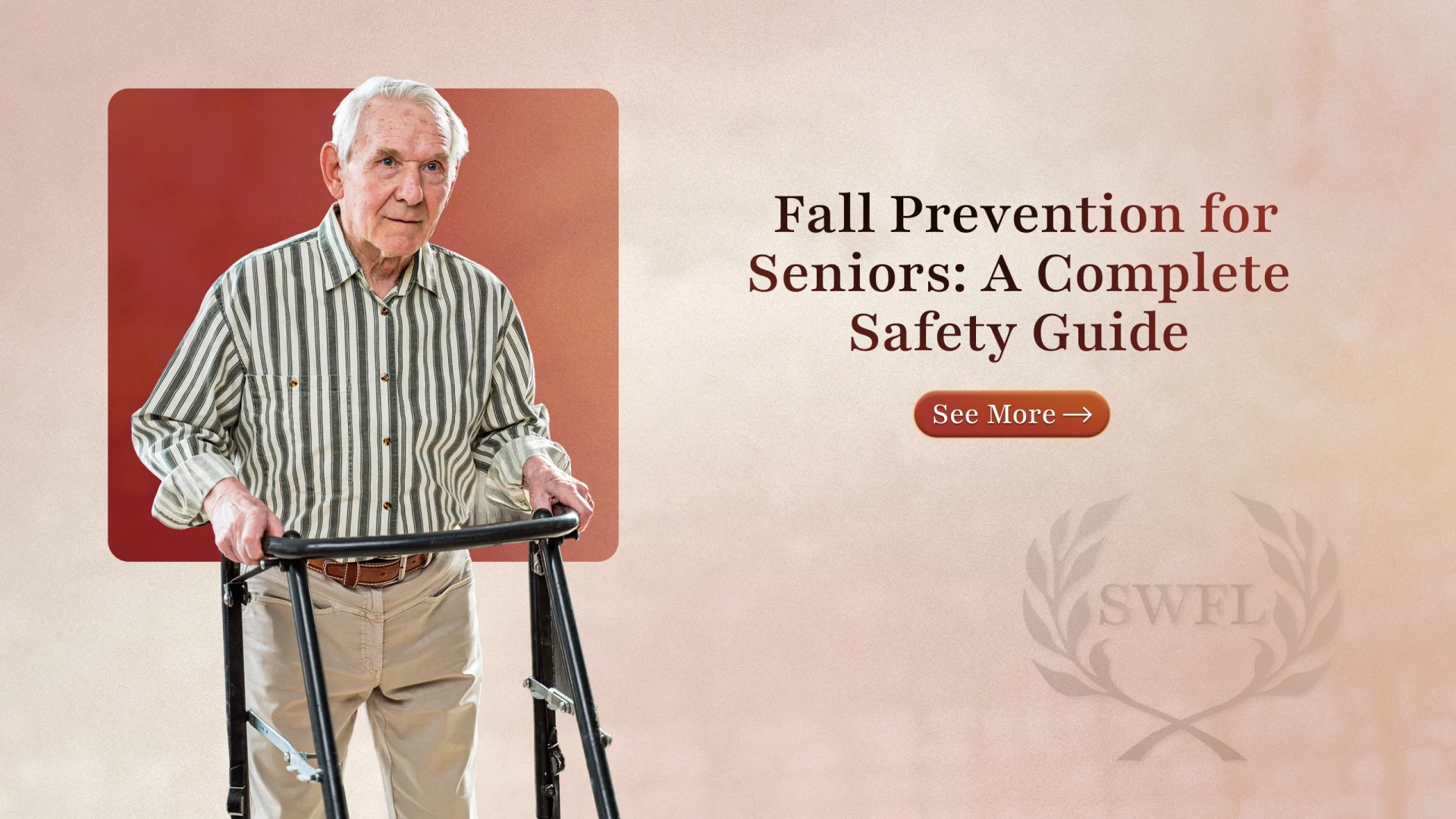
When it comes to older adults, a fall is rarely “just a fall.” It can trigger a chain reaction, injury, reduced mobility, fear of moving, and eventually loss of independence. That’s why avoiding falls among seniors is important not only for health but also for maintaining a sense of independence.
The aging process affects not only muscle weakening but also vision deterioration, slower reactions, balance deterioration, and medication interactions. As a result, even simple movements, such as walking across the room to get food, going to bed, and entering the bathroom, can become a problem.
The truth is that most falls in elderly people can be avoided. You only need to use the necessary approaches and knowledge. This guide aims to show how to prevent falls in elderly people, regardless of where they live or what activities they engage in.
Fall Prevention Tips for Seniors: Everyday Safety Strategies
Fall prevention for seniors does not imply any significant actions. On the contrary, it presupposes a complex of smaller changes that should be made regularly and consistently.
Daily Habit Adjustments
Encourage slow transitions between positions
- Rapid transitions from lying to sitting or sitting to standing may cause sudden blood pressure drops called orthostatic hypotension, which can result in dizziness or fainting.
- Teach older adults to remain seated for several seconds before standing.
- Have a stable object close by to support their weight.
- Early mornings are particularly critical because the body is less balanced after sleeping.
Promote consistent hydration throughout the day
- Dehydration is a silent factor that increases the likelihood of falls by causing fatigue, disorientation, and muscle weakness.
- Encourage small amounts of fluids instead of large quantities.
- Include water-rich foods such as fruits, vegetables, soups, or broths.
- Look out for symptoms like dry mouth, headache, or sudden weakness.
Maintain regular meal timing
- Inconsistent food intake may affect blood sugar levels, causing shaky hands, confusion, or dizziness.
- Prepare balanced meals containing proteins, fibers, and healthy fats.
- Prevent prolonged intervals between meals, especially in individuals with diabetes.
- An evening snack can prevent low blood sugar while sleeping.
Improve nighttime safety habits
- Nighttime is when many falls occur due to poor visibility and reduced awareness of the surroundings.
- Always maintain a clutter-free route between your bed and your bathroom.
- Make use of bedside or automatic lights that will illuminate your way.
- Develop the habit of sitting near the edge of the bed before getting up.
Footwear Matters
Your choice of shoes plays an important role in avoiding falls; however, many people overlook it without realizing its significance.
Choose supportive, non-slip shoes
A good shoe will always be one with a sturdy sole and adequate grip. In addition, it must fit you perfectly. Shoes must have rubber soles because they give more traction on slippery surfaces.
Avoid risky footwear choices
Loose slippers may come off your feet unexpectedly. Flip-flops should never be worn because they lack adequate support. Walking without wearing any shoes may also result in falls.
Use grip socks
They can be used indoors when you move about from one point to another, particularly on slippery surfaces. Remember that they are only meant to be worn indoors, and they must fit properly.
Vision and Hearing Checks
Perceptual changes can be subtle, yet a significant cause of falls.
Regular vision assessments
New prescriptions will enhance depth perception and acuity. Cataracts, glaucoma, or macular degeneration can impact spatial awareness. Any impairment in vision could result in miscalculating the next step or an obstacle.
Improve environmental contrast
Using different shades on staircases or furniture edges is advised. Do not choose excessively patterned surfaces, which could affect depth perception.
Address hearing-related balance issues
The inner ear system regulates balance. Impairment in hearing might have a secondary effect on balance through disorientation in noisy surroundings. Hearing aids could help if necessary.
Medication Review
Prescriptions contribute to falls more often than assumed. Several medications can affect awareness, coordination, or blood pressure.
Understand side effects clearly
Hypnotics and tranquilizers induce persistent drowsiness. Hypotensive drugs trigger an abrupt blood pressure drop when changing from sitting to standing position. Analgesics slow down motor skills.
Schedule regular medication reviews
A doctor or pharmacist could detect potential interactions between medications. Adjusting dosages might be required due to physiological changes.
Monitor new medications closely
The early days are essential after beginning a new prescription. Pay attention to dizziness, disorientation, or fatigue.
Lighting Improvements
Visibility is just part of the equation; what matters more is minimizing the uncertainty that poor lighting causes by making the brain guess distances and shapes.
Use bright, even lighting throughout the home
Ensure there is no harsh glare that could cast shadows and alter depth perception. Layer your light sources, from ceiling lights to lamps and task lighting.
Install nightlights in key areas
Your bedrooms, hallways, and bathrooms need low-level light to minimize the danger of moving about in complete darkness.
Consider motion-sensor lighting
These will automatically switch on as soon as movement is detected. Useful for nighttime trips to the bathroom or for navigating flights of stairs.
Best Fall Detection for Seniors and Other Assistive Devices
In addition to canes and walkers, the best fall detection for seniors may include wearable alert devices that can automatically notify caregivers or emergency contacts if a fall occurs, providing an added layer of safety.
Proper Use of Mobility Aids
Equipment such as canes and walkers helps improve balance and confidence while walking. Make sure they are properly sized based on individual height and posture.
Install grab bars in high-risk areas
This equipment should especially be placed in bathrooms, particularly near the toilet, shower, and bathtub. Securely fix them to the walls instead of using suction cups.
Use supportive bathroom equipment
Raised toilet seats reduce strain when sitting and standing. Shower chairs allow safe bathing without standing for long periods. Handheld showerheads improve control and reduce unnecessary movement.
How to Help an Elderly Person Up After Falling
Knowing what to do after falling is as critical as the actual process of fall prevention for seniors.
When They Fall
First, Stay Calm and Assess
- Test for any pain or responsiveness.
- Ask specific questions: “Where does it hurt?”
Look for serious warning signs
- Any head trauma.
- Back and hip discomfort.
- Inability to move limbs.
Do not rush to lift them
- Rushing can exacerbate any existing damage.
When They Are Capable of Moving
Guide them step-by-step
- Position on the side.
- Assume the hands and knees position.
- Utilize a strong chair as leverage.
Let them move at their own pace
- It helps avoid further injuries.
Important Reminders
- Avoid lifting through arm handles.
- Remain calm and informative while assisting.
- Move gently; quick movements increase the chances of hurting the patient.
Aftercare
Observe for delayed symptoms
- They may occur several hours after falling.
Encourage rest and hydration
- The body requires time to recuperate from the trauma.
Document the fall
- Collecting data is beneficial for improving future fall prevention for the elderly.
Preventing Falls in the Elderly
Falls do not happen randomly; they are messages. Neglecting them may result in more severe injuries and complications.
1. Identify Patterns
Track when and where falls occur
- Falls in the morning might be due to changes in blood pressure.
- Bathroom falls may be due to slippery floors or urinary urgency problems.
- Falling at night may be due to fatigue or inadequate lighting.
Look for behavioral triggers
- Answering the phone or door too hastily.
- Moving around while holding things that impede visibility.
- Lack of use of walking aids when necessary.
Medical evaluation
- When falls become frequent, a full physical examination is crucial.
Assess chronic conditions
- Parkinson’s disease impacts mobility.
- Arthritis causes stiff joints.
- Nerve damage decreases foot sensitivity, resulting in impaired balance.
Check cardiovascular factors
- Arrhythmias cause unexpected fainting episodes.
- Postural hypotension causes dizziness upon standing up.
Evaluate cognitive health
- Cognitive disorders can affect decision-making abilities.
- Seniors with dementia may not utilize their aids and misjudge distances.
2. Strength and Balance Assessment
Muscle weakness is a major risk factor
- Decreased strength in the lower limbs could affect stability.
Professional assessment adds clarity
- Physical therapists assess pace, posture, and reflexes.
- They develop tailored exercise plans that focus on enhancing strength and coordination.
Consistency matters more than intensity
- Low-impact regular physical activities can prove more effective than occasional high-intensity exercises.
3. Emotional Impact
The effects of falls go beyond the physical consequences.
Fear of falling creates hesitation
- Older adults may become reluctant to move after a fall.
Reduced activity leads to muscle loss
- Older adults end up in an unfavorable vicious circle.
Encourage safe and guided movements
- Supervised walking or exercise sessions can help restore self-assurance and confidence.
4. Home Reevaluation
Reassess the environment after every fall
- Every occurrence provides valuable information on potential hazards.
Remove hazards immediately
- Secure loose carpeting.
- Make sure there is enough lighting.
- Redesign the living space if necessary.
Consider professional home safety assessments
- Such professionals will be able to detect potential hazards that one might not see otherwise.
Causes of Falls for Seniors
Knowledge of why falls occur is useful for more targeted preventive measures.
Physical Factors
- Weak muscles, especially in the legs.
- Stiff joints.
- Slow reaction times.
- Chronic diseases that affect mobility.
Sensory Changes
- Blurred vision.
- Poor hearing influences spatial awareness.
- Difficulties with estimating distance.
Medication Side Effects
- Drowsiness from tranquilizers.
- Lightheadedness from hypertension drugs.
- Confusion from interaction with other medications.
Environmental Hazards
- Slippery or uneven floors.
- Disorganized environment.
- Insufficient lighting.
- Unsteady furniture.
Psychological Factors
Fear results in limited movement, depression leads to inactivity, and cognitive impairment influences judgment and awareness.
Such an expanded level of awareness changes fall prevention for the elderly from something done out of habit to becoming a part of daily life. Once all of the factors are taken care of on an ongoing basis, fall prevention for seniors will become preventative rather than remedial.
Fall Prevention Point Lookout: Assessing Everyday Risks
A systematic approach to evaluating risks can reveal potential danger spots in advance.
Personal Risk Factors
- Previous fall experiences.
- Age older than 65 years.
- Polypharmacy.
- Limited mobility.
Functional Assessment
- Walking without support.
- Balancing while standing and turning.
- Reaction speed.
Home Safety Evaluation
- Flooring check.
- Lighting evaluation.
- Identification of obstacles in walkways.
Professional Evaluation
- Physiotherapy screening.
- Occupational therapy for adjustments at home.
- Medical examination.
A practical fall prevention point lookout includes identifying slippery surfaces, poor lighting, loose rugs, and other everyday hazards before they become a cause of injury for older adults.
High-Risk Areas at Home
There are particular zones where risks are always high. The following should be addressed to prevent falls among the elderly.
Bathroom
- A wet floor may lead to a slip.
- Installation of handrails near the toilet and showers.
- Use an anti-slip mat.
- Walk-in showers rather than tubs.
Bedroom
- Proper bed height.
- Items should be placed close by.
- No obstacles along pathways.
Stairs
- Handrails on both sides of the stairs.
- Good lighting should be installed.
- Contrasting color for edge markings.
Living Room
- Rugs should not be loose.
- Furniture should be placed to allow free space.
- Electrical cords should be fastened.
Kitchen
- Commonly used objects should be reachable.
- Step stool use should be avoided.
- Quick cleaning of spills.
Strength and Mobility for Fall Prevention
In fall prevention for seniors, strength and mobility are of absolute necessity.
Muscle Strength
Should involve training the leg muscles, such as quads, hams, and calves. Muscles strengthen the body and improve endurance.
Balance Training
These are exercises that test the balance. Such exercises include simple standing.
Flexibility
Movement can be limited due to stiff joints. Flexibility exercises open up the joints for smooth movement.
Coordination
Coordination involves movement exercises and helps one react faster during falls.
Endurance
Improvement of endurance through light activities like walking.
Easy Exercises to Improve Core Strength
Muscle strength affects posture and balance. They are easy and highly beneficial.
Seated Marching
- Sit properly on a chair.
- Raise each leg as if you were marching.
- Aids in hip/core muscle stability.
Heel Raises
- Get behind a chair for balance.
- Slowly raise your feet off the ground.
- Tone calf muscles.
Side Leg Raises
- Support yourself on something stable.
- Raise legs out to the side.
- Improves balance/hip muscles.
Sit-to-Stand
- Try getting up from a seated position without using your hands.
- Improves leg/core muscles.
Gentle Plank (Modified)
- Do this exercise leaning against a wall/table instead of lying down.
- Holds this position briefly.
- Improves core muscles.
Walking Practice
- Encourage the patient to walk around a safe area.
- Focuses on proper posture.
Conclusion
Falls don’t just happen out of the blue. In most cases, they are the consequence of specific risks that can be eliminated and avoided. All that needs to be done is to combine sufficient awareness, appropriate environmental changes, and appropriate exercise to successfully prevent falls in the elderly.
The objective here isn’t to limit people’s activity, but to help them perform it safely. There should be no need to give up independence for safety’s sake, nor compromise one’s safety because of the need for independence. This is where successful fall prevention measures for the elderly will make a great impact on senior citizens.
It’s all about the details. Whether it’s better lighting, more strength, a safer bathroom, or improved routines, none of these changes is insignificant.