
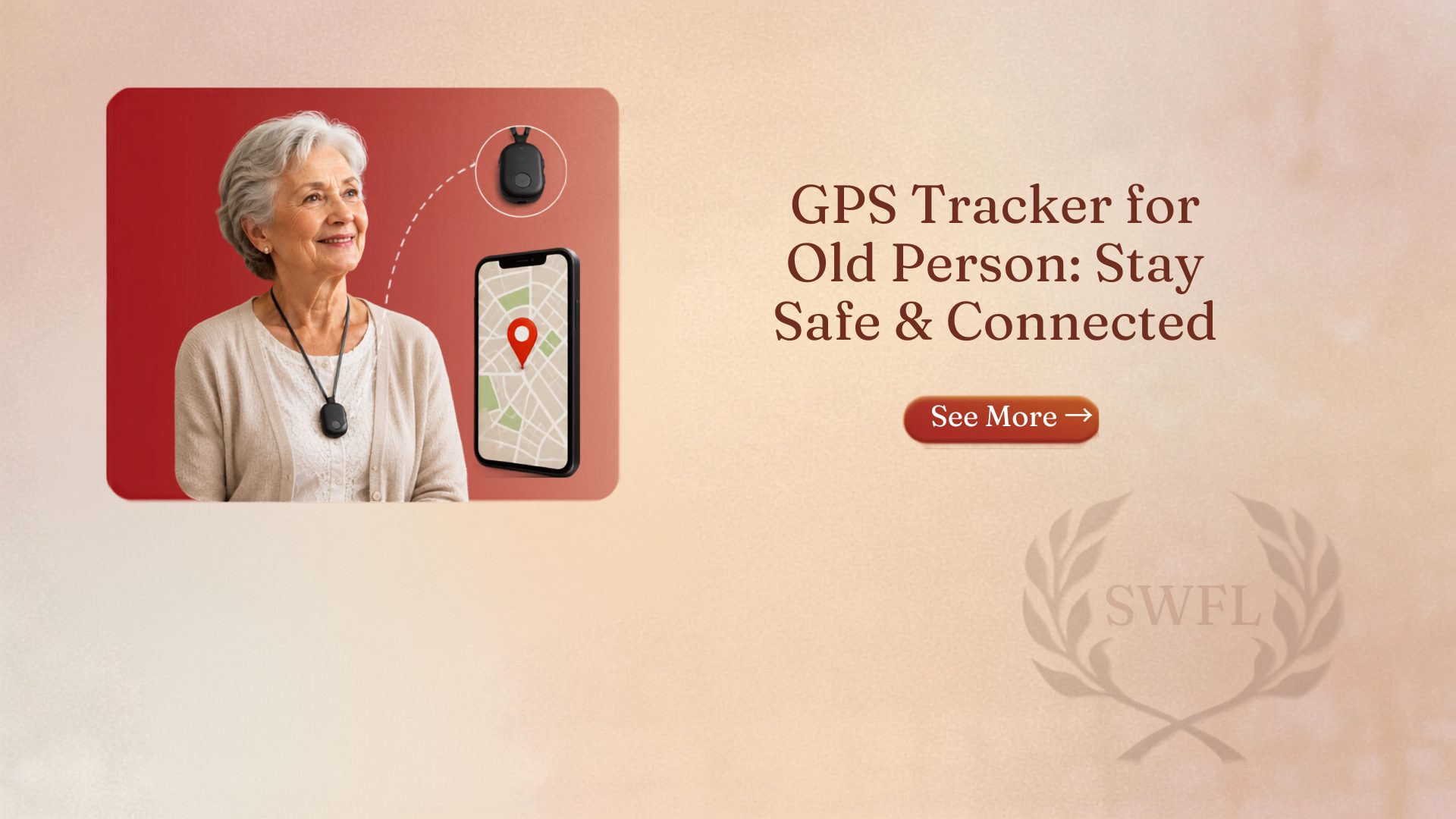
As parents and loved ones grow older, keeping them safe becomes a top priority. While checking up on them regularly helps, it might not be sufficient in all cases. If the senior is suffering from some memory-related problems or if he likes to be out and about, then a simple GPS device can help in many ways.
The use of a GPS device for the elderly becomes essential for maintaining their independence while ensuring the safety of the elderly through real-time location tracking, as well as emergency SOS options available on modern-day GPS devices.
In this guide, we will look at the types of GPS devices, the features to look for, and how to find the right option for your family’s needs.
Why More Families Are Buying GPS Trackers for Seniors
Growing older should never be an obstacle to freedom.
For the majority of older people, freedom means the ability to:
- Walk alone
- See friends
- Shop
- Do exercise outdoors
- Participate in various events
- Live independently without being supervised all the time
At the same time, family members fear:
- Wandering away
- Trips and falls
- Medical crises
- Dementia
- Driving to some place and not knowing how to get home
- Slow response in case of an emergency
A GPS tracker can be considered a solution that provides safety and freedom at once.
Instead of constantly checking on your loved one, technology quietly does the monitoring while allowing them to continue living their lives.
What Is a GPS Tracker for Old Person?
GPS trackers are wearable or portable gadgets that use satellites and mobile technology to identify an individual’s whereabouts.
The following features can be found on most gadgets today:
- Real-time location
- Movement history
- Setting up safe zones or geo-fencing
- Emergency alerts
- Instant contact with the elderly person
- Checking battery level
- Sharing the location with multiple family members
Most devices work via a smartphone app, making them very user-friendly.
Why GPS Tracking Is Becoming Essential for Older Adults
Not all seniors require GPS tracking. But there are many cases when it can be extremely useful.
Mild Memory Loss
Even mild forgetfulness can pose serious threats outside of the house.
The GPS tracker will help family members easily locate a senior if they get confused somewhere outside.
Dementia or Alzheimer’s
One of the most common risks in the case of dementia is that the person can wander off.
They might start to walk away from their home, thinking that they need to go to work, see their relatives, or come back to their old house.
Locating them without GPS tracking will be very difficult.
Fall Risk
Most of the devices provide an option for automatic detection of a fall.
In case of a fall, immediate alerts will be sent to the caregivers even if the senior cannot use the phone.
Seniors Living Alone
Independence does not mean loneliness.
GPS trackers enable family members to stay in touch with the elderly without visiting them every day.
Outdoor Activities
Most of the seniors like to spend time:
- Walking
- Gardening
- Fishing
- Visiting community events
- Traveling
GPS trackers make these activities safer while preserving independence.
Types of GPS Trackers Available
There is a variety of needs among different seniors. The choice will depend on their lifestyles.
GPS Tracker Watches
Combining features of a GPS tracker with the comfort of a wear device.
Typical features:
- Real-time GPS
- SOS button
- Two-way calling
- Heartbeat tracking
- Steps tracking
- Fall alert
- Medication reminders
A GPS tracker watch for an elderly adult is one of the most popular options since it is always on the wrist.
It cannot be lost easily and is always available in an emergency situation.
GPS Pendants
Perfect for seniors who don’t like wearing watches.
Typical features:
- SOS button
- GPS tracking
- Speaker
- Microphone
- Cellular network connection
They look like medical alert devices, but also perform GPS tracking functions.
Pocket GPS Tracking Devices
They can fit in:
- Pockets
- Handbags
- Walking bags
- Wheelchairs
They’re very handy for seniors who already always carry a bag around.
Medical Alert Systems with GPS
Such systems include emergency services along with GPS tracking technology.
Good choice for the elderly who have:
- Heart ailments
- Diabetes
- Risk of falling
- Difficulty moving around
Smartphone GPS Apps
It is good enough if an elderly individual regularly uses his or her smartphone.
Nevertheless, smartphones can be:
- Lost
- Turned off
- Plugged in for charging
- Hard to use in emergencies
Dedicated GPS devices can be more reliable.
Essential Features to Look For
Not all tracking devices offer the same amount of security. Make sure you have those below.
Real-Time GPS Tracking
Live location information allows caregivers to react immediately when emergencies occur. Some devices provide live updates every few seconds.
Others update the location every few minutes.
SOS Emergency Button
Pressing it once makes sure family members get notifications. Some devices make automatic calls to emergency contacts.
Geo-Fencing
Geo-fencing allows creating virtual safe zones.
These include:
- Home
- Retirement community
- Neighborhood
- Park
- Family member’s house
Caregivers will be notified immediately in case the senior leaves the predetermined zone.
Fall Detection
Smart sensors detect any sudden collisions. Alerts are automatically triggered in case the user is unable to answer.
Two-Way Voice Calling
No need to search for a phone; seniors just push one button. Communication is enabled right through the tracker.
Long Battery Life
The difference in battery life is drastic.
Choose devices with:
- 2-5 day minimum
- Low battery notifications
- Fast charging capabilities
Water Resistance
Rain, washing hands, and accidental spillage won’t affect the functionality of the device. Select waterproof gadgets where possible.
Easy Interface
- Big buttons.
- User-friendly menu.
- Clearly visible screen.
Elderly people should not have difficulties operating safety technology.
GPS Tracker for Elderly Parents: Why Adult Children Are Choosing Them
Caring for aging parents can be emotionally exhausting.
Many adult children stay:
- In different cities
- In different states
- Throughout the country
Every day, visiting is not always possible. With a GPS tracker for senior citizens, one gets a sense of security without being invasive.
Instead of repeatedly asking,
“Where are you?”
You already know they’re safe.
GPS Tracker for Elderly Dementia Patients
Taking care of senior citizens suffering from dementia can be particularly tough.
The tendency to wander can be spontaneous.
A senior citizen may:
- Wander off at night
- Wander away after having his dinner
- Forget the way back home
- Be scared and
- Shy away from seeking assistance from strangers
A GPS tracker for senior citizens can help deal with this situation immediately.
Some of the GPS trackers even have:
- Safe zone alert
- Movement tracking
- Voice calling facility
- Caregiver alerts
- Location emergency sharing
All of this significantly reduces search time in cases of wandering incidents.
GPS Tracker Watch for Old Person: Why Watches Are Becoming the Favorite Option
Wearable technology has become extremely advanced. New models of GPS watches are quite different from the bulky and uncomfortable gadgets of the past.
The advantages are:
- Comfortable to wear
- Always available
- Easy to find
- Provides health functions
- Emergency communications
- Activity monitoring
Senior people tend to forget their phones frequently. But very few would forget the watch they wear on their wrist.
Benefits Beyond Safety
GPS tracker watches can offer much more than just locating.
Greater Independence
GPS tracking does not limit elderly people in their activities outdoors, but gives them confidence.
They stay active. Family members are less worried.
Faster Emergency Response
Time is crucial in case of any emergency.
Exact information about the location allows faster assistance.
Reduced Caregiver Stress
Caregivers often face high emotional stress. GPS tracking removes most of the stress.
Better Daily Routine
Tracking allows for identifying deviations from the usual routine.
Examples could be:
- Decreased movement
- Strange travel
- Routine absence
- Extra inactivity
Such deviations could mean some health problems are developing.
Common Mistakes Buyers Make
Buyers usually go for the first tracking device that appears when searching the web. Do not make those mistakes.
Choosing Price Over Reliability
Inexpensive devices will always:
- Have a weak GPS
- Have a poor battery
- Have slow updates
- Offer no customer support
Ignoring Cellular Coverage
Some devices need cellular network coverage. Check the compatibility with your network.
Forgetting Battery Maintenance
Even the best tracker won’t help if the battery has zero power. Choose a tracker with a battery warning feature.
Buying Complex Devices
The purpose of technology is to simplify our lives. Simple devices are always good for seniors.
Do GPS Trackers Invade Privacy?
This is one of the most serious problems. The purpose is not watching. The purpose is to protect.
Elderly adults appreciate it when they know that help is provided in case of confusion, accidents, or other problems.
The most effective way is to discuss. Discuss why the tracker is helpful rather than forcing its use.
What Is the Best GPS Tracker for Seniors?
Not all seniors require the same type of device.
The perfect tracker will depend on:
- Mobility
- Cognition
- Lifestyle
- Technology comfort
- Emergency requirements
- Battery demands
- Financial constraints
In general, the best GPS tracker for seniors is one that includes:
- Real-time, accurate GPS coordinates
- An SOS emergency button
- Geo-fencing capabilities
- Two-way communication
- A long battery life
- Comfortable to wear
- A mobile app that can easily be used by caregivers
In the case of someone who suffers from dementia, accurate tracking and immediate alerts for caregivers are the most important aspects. In the case of active seniors, a GPS watch is the way to go.
Is There a Free GPS Tracker for the Elderly Without a Monthly Fee?
A number of GPS trackers claim to offer “free monthly charge,” but it is critical to understand what it means.
The device that uses solely Bluetooth connection or works with the connected smartphone doesn’t charge any money monthly. But such options have a restricted tracking distance and won’t work when the senior goes out of reach of the smartphone.
In its turn, true GPS tracking devices use a cellular network to provide real-time updates. Therefore, a majority of such trackers require a payment for the monthly service, including SIM card and data expenses.
That said, you can find GPS trackers that:
Are charged once only at the moment of purchasing.
Contain absolutely free companion applications without an extra software subscription.
Have optional monthly packages rather than compulsory subscriptions.
Thus, when choosing among various devices, it is essential not to pay attention only to the nonexistence of monthly fees. Evaluate if the tracker offers you reliable functioning, an extensive area of coverage, effective emergency communication features, and other capabilities that will suit your family. Sometimes, the monthly charge is worth paying to receive better services.
How to Choose the Right GPS Tracker
Ask yourself these basic questions before making your purchase.
Does the senior have memory loss?
Pick a tracker that has geo-fencing and real-time notifications.
Is there a risk of falling?
Select a model with automatic fall detection and an SOS button.
Does the senior spend time outdoors?
Get a GPS watch with a long-lasting battery and water resistance.
Do multiple family members provide care?
Find a tracker that allows sharing data and receiving notifications from several caregivers.
Is technology intimidating for the senior?
Get a tracker that has big buttons, a clear interface, and an easy setup process. The right tracker should fit naturally into daily life, offering protection without creating frustration.
The Future of Senior Safety Is Smarter
GPS technology is advancing quickly. The newer models are now starting to combine location services with health monitoring, artificial intelligence, and alerts.
The GPS trackers of the future will be able to:
- Pick up on any unusual gait prior to a fall.
- Recognize cognitive decline by noting changes in gait.
- Track heart rate, blood oxygen levels, and sleep patterns, in addition to location.
- Warn caregivers when an anomaly in behavior has occurred.
- Connect with smart home technology for added protection.
These new developments are assisting families in shifting from emergency mode to prevention mode.
Final Thoughts
Growing older shouldn’t mean losing freedom. Independence is a crucial aspect of life for the elderly. It ensures respect, self-assurance, and a high quality of living. Peace of mind for relatives can be achieved by the awareness that assistance can always be found.
A GPS tracker for an old person delivers both of those things at once.
No matter whether you take care of elderly parents, dementia patients, or just plan for your own future, having the right GPS tracker can provide additional safety while retaining independence.
Nowadays, due to technological developments, older people can enjoy their walks, social activities, and other routines thanks to GPS trackers such as a GPS tracker watch for older people and specialized devices like a GPS tracker for elderly dementia patients.
Not only should the feature set be considered while choosing the best GPS tracker, but it also has to be worn by the user constantly and be trusted.
And also, knowing exactly where someone is located is crucial to bringing them home safely.