

You know that moment when you’ve been sitting for a while, and getting back up suddenly feels like more work than it should? Maybe your knees feel stiff, your legs need a moment to cooperate, or you find yourself reaching for the armrest to push yourself up.
It happens. And while you might not feel like heading to a gym or following an elaborate workout routine, that doesn’t mean you have to give up on exercise.
A chair can be a perfectly good place to start.
Chair exercises for seniors let you move your arms, legs, and torso without spending the entire workout on your feet. You can start with a few movements, take a break whenever you need one, and build from there.
11 Chair Exercises Worth Trying
First, find a sturdy chair that doesn’t slide around. A dining chair without wheels is usually a good choice. Sit comfortably, keep your feet supported, and clear a little space around you.
There’s no need to tackle all 11 exercises at once. Pick a few that feel manageable and see how you get on.
- Seated Marching
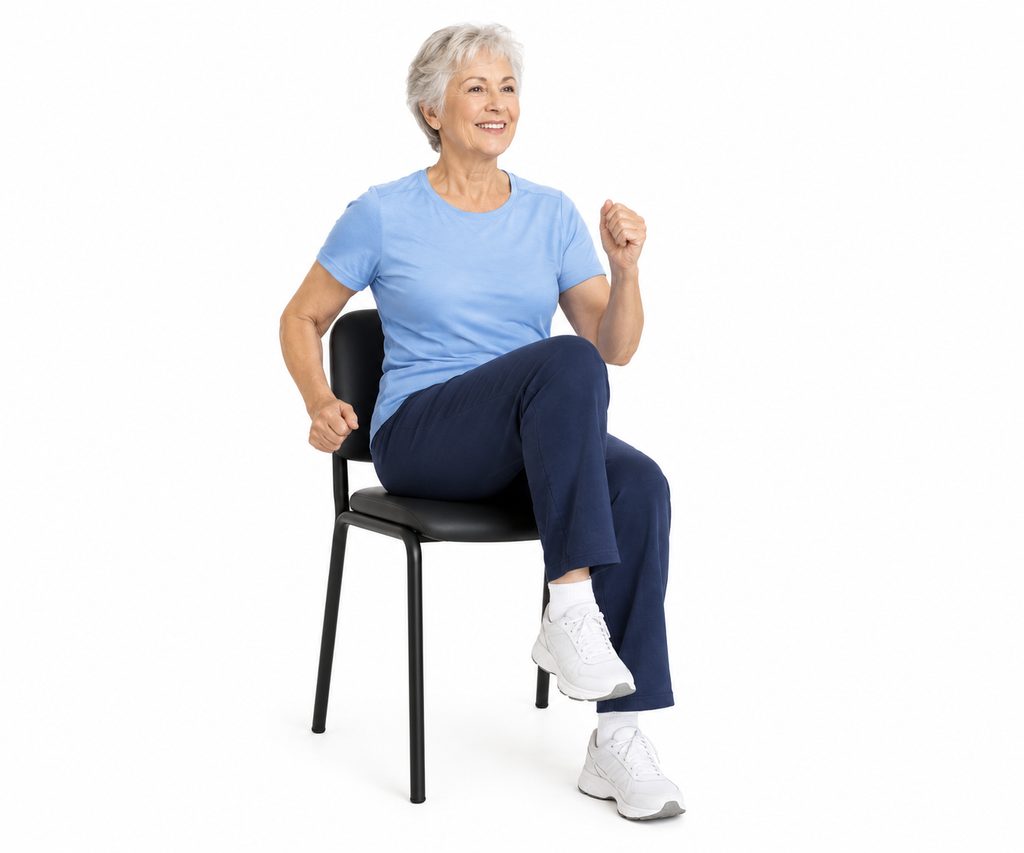
If your legs feel stiff after sitting for too long, try this one first.
- Sit upright with both feet on the floor.
- Lift your right knee a few inches, lower it, and then lift your left.
- Keep alternating as though you’re marching, just at a much slower pace.
Try 30 seconds to start with. If that’s tiring, five lifts per leg will do.
- Seated Leg Extensions
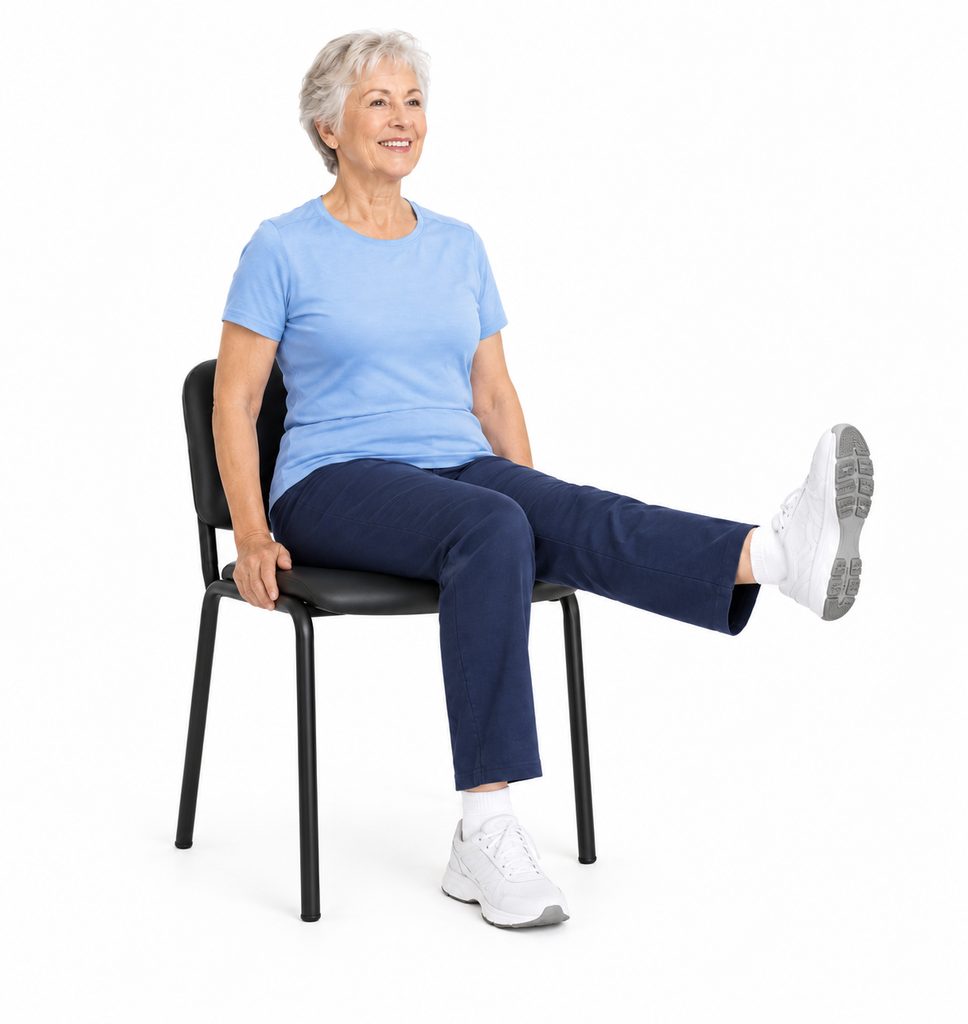
Your thigh muscles help you straighten your knees and get up from a chair. Giving them some attention is worthwhile, particularly if standing up has become more difficult.
- Sit with your feet flat.
- Slowly straighten your right leg in front of you, pause briefly, and lower it.
- Repeat with your left leg.
Start with five to 10 repetitions per leg. These seated leg exercises for seniors should feel controlled, not forced. If your knee doesn’t straighten fully, work within the range that feels comfortable.
- Heel and Toe Raises
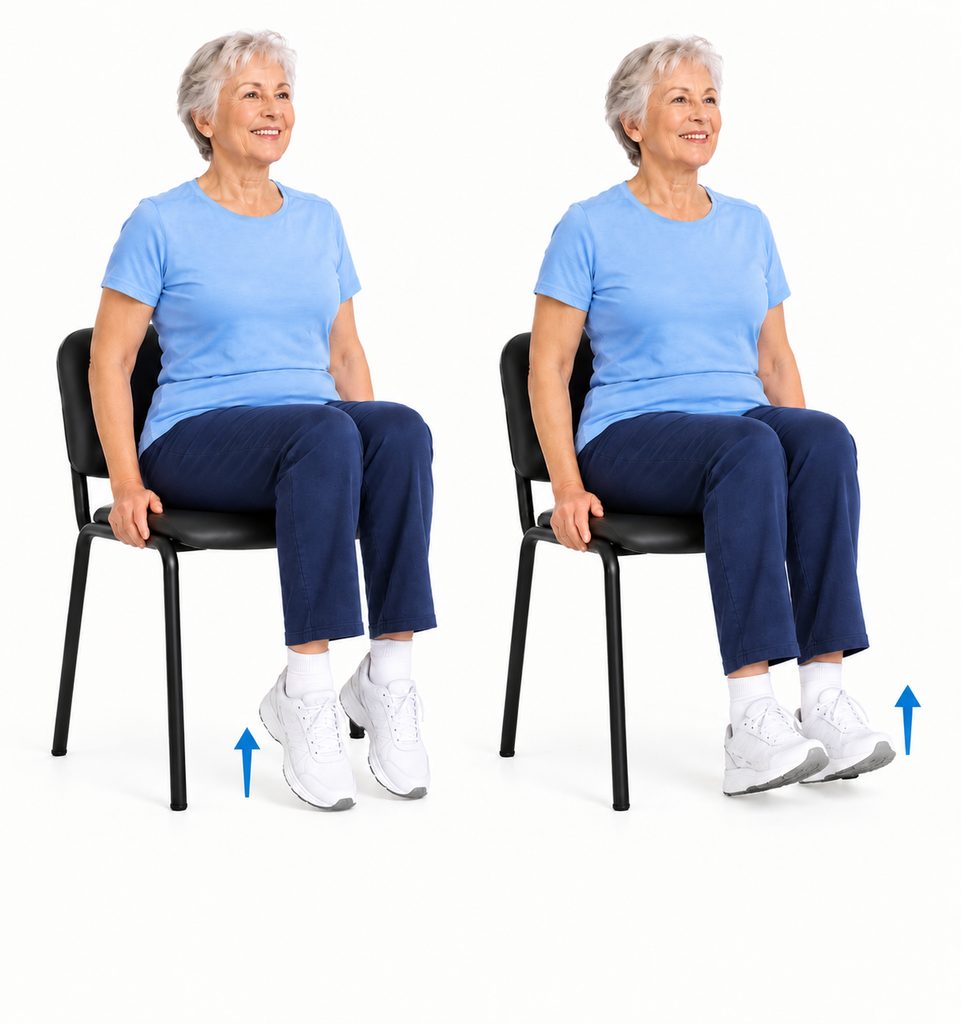
Here’s an exercise you can do while watching television without missing much of the program.
- Keep your toes on the floor and raise your heels.
- Lower them, then leave your heels down and lift your toes. That’s one round.
Repeat eight to 10 times. The movement gets your ankles and lower-leg muscles working without requiring much space or effort.
- Seated Knee Squeezes
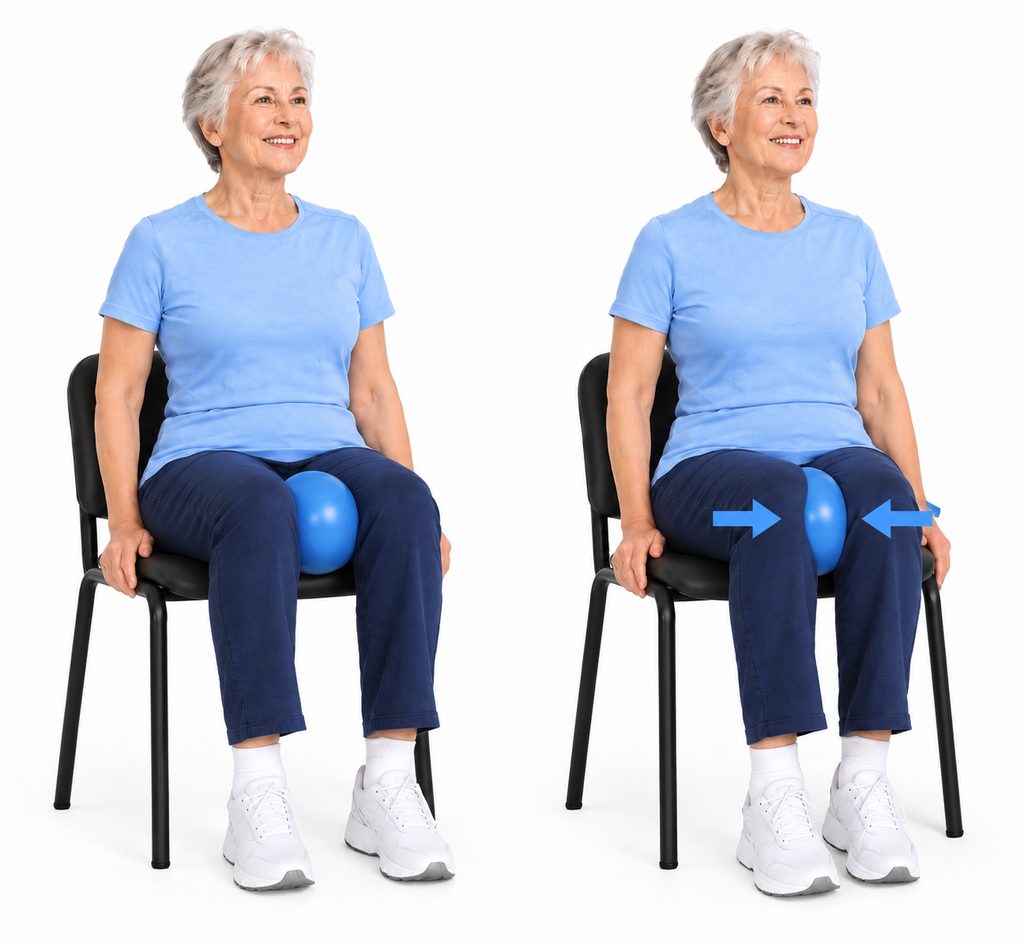
You’ll need a small pillow or a soft ball for this one.
- Sit with your feet flat and place the pillow between your knees.
- Gently squeeze your knees toward each other.
- Hold for three to five seconds, and relax.
Repeat five to 10 times. There’s no prize for squeezing as hard as you can. A gentle contraction is enough, and you should stop if the movement causes hip or knee pain.
- Biceps Curls
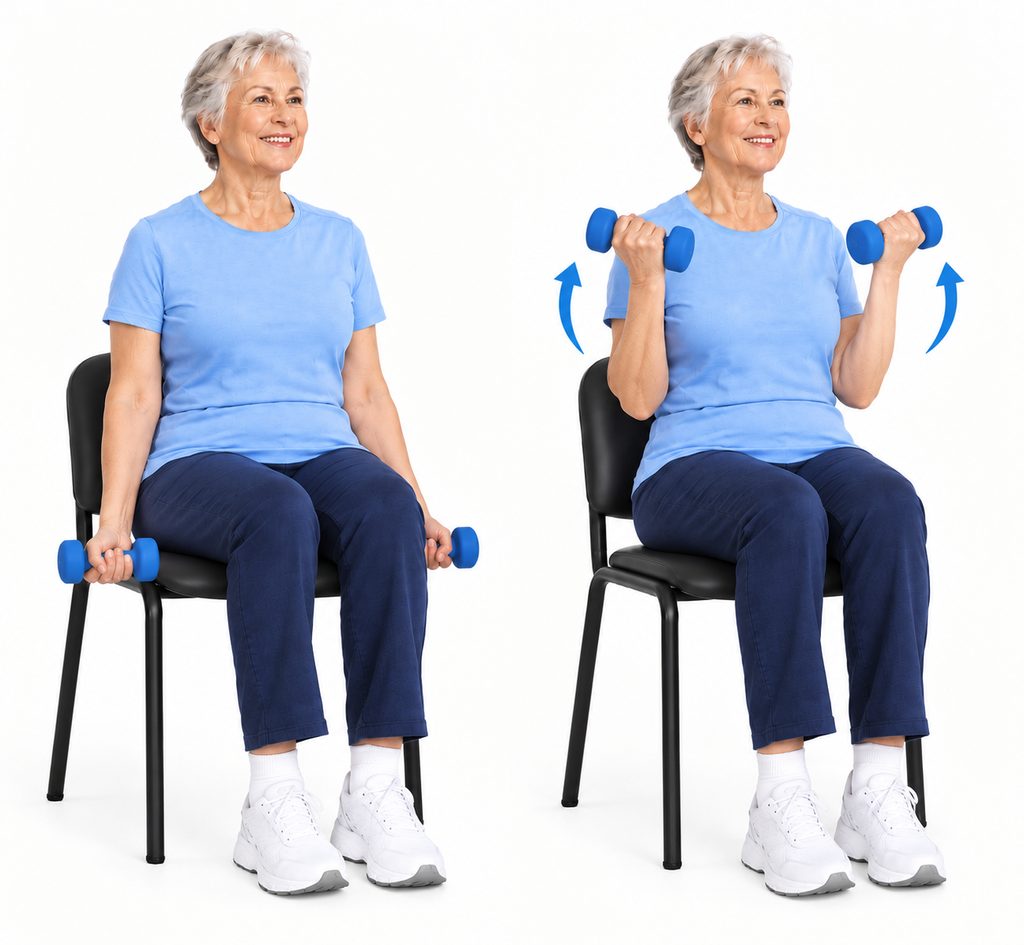
Carrying groceries, lifting a saucepan, and opening certain doors all involve your arm muscles. Biceps curls are a simple way to work them while seated.
- Keep your elbows close to your body, with your palms facing forward.
- Bend your elbows to bring your hands toward your shoulders, then lower them slowly.
Try eight to 10 repetitions. You can begin without weights and add a small water bottle later if the movement feels easy and comfortable.
- Seated Side Bends
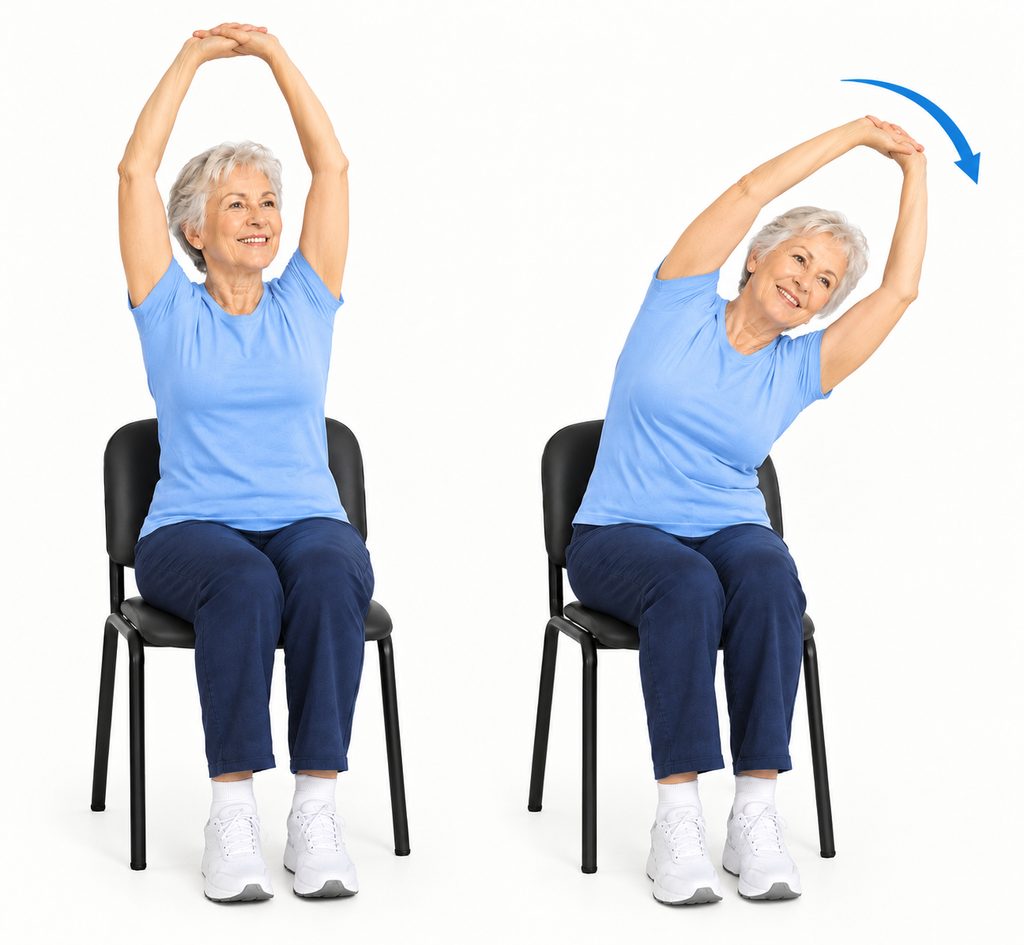
Feeling stiff through your waist and sides? A gentle side bend might help you move a little more comfortably.
- Sit tall and raise your left arm as far as feels comfortable.
- Lean slightly to the right, keeping your hips on the chair.
- Return to the middle and switch sides.
Three to five repetitions on each side are enough to begin. Don’t force yourself to reach farther just to make the stretch feel stronger.
- Pelvic Tilts
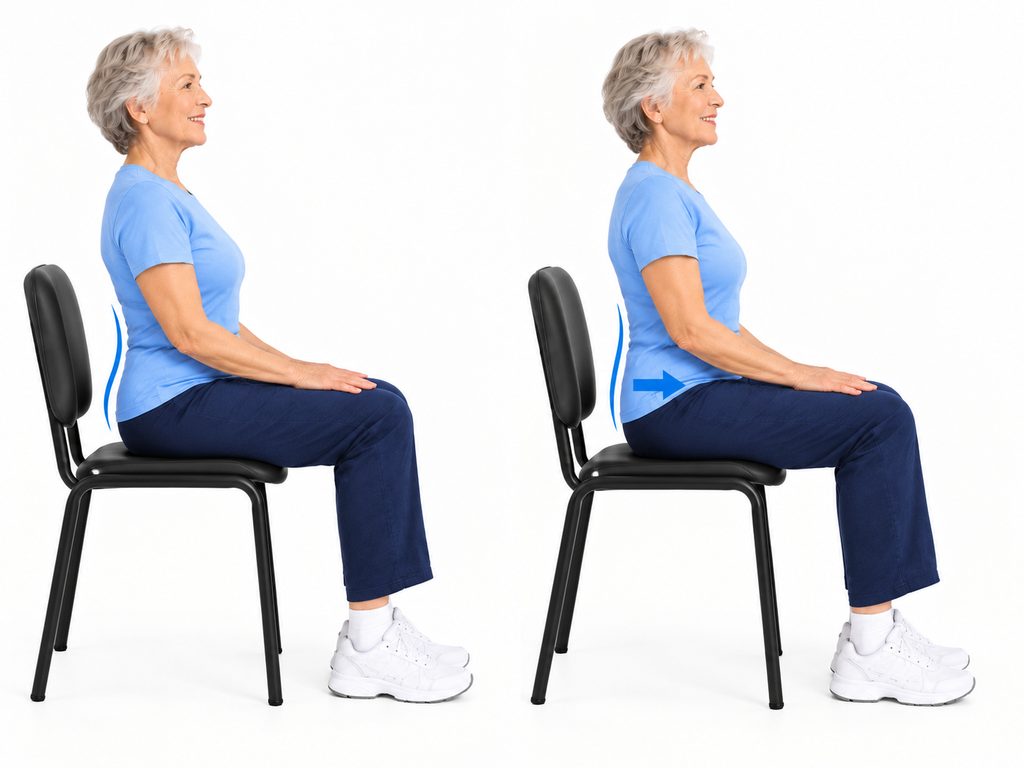
Core exercises don’t always have to involve getting down on the floor.
- For this movement, sit with your feet flat and your shoulders relaxed.
- Gently tilt your pelvis backward so your lower back moves toward the chair’s backrest.
- Return to your usual upright sitting position.
Repeat five to 10 times, keeping the movement small and comfortable. If you have a back condition, check with your healthcare provider before trying it.
- Abdominal Bracing
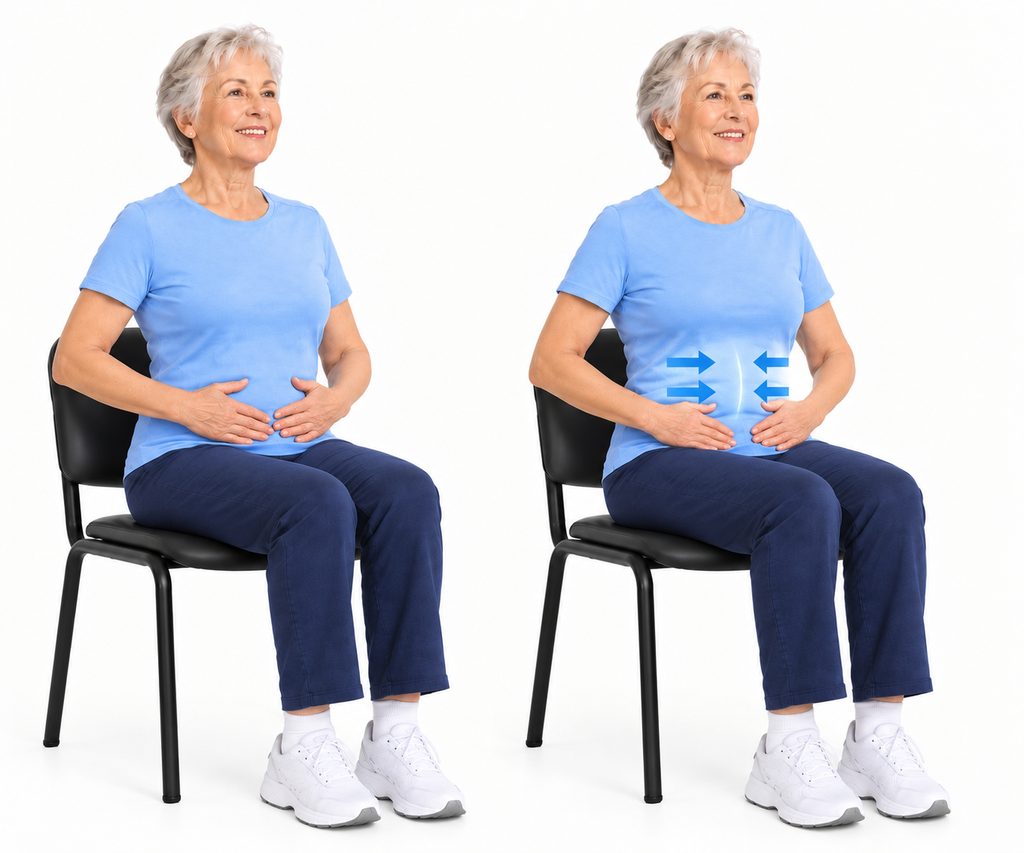
This one looks almost too simple to count as exercise, but it gives you a chance to practice engaging your abdominal muscles.
- Sit upright and place your hands lightly on your stomach.
- Tighten your abdominal muscles gently, as though preparing for a small cough.
- Hold for three to five seconds while breathing normally, then relax.
Repeat five to eight times.
Of the seated core exercises for seniors, abdominal bracing is a straightforward option for many beginners because there’s no twisting or bending involved.
- Seated Twists
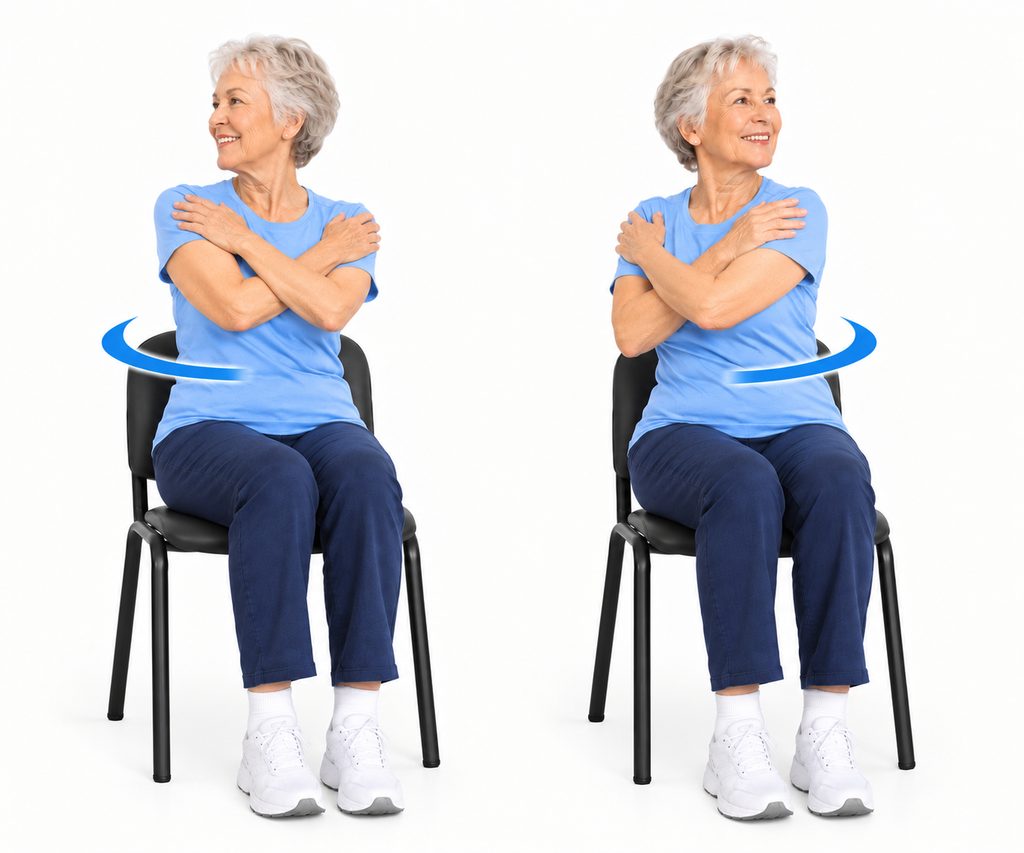
Imagine someone calling your name from beside you. Turning to look at them is the sort of movement this exercise helps you practice.
- Sit with your feet flat and your knees pointing forward.
- Turn your shoulders gently to the right, return to the center, and repeat on the left.
Try three to five repetitions per side. Keep your hips facing forward and don’t twist if you’ve been advised to avoid that movement because of a back or spinal condition.
- Seated Arm Raises
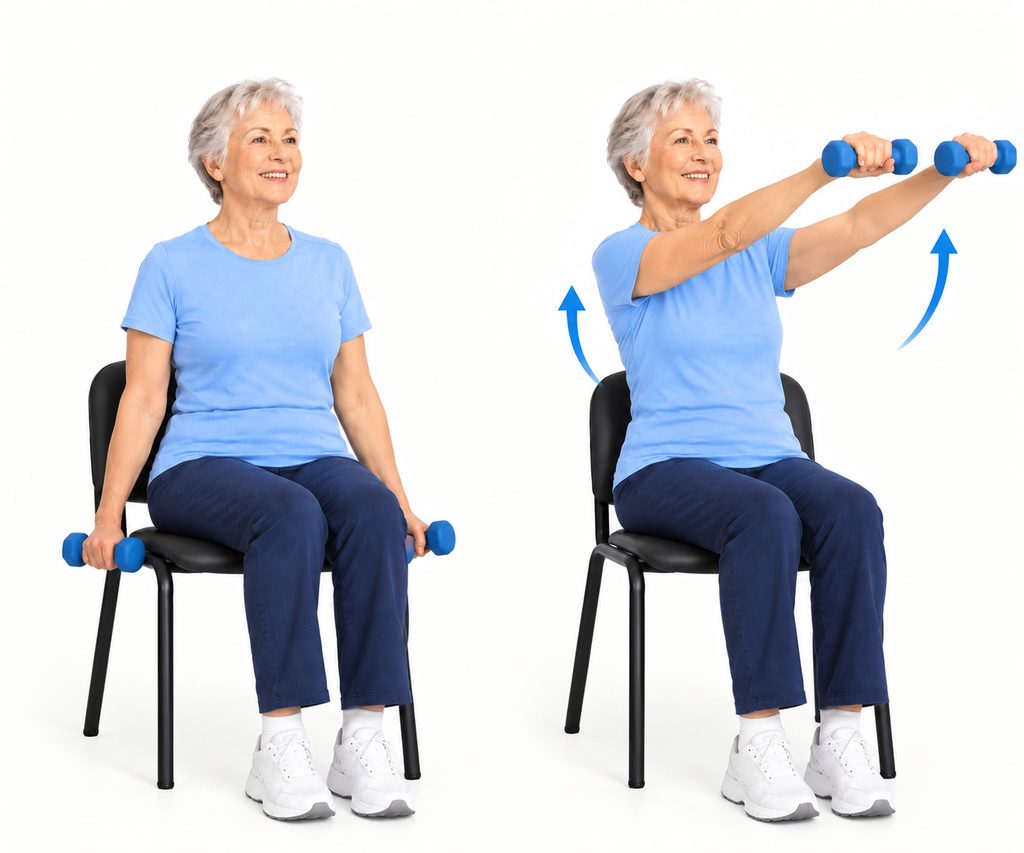
Shoulder stiffness can make reaching for something on a shelf surprisingly awkward. This exercise lets you practice raising your arms without adding weights.
- Sit upright and slowly lift your arms forward.
- Stop at shoulder height, or sooner if that’s your comfortable limit.
- Lower them gently and repeat five to eight times.
If raising both arms feels tiring, try one at a time. There’s no need to push through shoulder pain.
- Seated Hamstring Stretch
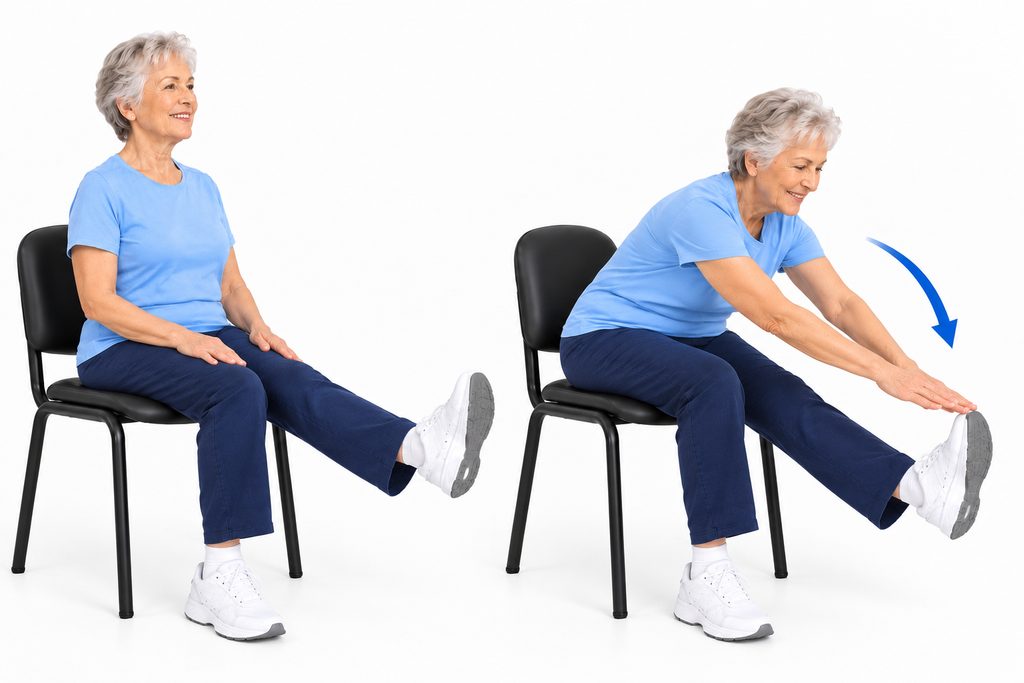
Let’s finish with a gentle stretch for the backs of your thighs.
- Sit near the front of your chair and extend your right leg forward, keeping your heel on the floor.
- Straighten your knee as comfortably as possible.
- Then lean forward slightly from your hips while keeping your back relatively straight.
You should feel a mild stretch behind your thigh. Hold for 10 to 20 seconds and switch legs.
Don’t bounce or force yourself to reach your toes. If the stretch hurts, ease off.
How Often Should You Do These Exercises?
You don’t need to squeeze all 11 movements into one session. In fact, starting with four or five is probably more sensible if you haven’t exercised in a while.
Try seated marching, leg extensions, heel raises, biceps curls, and abdominal bracing. Spend around five to 10 minutes on your first session, taking breaks whenever necessary.
As the movements become more familiar, you can add others or gradually increase your repetitions.
The CDC recommends that adults ages 65 and older generally aim for 150 minutes of moderate-intensity aerobic activity each week, muscle-strengthening activities on at least two days, and activities that improve balance.
You don’t have to reach those targets immediately. Chair exercises can be part of your routine, but they don’t necessarily replace aerobic exercise or balance training when those activities are suitable for you.
Pay attention to how you feel during and after exercise. Being a little tired is one thing; feeling sharp pain or becoming dizzy is another.
A Few Things to Remember Before You Start
- Check your chair – It should be stable, with no wheels or swivel mechanism.
- Take your time – Slow movements are easier to control than rushed ones.
- Keep breathing – Avoid holding your breath while tightening your muscles.
- Don’t ignore pain – Stop if an exercise causes sharp pain, dizziness, chest discomfort, or unusual shortness of breath. Seek urgent medical care for serious or sudden symptoms.
- Ask for guidance if needed – If you’ve recently had surgery, experienced a fall, or have a condition affecting your mobility, speak with your healthcare provider or physical therapist before starting.
- Don’t push too hard – You don’t have to push through every movement to get something useful out of your session. Adjusting an exercise or leaving it out is perfectly reasonable.
Start With What Feels Manageable
You might begin with five leg extensions today and try a few more exercises later in the week. That’s fine. There’s no need to turn a short workout into a test of endurance.
Chair exercises for seniors offer a convenient way to fit movement into an ordinary day, whether you try them in the morning, between chores, or while watching your favorite show.
The best routine isn’t necessarily the longest one. It’s the one that suits your abilities, feels comfortable enough to repeat, and helps you keep moving safely.