
Your knees hurt. Your back feels stiff. And some days, simply getting up from the couch feels like a workout of its own.
That can make exercise sound like a terrible idea.
However, regular physical activity does not necessarily have to imply running on a treadmill, weight lifting and exhausting yourself. Low impact exercises for elderly people are aimed at staying active but doing it without adding extra strain on your joints.
You don’t have to go as far as exercising in the same way as you used to thirty years ago. You just need to choose some activities that fit you now… activities that will keep you strong, agile and independent.
And it does not have to involve any kind of fancy equipment or a gym. Some low impact exercises for seniors at home can be done right in front of your chair or against a wall.
What Are Low-Impact Exercises?
Low-impact exercises are forms of exercises that have minimal impact on your joints due to the absence of constant jumping, pounding, or abrupt motions.
Walking is a good example. So are swimming, cycling, gentle stretching, chair exercises, and tai chi.
That doesn’t mean these exercises are “too easy.” A low-impact workout can still make your muscles work and get your heart rate up. The difference is that you’re giving your knees, hips, ankles, and back a little more consideration.
That’s especially useful if you’re dealing with stiff joints, reduced mobility, or simply don’t feel comfortable with high-impact exercise.
Why Should Seniors Try Low-Impact Exercise?
Think about the things you want to keep doing without needing someone’s help.
Getting out of a chair. Carrying groceries. Walking through the neighborhood. Playing with your grandchildren. Climbing a few stairs. Getting dressed without struggling.
Both strength and flexibility play a part in all these moments.
Exercise can assist older people in retaining their muscles’ strength, ensuring good balance, flexibility, and stamina. Exercise can also provide one more equally important element for you: self-confidence.
You don’t have to become a fitness enthusiast. You simply want your body to keep doing the things that matter to you.
10 Low Impact Exercises for Seniors
The best exercise is one you’ll actually do. So instead of giving you a complicated workout plan, here are some simple low impact senior exercises you can work into your day.
- Walking
Let’s start with the obvious one.
Walking may not look impressive on paper, but it’s one of the easiest ways to stay active as you get older. You don’t need special equipment, and you can control the pace and distance.
If you’ve been inactive for a while, don’t worry about walking five miles. Start with a comfortable stroll around your home or neighborhood.
Ten minutes is still ten minutes of movement.
As you become more comfortable, you can gradually walk for longer. If the weather isn’t cooperating, try walking inside your home, at a mall, or at a community center.
And if you have a friend or family member who enjoys walking, invite them. A conversation can make the time pass much faster.
- Seated Marching
Don’t feel like standing for a workout? You can still get your legs moving.
Sit in a sturdy chair with your feet on the floor. Lift one knee toward your chest, lower it, and then lift the other.
Keep alternating as though you’re marching—but from your chair.
Start slowly and focus on controlled movements. Once you’re comfortable, you can pick up the pace a little.
This is one of those low impact exercises for seniors at home that’s particularly convenient because you can do it while watching television or listening to music.
Just make sure you’re sitting in a stable chair and not one with wheels.
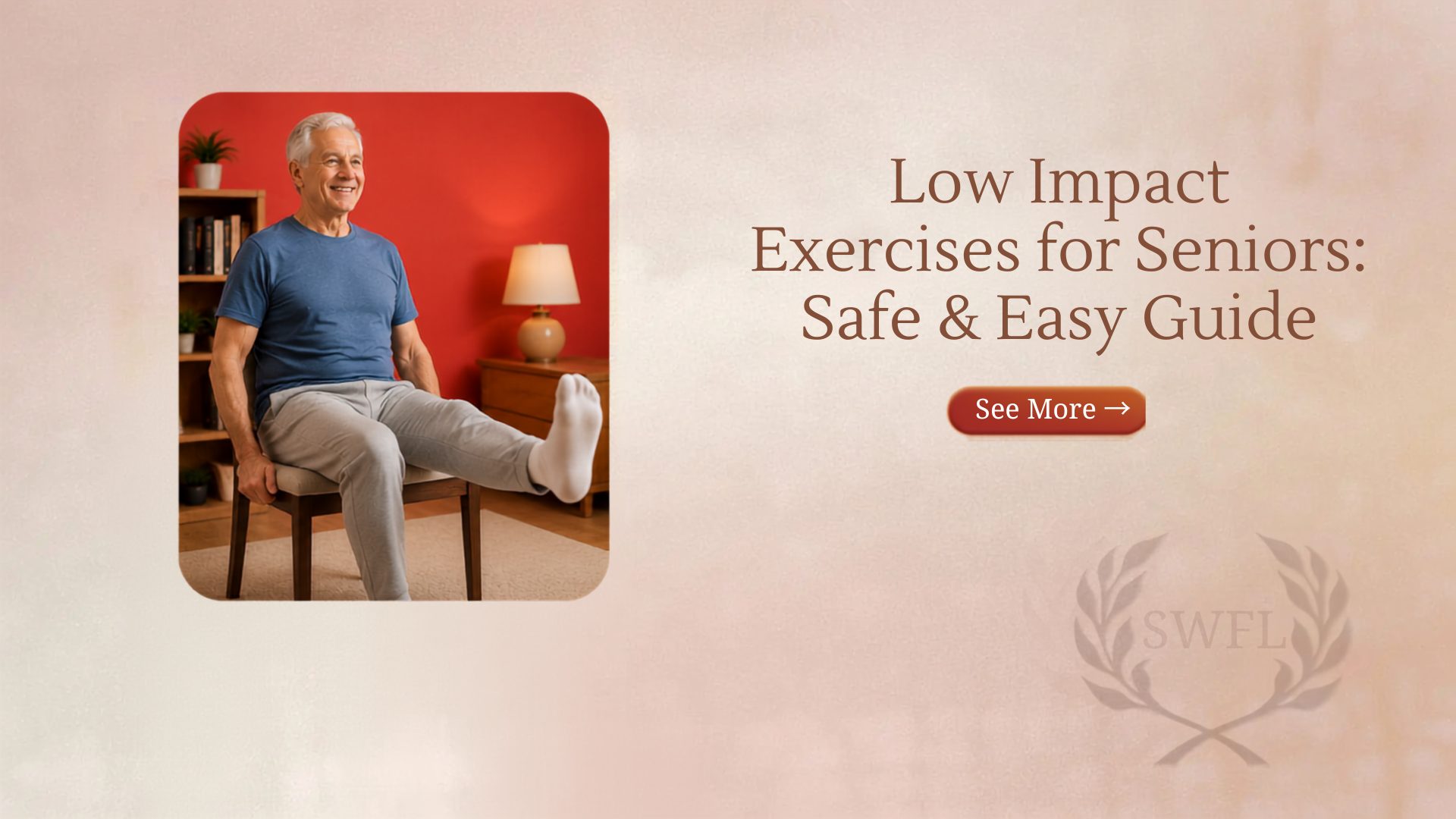
- Seated Leg Extensions
Here’s another easy chair exercise that gives your legs some attention.
Sit upright and place both feet on the floor. Slowly straighten one leg in front of you. Hold it for a moment, then lower it. Do the same thing with your other leg.
No need to do any kicking or swinging here.
The slower you move, the more control you have over yourself.
This particular exercise will prove helpful for those who don’t feel comfortable being on their feet for too long.
- Wall Push-Ups
You don’t need to get down on the floor to strengthen your upper body.
Stand facing a wall and place your hands against it at about shoulder height. Take a small step backward. Keeping your body relatively straight, bend your elbows and gently bring your chest toward the wall.
Then push yourself back.
That’s one repetition.
Another exercise that is less intense than push-ups is wall push-ups. They will allow you to exercise your chest, shoulders, and arms.
Make sure that you stand on an even surface, and the wall is steady.
- Calf Raises
As the name implies, these exercises help strengthen the calves. These muscles are engaged while we walk or climb up the stairs.
Stand behind a chair and hold its back. Slowly raise your heels so you’re standing on the balls of your feet.
Pause for a second. Then lower your heels back down. That’s it.
You don’t need to lift yourself very high. The goal is controlled movement, not seeing how many repetitions you can squeeze in.
If standing exercises aren’t comfortable for you, ask a physical therapist or healthcare professional about a seated alternative.
- Shoulder Rolls
Not every exercise needs to make you sweat.
If you’ve spent most of the morning sitting at a desk, watching television, or reading, your shoulders may appreciate a little movement.
Sit or stand comfortably. Slowly roll your shoulders forward, upward, and backward in a circle. Do a few repetitions in one direction and then reverse.
Keep the movement gentle. You should feel movement, not sharp pain.
It’s a small exercise, but adding little movements like this throughout the day can help keep your body from feeling so stiff.
- Heel-to-Toe Walking
Balance becomes more important as we get older, and this simple exercise gives you a chance to practice it.
Stand near a sturdy counter, railing, or another stable surface you can hold if needed.
Place one foot directly in front of the other, with the heel of the front foot close to the toes of the back foot. Take a few slow steps forward. Don’t rush.
If you feel unsteady, stop and hold onto your support.
Balance exercises should always be done in a safe environment. There is no benefit in trying to prove you can do something without support.
- Water Exercise
If you enjoy being in the water, swimming or water aerobics can be a wonderful way to exercise.
The water supports much of your body weight, which can make movement feel easier on the joints. At the same time, the water provides resistance that makes your muscles work.
You could try water walking, gentle leg movements, or a class designed specifically for older adults.
And there’s another advantage: it can feel more like a fun activity than a workout.
If you’re not a confident swimmer, choose a supervised program and stay in an appropriate depth.
- Stationary Cycling
You can get your legs and heart into shape without pounding your feet by using a stationary bike.
Start with low resistance and a comfortable pace. You shouldn’t feel like you’re racing anyone.
Some older adults may find a recumbent bike more comfortable because it offers back support and has a different seating position.
If cycling causes knee or hip pain, don’t simply push through it. Adjust the setup or talk with a healthcare professional about whether another exercise would be a better fit.
- Tai Chi
Tai chi may seem slow and that’s the whole idea.
It uses soft and fluid movement patterns along with breathing control and concentration.
It is a good form of exercise for elderly people because you can work on balance, coordination, flexibility, and body awareness without a tough and demanding physical workout.
You do not need to understand anything about it before beginning. Find a class that welcomes beginners.
Low Impact Exercises for Seniors at Home
One of the biggest misconceptions about exercise is that you need a gym. You don’t. Your living room may be enough.
A sturdy chair can help you perform seated marches, leg extensions, and supported exercises. A clear stretch of floor gives you space to walk. A wall can be used for gentle push-ups.
You could even create a simple 15-minute routine:
- Start with a few minutes of walking or seated marching.
- Do several seated leg extensions.
- Add wall push-ups.
- Try a few calf raises while holding a chair.
- Finish with shoulder rolls and gentle stretching.
That’s already a good amount of movement. And if 15 minutes feels like too much, start with five. There’s no prize for making your first workout unnecessarily difficult.
How Often Should Seniors Exercise?
The right amount of time you can exercise purely depends on your current fitness level, mobility, and overall health.
If you’ve been sitting most of the day or haven’t exercised in a long time, start small. Your body may need time to adjust.
You might take a short walk one day and do some chair exercises the next. As your stamina improves, you can gradually increase how long or how often you exercise.
A balanced routine can include aerobic activity, strength exercises, balance work, and flexibility exercises.
But don’t get caught up trying to create the “perfect” schedule.
Consistency matters more than perfection.
A gentle routine you actually enjoy doing three or four times a week is far more useful than an intense workout plan you abandon after two weeks.
Can Exercise Help With Everyday Stress?
Absolutely.
Exercise doesn’t have to be intense to give your mind a break.
A quiet walk outside can help you step away from whatever has been bothering you. Gentle stretching can give you a few minutes to slow down. Tai chi combines movement and breathing in a way that many people find calming.
Even putting on your favorite music and moving around your living room counts.
If you’re having a particularly stressful day, you don’t have to think about completing an entire workout. Get up and walk for a few minutes.
Sometimes, that’s enough to change the way the rest of your day feels.
Safety Comes First
“Low impact” doesn’t mean you should ignore your body’s signals.
If you’re starting a new exercise routine, especially after a long period of inactivity, it’s a good idea to discuss it with your healthcare professional if you have existing health concerns or significant mobility limitations.
While exercising:
- Start slowly.
- Keep a solid support nearby for balance exercises.
- Wear comfortable, supportive shoes.
- Keep your exercise area free of clutter.
- Drink enough water.
- Don’t exercise through sharp or worsening pain.
- Stop if you feel dizzy, faint, unusually short of breath, or unwell.
And if you’ve recently had surgery, suffered an injury, or are dealing with significant mobility issues, a physical therapist can help you choose exercises that are appropriate for you.
What Is the Best Low Impact Exercise for Seniors?
There is no such thing as ‘one perfect exercise’ for older adults.
For many people, walking is a great place to start because it’s simple and easy to adjust. Someone with limited mobility may feel more comfortable with chair exercises. Another person might prefer swimming, cycling, or tai chi.
The best exercise is the one that fits your body, your lifestyle, and your interests.
If you enjoy what you’re doing, you’re much more likely to keep doing it.
What Exercise Can Help Relieve Stress?
Walking, gentle stretching, tai chi, swimming, and other low-impact aerobic activities can all be useful ways to manage everyday stress.
If you want something calming, try a slow walk outside or a few minutes of gentle stretching while taking steady breaths.
If you enjoy being around other people, consider joining a senior exercise or water aerobics class. The social side of exercise can be just as enjoyable as the physical activity.
Keep Moving, Your Way
Getting older doesn’t mean you have to stop being active.
It may simply mean changing how you stay active.
You don’t need to run, jump, lift heavy weights, or spend hours at a gym. A walk around the block, a few chair exercises, some time in the pool, or a gentle tai chi class can all give your body a reason to keep moving.
Start where you are. If five minutes is all you can comfortably manage today, start with five minutes. Tomorrow might be six. The goal isn’t to beat your younger self. It’s to keep your older self strong enough to enjoy everyday life.