
Pain doesn’t have to stop motion completely. Recovering from surgery? Daily stiffness? Just moving matters. Simple shifts in posture quietly build strength. The breath slows as arms rise above knees. This kind of practice opens doors long thought closed. Little by little, control returns to the body.
And when regular exercise seems too much, too intimidating, or simply out of reach, chair yoga for seniors offers a calm but steady path forward, especially when following a printable chair yoga PDF for seniors routine at home.
This isn’t effort for effort’s sake. Instead, gentle motion keeps joints moving, muscles awake, balance better – all without strain. Confidence grows quietly through small, repeatable actions done sitting down
Free Printable Chair Yoga for Seniors: Getting Started
Chair yoga is a modified form of traditional yoga that allows individuals to perform poses while seated or using a chair for support. Because stability can be hard to come by, the chair offers steady support.
When standing feels uncertain, leaning on a backrest keeps motion safe. Designed with limited mobility in mind, it opens movement to more bodies. Rather than pushing past barriers, it gently works around them.
Starting slow, chair yoga focuses on soft motions rather than forceful effort. Not about pushing harder – just showing up regularly matters more. With every stretch guided by breath, it quietly builds strength while gently supporting joints. Awareness grows through consistency, not strain.
It’s especially popular among seniors, but it’s not limited to them. For people recovering from surgery, dealing with arthritis, or seeking gentle movement, this practice offers real support, especially with access to free chair yoga for seniors routines that can be followed daily. What makes chair yoga stand out is how easily it fits into your daily routine, and that no baseline of flexibility is required.
Printable Chair Yoga for Seniors Free: Download Your Routine
Click here to download your free printable chair yoga for seniors PDF
A free printable chair yoga for seniors routine allows older adults and caregivers to keep easy-to-follow exercises on hand, making daily practice simple whether at home or in a senior living community.
Not every chair yoga routine works the same for everyone. Depending on how someone feels, their health, or what they hope to gain, changes can be made easily. What matters most is fitting the practice to the person, not forcing the person into a fixed mold.
Some routines take it slow with stretches and are perfect for reducing stiffness. And for individuals dealing with chronic conditions like arthritis or osteoporosis, therapeutic chair yoga focuses on joint-friendly motions and pain management.
For those seeking improved blood flow and greater vitality, dynamic chair yoga incorporates continuous movement sequences. Those handling long-term issues such as stiff joints or weak bones might find that gentle motions while sitting help ease discomfort.
What keeps chair yoga going isn’t rigidity but the way it shifts with the person practicing, especially when using free printable chair yoga exercises for guidance.
Forward Bend
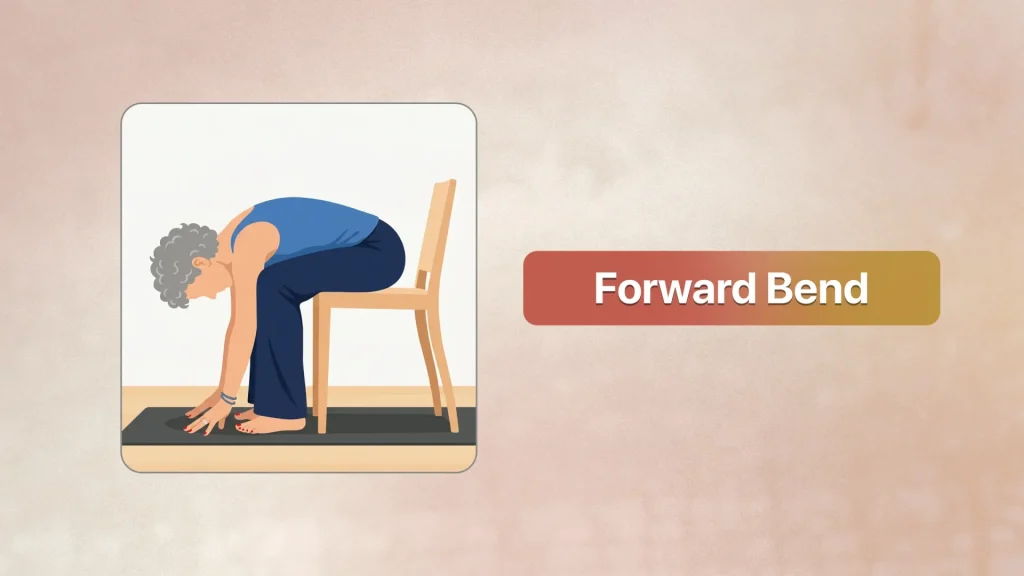
Forward bending while sitting feels calm, yet works well. No forcing-just a gradual stretch.
Steps:
- Sit upright.
- Slowly hinge forward from the hips and reach your toes or shins.
- Take some deep breaths and slowly go back.
- Take a deep breath and move forward again.
- Do this 5 times.
This movement reaches deep into the lower back, stretching tight spots left by long hours in chairs. Slow practice loosens stiffness while gently waking up stiff hips.
Breathing steadily becomes easier when you bend forward. This slowing down shifts your mind just like it stretches your body.
Leg Lifts
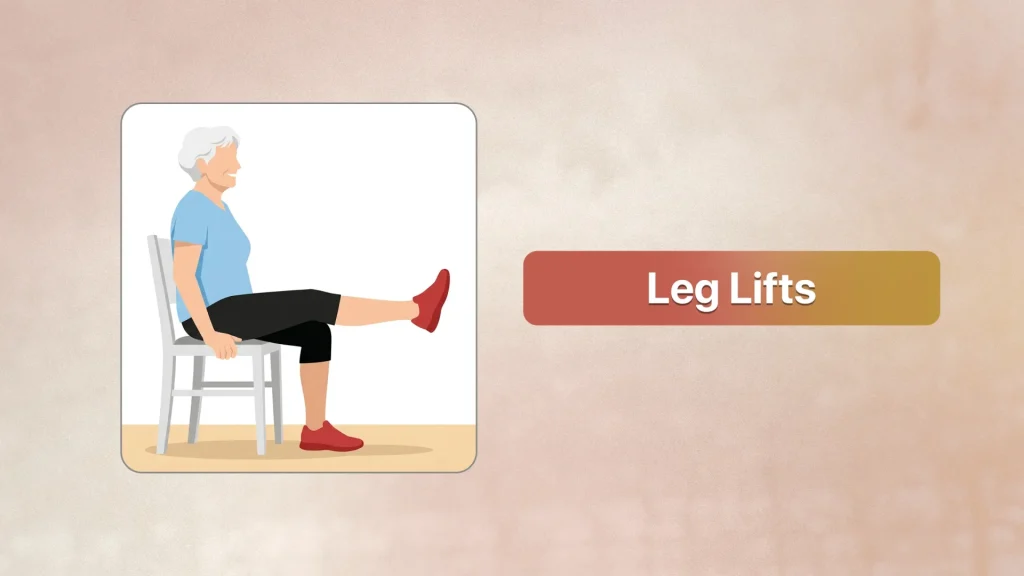
Lifting your legs might look basic, yet it quietly builds power.
Steps:
- Sit upright
- Extend one leg forward and apply a little bit of force.
- Bring the leg back and do the same to the other leg.
- Do this 5 times.
This engages the quadriceps, improves circulation, and supports knee stability. When seniors keep their legs strong, walking becomes easier and slipping or stumbling happens less often.
Try holding longer for more strength. Or go slow and tight to boost stamina instead. Either way, this effort shows up when climbing stairs. Even lifting groceries feels different after practice.
Seated March
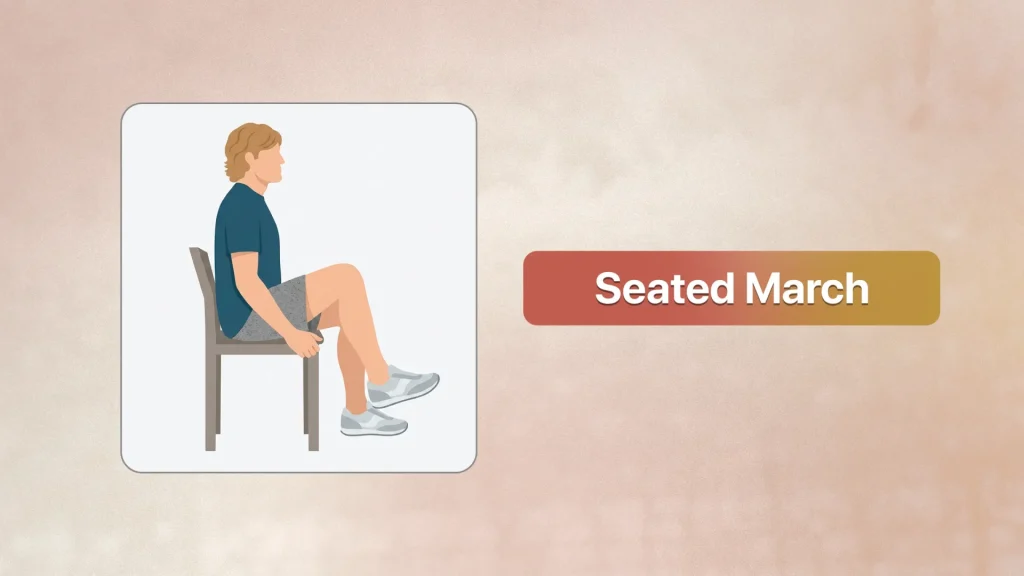
Think of this as a low-impact cardio boost.
Steps:
- Sit upright.
- Lift one knee like you are stepping forward.
- Then do the same to the other leg.
- March left, right, left, right, like you are in a parade.
- Do this 5 times.
A slightly faster heartbeat shows up, along with sharpened movement control and engaged hip muscles. When walking far isn’t possible, staying physically involved still happens through this method.
Surprisingly fun to get into. Try mixing in some movement, shift your speed, add a beat, wave an arm – and suddenly your whole body joins the act. Many seniors also follow a printable chair yoga for seniors free guide to stay consistent with their daily routine.
Cat-Cow Stretch
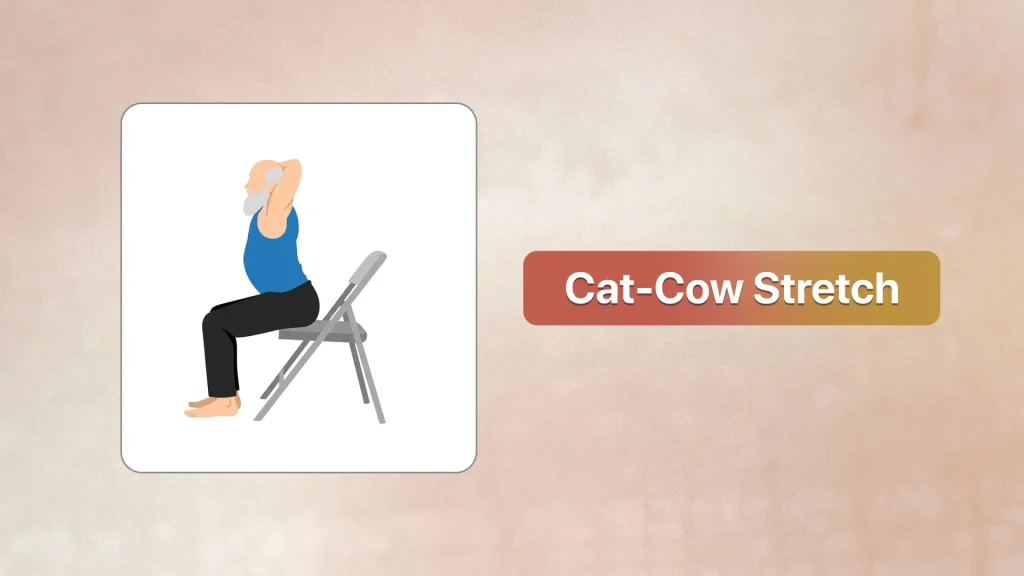
The seated cat-cow stretch focuses on spinal mobility.
Steps:
- Sit upright.
- Slowly inhale as you arch your back and lift your chest like a cow.
- Exhale as you round your spine and tuck your chin.
- Do this 5 times.
A soft rhythm here helps you sit straighter, eases tightness, while giving your spine steady support. Great for people stuck at desks most of the day.
Breathing guides the motion, bringing a quiet kind of stability that seniors often appreciate, as well as valuable physical benefits.
Neck Rolls
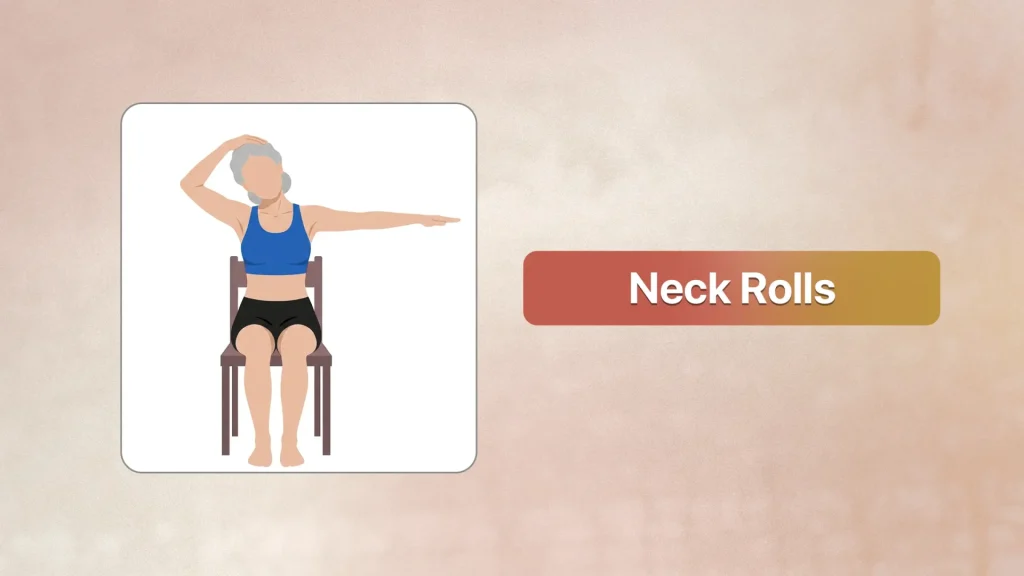
Tiny motions can ease tightness where your head meets your shoulders. It is a small movement with a big impact.
Steps:
- Sit upright.
- Keep your hands at your lap or your hips.
- Slowly roll your head clockwise in a circular motion.
- Do this 5 times.
- Now slowly roll your head in an anticlockwise circular motion.
- Do this 5 times.
It gently eases neck tension over time. Blood moves better when routines include this kind of slow release.
Slow, careful motion matters most. Take your time; it is not a sprint, but smooth steps that help you unwind.
Seated Shoulder Circles
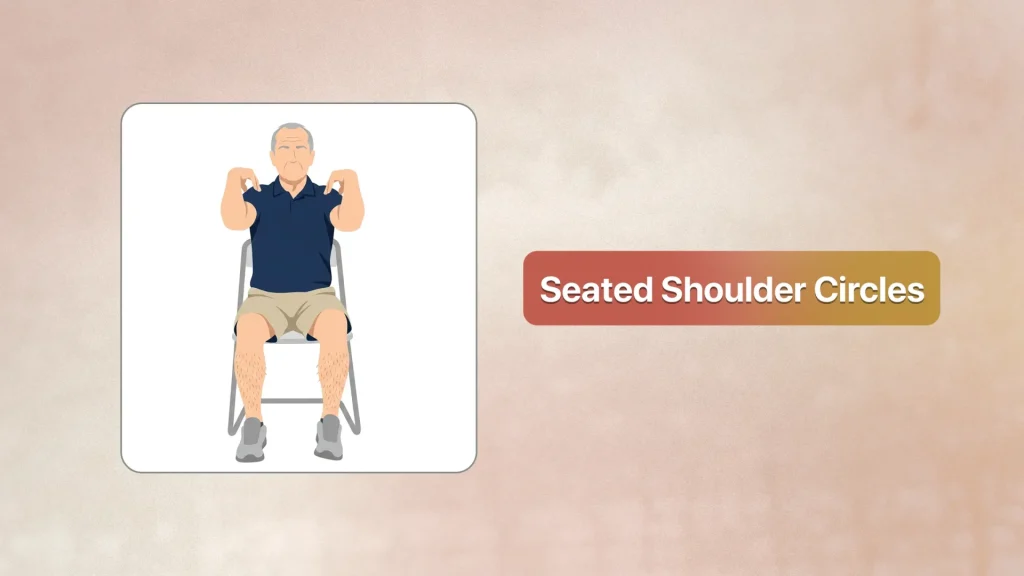
Most seniors experience shoulder tightness as they age; this move targets that exact issue. Moving the shoulders in circles, both ways, helps loosen stiff joints and ease built-up strain.
Steps:
- Sit upright.
- Keep your hands on your lap or your hips.
- Roll your shoulders forward.
- Do it 5 times.
- Now slowly roll your shoulders backward.
- Do it 5 times.
Fixing your stance gets easier when the chest stretches out, easing the slow forward lean that people often settle into.
Seniors who keep at it notice that overhead grabbing or picking up groceries starts to feel easier. Over time, those little actions just click without thought.
Seated Twists
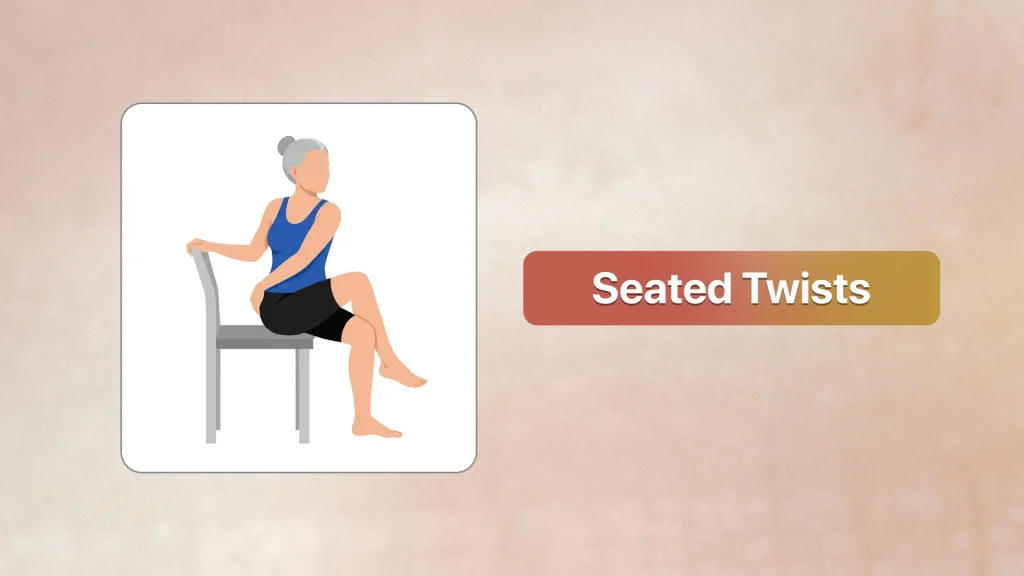
Twisting while seated strengthens your spine and core for better movement.
Steps:
- Sit upright.
- Twist your torso gently to one side while keeping your hips stable and hold for a few seconds.
- Now do the same to the other side.
- Do this 5 times.
Subtle movements here make a difference over time. One small shift at a time helps the body move better, keeps the gut working smoothly, and supports spine health.
Twisting gently enhances attention, letting people know their body’s range of motion. Not forcing anything keeps things safe while tuning into what the body allows.
Side Stretch
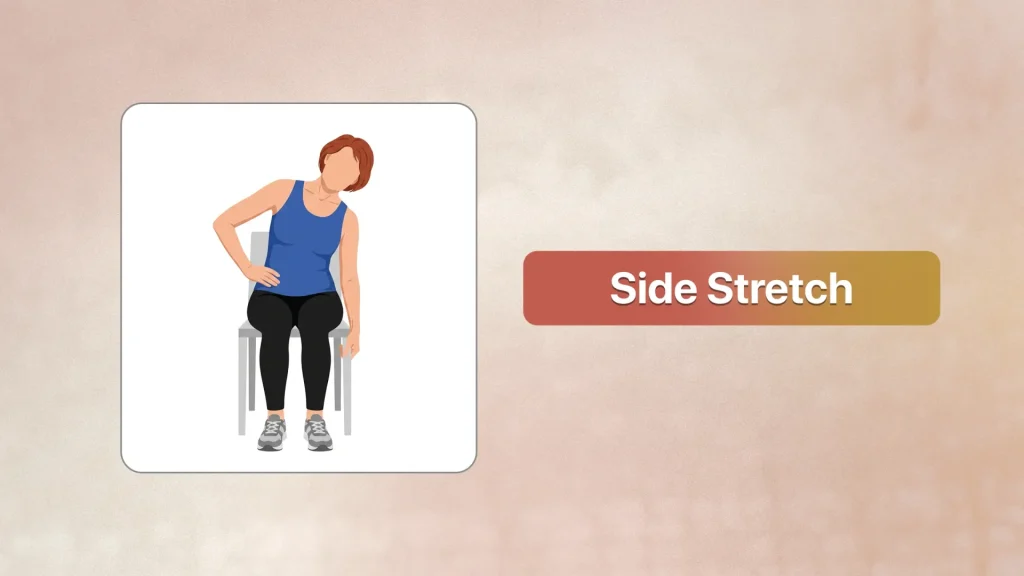
Side stretches loosen your body and help you to relax.
Steps:
- Sit upright.
- Keep your hands on your hips.
- Stretch one arm overhead, lean gently towards the other side, and hold the position for a few seconds.
- Now come back to your position.
- Do the same to the other side.
- Continue this 5 times.
When you move like this, your lungs get more room to work while the upper body loses its tightness. Seniors who are always sitting or stuck at desks most of the day find that it helps ease that locked-up feeling.
Slow growth matters more than sudden change. What counts is steady reach, not going too far too fast.
Hands Up
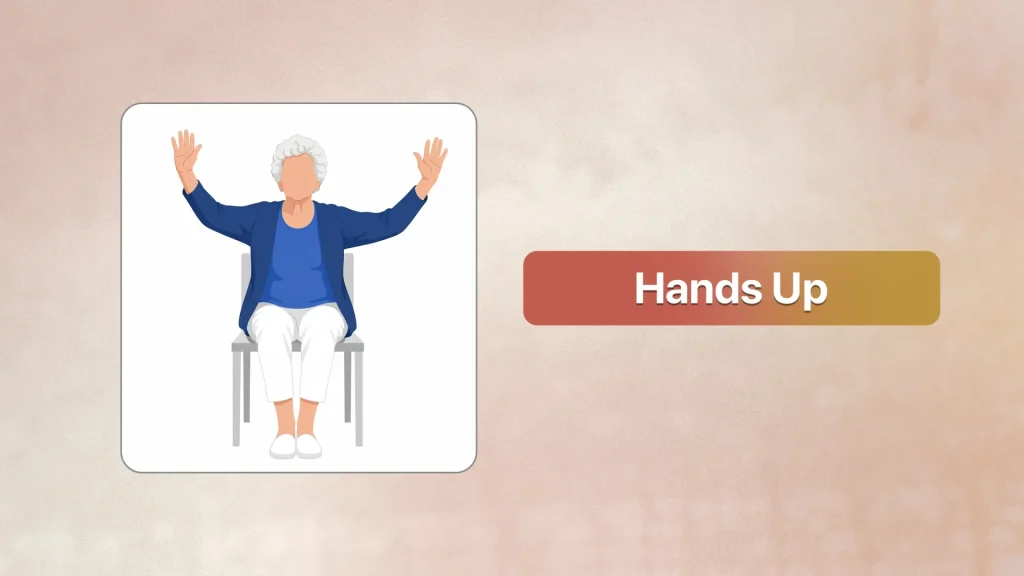
Raising both arms overhead may seem basic, but it’s a full upper-body stretch that releases tension in your body.
Steps:
- Sit upright.
- Raise both arms overhead.
- Stretch your body.
- Do this for a few seconds, then take a break, and repeat 5 times.
Breathing deeply helps you sit up straighter while your lungs expand. As the breath slows, energy rises, and tension slips away.
For many seniors, even this simple movement can feel like a reset, lifting not just the arms, but overall energy.
Chair Flexing Foot
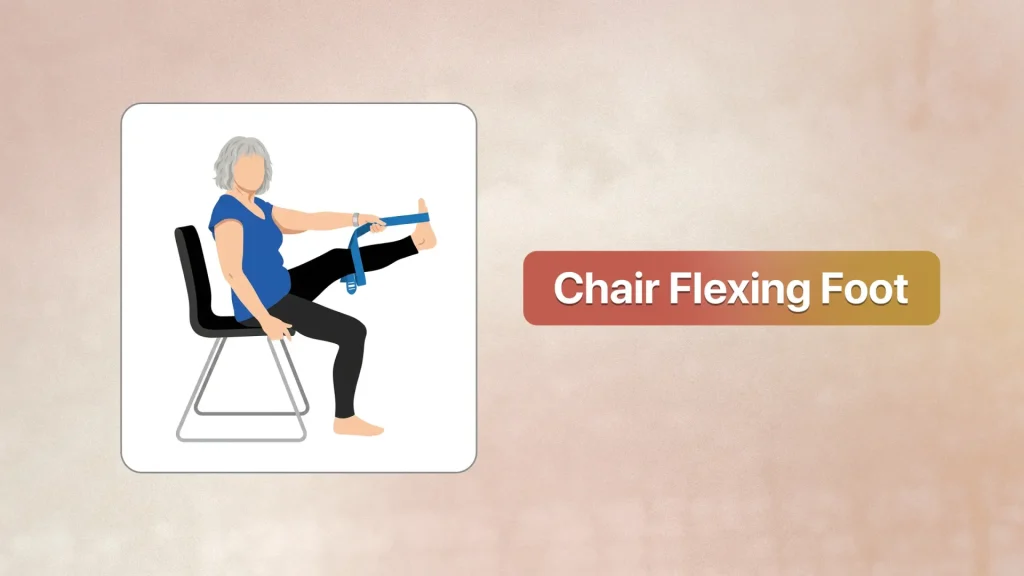
This exercise focuses on ankle mobility and movement enhancement.
Steps:
- Sit upright.
- Stretch your legs forward.
- Now slowly stretch your toes up and down.
- Do this 15 times.
Better blood flow occurs with increased movement, while puffiness tends to decrease at the same time, and helps with stability. Standing steady and moving without risk relies on ankles that bend easily yet hold firm.
Spending lots of time seated? This helps those dealing with poor blood flow.
Heel Raises
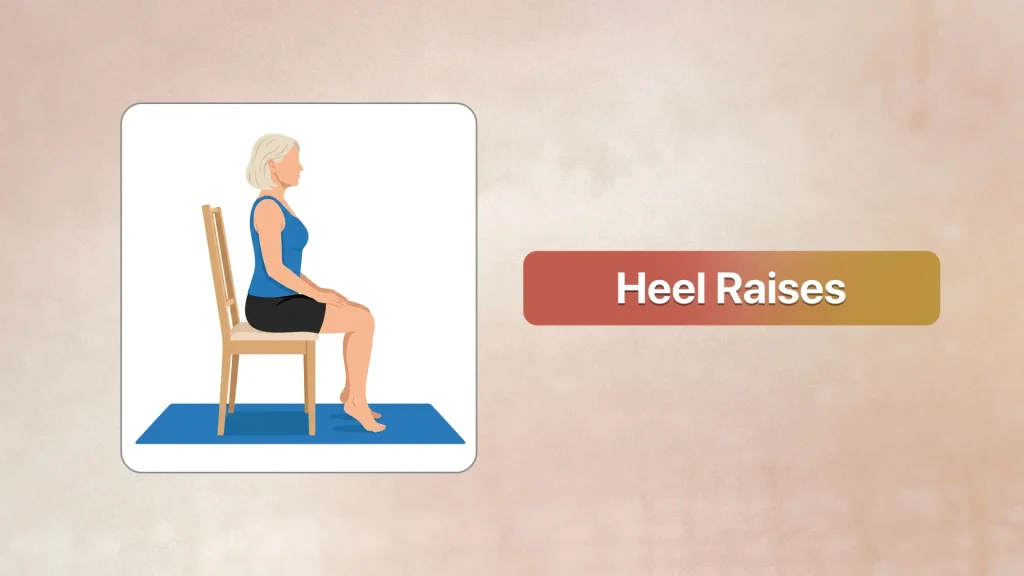
Heel raises provide extra balance to the legs, and the movement helps seniors move smoothly and steadily.
Steps:
- Sit upright.
- Stretch your legs forward.
- Now lift your heels off the floor, keeping your toes down.
- Do this up and down 15 times.
Walking better begins here, and steady practice sharpens control. Strength grows quietly, focused on what truly keeps you moving.
With regular practice, standing taller becomes easier, while balance improves. Later on, slips decrease as body control strengthens day by day.
Seated Mountain Pose
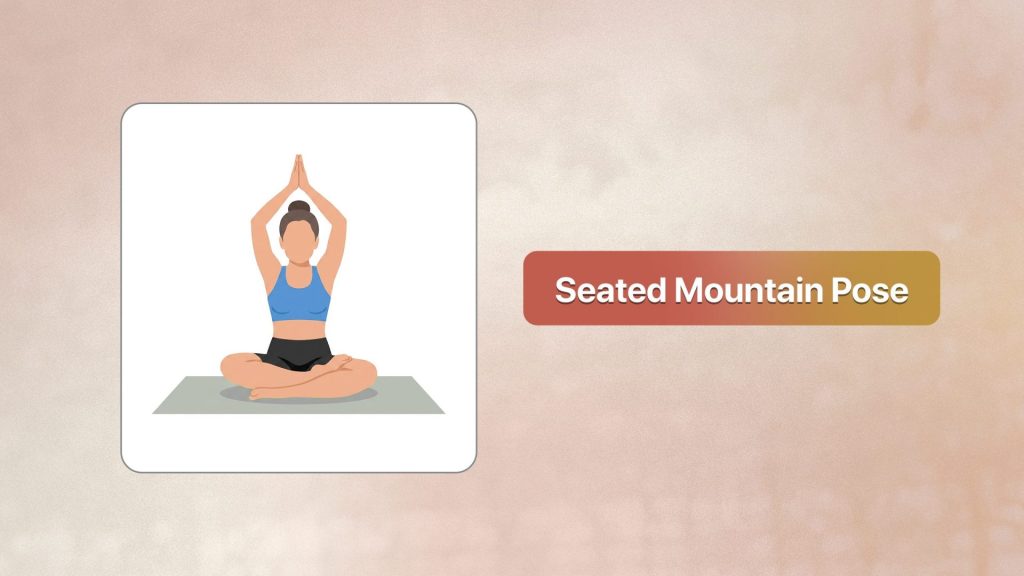
This isn’t really just about motion; it leans on stance instead.
Steps:
- Sit upright.
- Sit tall, with shoulders relaxed and spine aligned, and hold steady.
- Hold the position for a few minutes.
Standing tall here wakes up your sense of where your body is. Though quiet on the surface, there’s steady work happening underneath, deep inside the stomach and along the spine.
That position holds more than posture. Sitting up straight on purpose changes sensation, shifts movement, and alters breath without effort.
Having a printable chair yoga for seniors free guide makes it easier to follow the same routine every day, helping build consistency, improve mobility, and support long-term wellness.
Chair Yoga for Seniors Free Printable: Why It Works
Chair yoga delivers results that go beyond the obvious. Physically, it improves flexibility, strengthens muscles, and enhances joint mobility. These are foundational elements for maintaining independence as you age.
It also supports balance and coordination, two factors that significantly reduce the risk of falls. Even small improvements in these areas can make a meaningful difference in daily life.
Circulation gets a boost as well. Gentle movements help blood flow more efficiently, reducing swelling and supporting cardiovascular health.
Peace of mind shows up quietly here. Movement paired with breath slows things down, easing tension that builds through the days. Structure appears, but it does not demand perfection; following something like a 28-day chair yoga for seniors routine can make consistency easier.
Something shifts when movement feels safe. Trust returns slowly, quietly, as steps come easier. Without worry, actions flow into ordinary moments – carrying things, climbing stairs, meeting friends. A quiet sureness grows, not loud, just present.
Maybe the quietest perk hides in plain sight. Open doors. Skip monthly fees, skip bulky machines, skip confusing steps. A seat near you works fine. Add time that matters. Done.
Using a chair yoga for seniors free printable routine encourages seniors to stay active at their own pace, making gentle movement a regular part of their daily lifestyle.
Chair yoga proves that staying active doesn’t have to be complicated. It just has to be consistent.