

There’s a point when you start noticing that your body isn’t quite keeping up with you. You reach for something on a shelf, and your shoulder feels stiff. You get up from the couch and need a little push from your hands. Even carrying a couple of grocery bags can leave your arms feeling tired.
It’s not necessarily a big change. Sometimes, it’s just a handful of little things that weren’t there before.
And while getting older does come with its share of changes, losing strength doesn’t mean you have to stop being active. Your muscles still need to be used, and they can still get stronger.
That’s why resistance training for seniors is worth considering. It doesn’t involve running on a treadmill for an hour or lifting weights that look like they belong in a professional gym. You can do quite a bit with a couple of light dumbbells, an elastic band, and a chair.
In fact, you might already have most of what you need at home.
What Happens When Seniors Stop Working Their Muscles?
Think about how much your legs do in an ordinary day. They help you get out of bed, walk to the kitchen, climb stairs, and stand long enough to prepare a meal. Your arms and shoulders aren’t exactly sitting idle either.
When muscles gradually lose strength, these everyday activities can become harder.
Age-related muscle loss is known as sarcopenia. It happens gradually, and it can affect physical strength, mobility, and balance. But it isn’t a reason to assume that nothing can be done.
A 2024 review of 15 randomized controlled trials involving 511 older adults found improvements in muscle strength and physical performance following resistance training.
That’s encouraging, particularly for someone who thinks they’ve missed their chance to start exercising.
You don’t necessarily need to notice bigger muscles or a dramatic change in your appearance. Perhaps you’ll simply find it easier to carry your laundry upstairs or get out of your favorite chair. Those changes are useful, too.
Regular strength exercises can also support bone health and help maintain the physical abilities needed for independent living.
How Much Exercise Is Enough?
Let’s get one thing out of the way: you don’t need to spend every morning exercising.
The CDC recommends that adults aged 65 and older aim for 150 minutes of moderate-intensity aerobic activity each week. It also recommends strength exercises at least twice a week and activities that improve balance.
If you haven’t exercised in a long time, don’t look at those numbers and feel discouraged. You can work toward them gradually.
For strength training, two days a week is a reasonable starting point for many beginners. Leave time between sessions for your muscles to recover.
A week could look something like this:
| DAY | ACTIVITY |
| Monday | Light Strength Exercises |
| Tuesday | Walking |
| Wednesday | Rest |
| Thursday | Resistance Band Workout |
| Friday | Gentle Stretching |
| Saturday | Gardening or a Leisure Walk |
| Sunday | Rest |
There’s plenty of room to change this around. Maybe you prefer exercising on weekends, or perhaps mornings are when you feel most energetic. That’s fine. Pick something you can realistically stick with.
7 Exercises to Try Without Buying Expensive Equipment
You don’t need to fill a spare bedroom with fitness equipment. Start with a sturdy chair and some light resistance. If you have dumbbells or exercise bands already, even better.
Here are seven movements that can be included in a beginner-friendly routine.
- Seated Bicep Curls
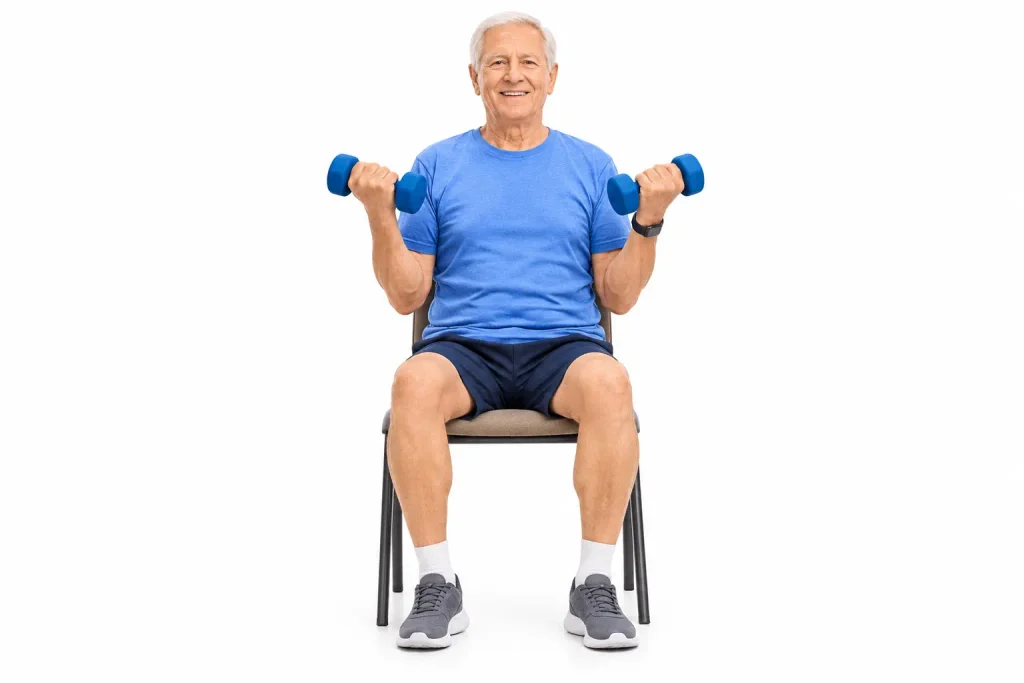
This is one of the easiest exercises to get familiar with, particularly if you’re new to using weights.
Your biceps are the muscles at the front of your upper arms. They help whenever you lift something toward your body, whether that’s a shopping bag or a small household object.
Sit comfortably with your feet flat on the floor. Hold a light dumbbell in each hand, keeping your elbows close to your sides. Bend your elbows and bring the weights toward your shoulders. Lower them slowly.
Try 8-10 repetitions.
No dumbbells at home? Small water bottles can work as a light substitute. You don’t have to buy everything before getting started.
- Seated Shoulder Press
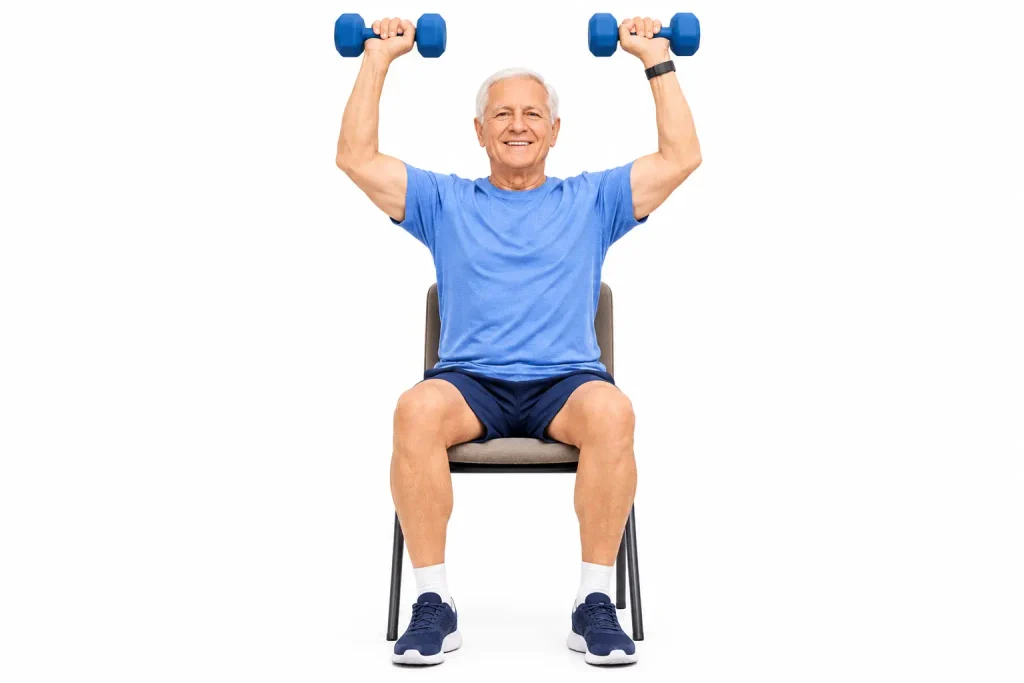
Reaching for a cup in an overhead cabinet shouldn’t have to feel like a major effort. Shoulder presses help work the muscles involved in lifting and reaching.
Sit with your back supported and hold light dumbbells near shoulder level. Slowly push the weights upward, then bring them back down.
Start with 8 repetitions.
If your shoulders feel stiff, don’t force the movement. Use a smaller range or ask a physical therapist whether another exercise would suit you better.
- Seated Resistance Band Rows
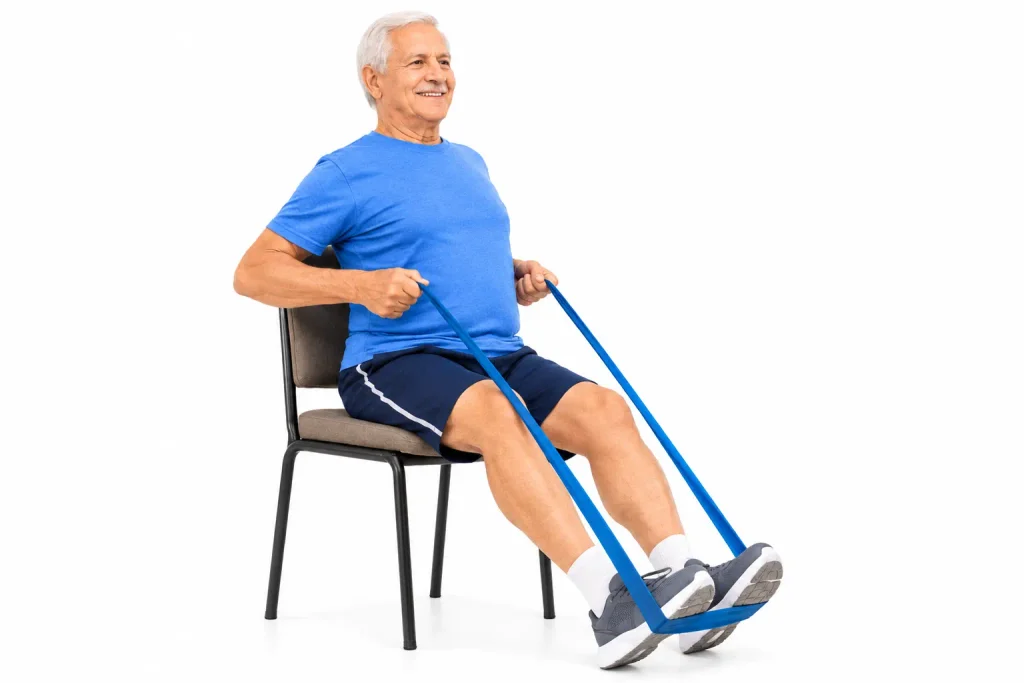
Here’s a good one for your back.
Sit on a sturdy chair with your legs extended comfortably. Loop a resistance band around your feet and hold one end in each hand. Pull your elbows backward, bringing your hands toward your waist. Slowly release the tension.
That’s it.
Try 8-12 repetitions.
This is one of the more practical stretch band exercises for seniors, especially if standing workouts aren’t particularly comfortable. Just check that the band is secure before you start pulling.
- Chair Squats
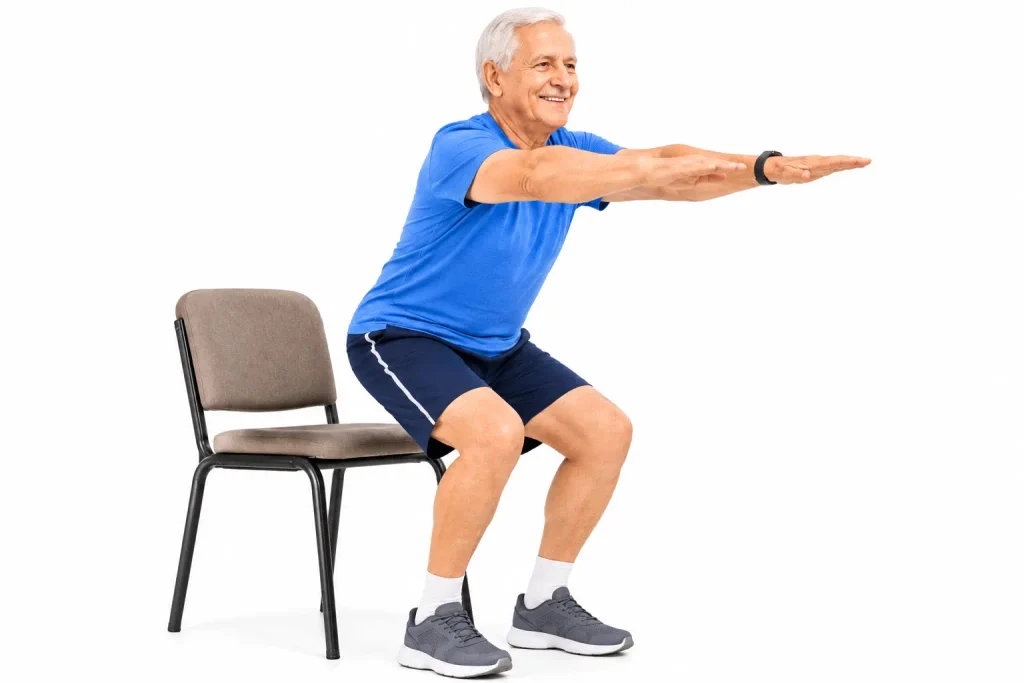
Getting out of a chair is something we do without thinking. But when the muscles in your legs become weaker, even that movement can take some effort.
Chair squats help work your thighs, hips, and buttocks.
Place a sturdy chair against a wall. Sit with your feet flat on the floor, lean forward slightly, and push through your feet to stand. Slowly lower yourself back onto the chair.
Begin with 5-8 repetitions.
If you need to hold the armrests, go ahead. You can reduce the support as your strength improves, provided you can do so safely.
- Seated Leg Extensions
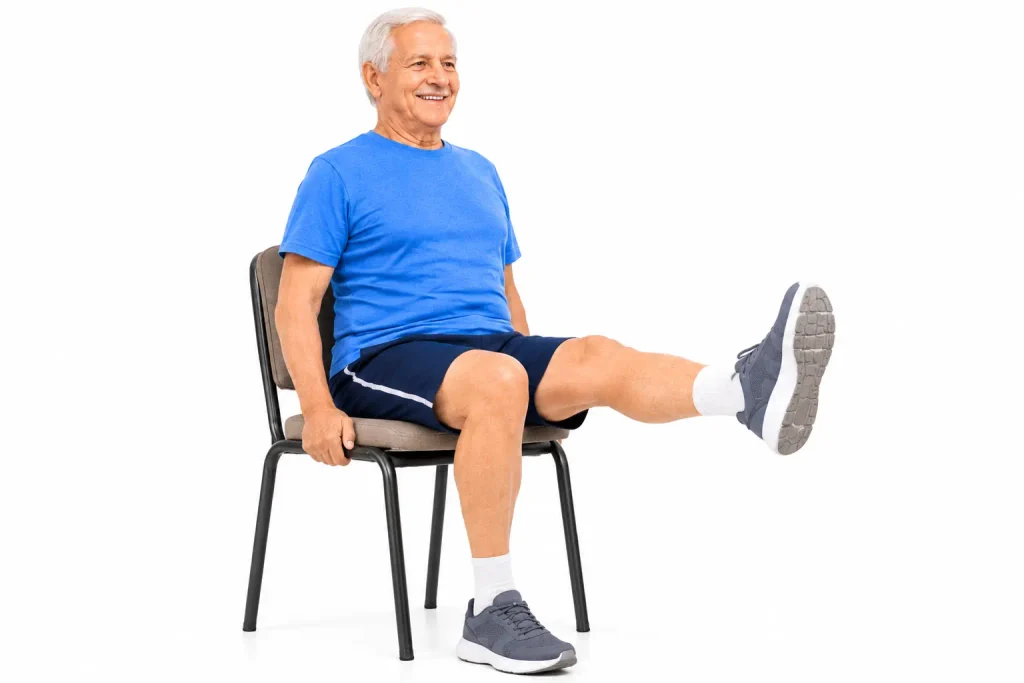
Not everyone feels comfortable doing standing exercises, and there’s no reason to force them.
For this movement, sit upright and slowly straighten one knee until your leg is comfortably extended. Pause briefly, then lower your foot. Do the same with the other leg.
Try 8-10 repetitions per side.
Leg extensions work the quadriceps, the muscles at the front of your thighs. If you have knee pain, check with a healthcare professional before adding this movement to your routine.
- Resistance Band Chest Press
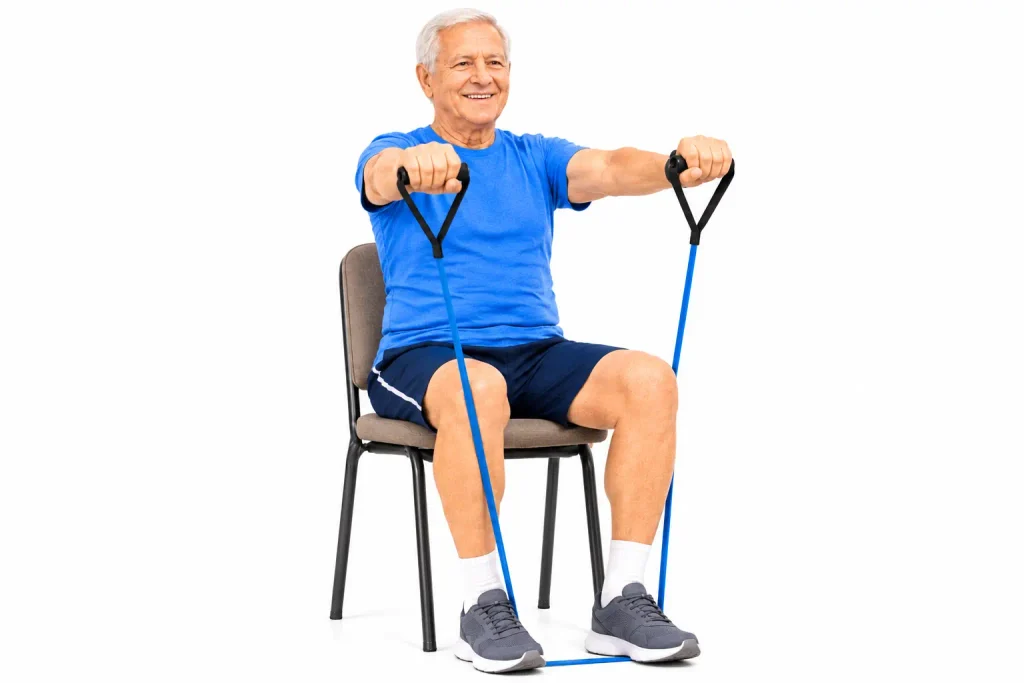
You use your chest and arms for all sorts of everyday movements, including pushing open doors and moving objects around the house.
To try this exercise, sit upright with a resistance band positioned behind your upper back. Hold one end in each hand near your chest. Push your hands forward slowly and bring them back.
Aim for 8-10 repetitions.
This is another useful exercise with bands for seniors who want to work out without handling dumbbells. Start with a light band so you can control the movement comfortably.
- Standing Calf Raises
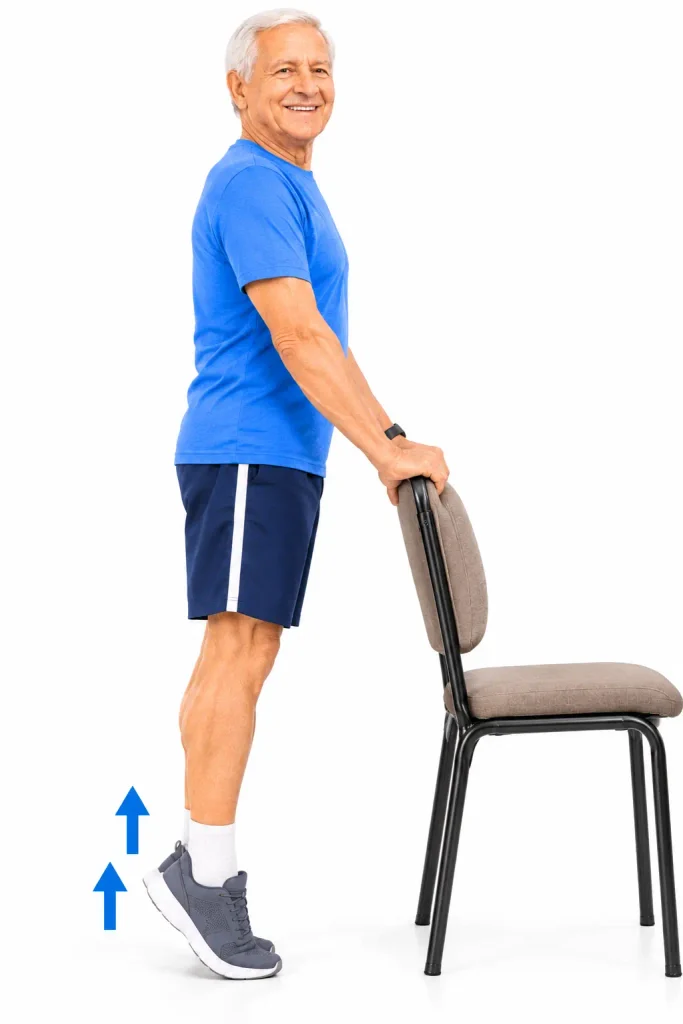
Your calves help you walk, step onto curbs, and move around throughout the day. Yet they’re often forgotten when people put together a home exercise routine.
Stand behind a sturdy chair and hold its back. Slowly lift your heels, rising onto your toes. Pause for a moment and lower them.
Try 8-12 repetitions.
Keep your movements slow. If your balance is uncertain, hold the chair firmly and have someone nearby.
Should You Buy Dumbbells or Resistance Bands?
If you’re planning to exercise at home, this is probably the next thing you’ll wonder about.
The good news is that you don’t need a complete set of equipment.
Dumbbells are useful because you know exactly how much weight you’re lifting. You can start with a light pair and move to heavier weights when your muscles are ready. Some good dumbbell resistance exercises include bicep curls, shoulder presses, and supported rows.
Resistance bands are a little different. They’re easy to store, don’t take up much room, and come in different resistance levels. You can use them for seated rows, chest presses, and several arm and leg movements.
One thing worth remembering: a band becomes harder to pull as it stretches. Don’t start with a band that’s too strong just because you think it will give you a better workout.
If you’re unsure, try a light band first. You can always introduce dumbbells later.
A Few Things to Remember Before Your First Workout
Starting slowly might not sound very exciting, but it makes sense. Your body needs time to get used to movements it hasn’t done regularly.
Before exercising, spend around 5-10 minutes warming up with gentle walking or easy arm movements. Keep some water nearby, wear comfortable shoes, and make sure the area around you is clear.
Don’t rush through repetitions. Take breaks whenever you need them, and breathe normally while lifting and lowering weights.
Also, resistance bands should be checked for tears or worn-out areas before every session.
If you have osteoporosis, arthritis, heart problems, a recent surgery, or balance difficulties, speak with your healthcare provider before starting. Stop if you experience chest pain, dizziness, sharp pain, or unusual shortness of breath.
A physical therapist can help modify exercises if certain movements are uncomfortable.
Does Resistance Training Make Everyday Life Easier?
That’s really the question, isn’t it?
Most people aren’t interested in spending their retirement worrying about how many repetitions they can complete. They want to enjoy their days without feeling limited by their physical strength.
The National Institute on Aging recommends muscle-strengthening activities as part of maintaining physical function and independence in older adults.
Research also points to improvements in physical abilities. A 2025 systematic review of 12 randomized controlled trials involving older adults reported improvements in lower-body strength, balance, flexibility, and coordination following resistance exercise programs.
Of course, exercise doesn’t guarantee that someone won’t fall or experience mobility difficulties. But maintaining strength, along with practising balance, can help support safer movement.
And progress doesn’t always look like something you’d expect.
Maybe you can stand up without pushing against the armrests. Maybe carrying groceries feels less tiring. Or perhaps you simply feel more comfortable moving around the house.
You might not even notice the change immediately. Sometimes it’s only when you look back that you realize a particular task has become easier.
Start With What Feels Comfortable
You don’t have to turn exercise into a big project.
Try a few bicep curls while watching television. Practise standing up from a chair a few times. Take a walk when the weather is pleasant. Once these movements become familiar, you can gradually add more exercises.
That’s what makes resistance training for seniors useful. It doesn’t have to be complicated, and it doesn’t require a complete lifestyle change.
Your body may not move exactly the way it did twenty years ago. That’s okay. There’s still plenty you can do to look after your strength and keep enjoying the activities that matter to you.
FAQs
Is resistance training safe for seniors?
It can be safe for many older adults when exercises are chosen according to their physical abilities. Start with light resistance and avoid movements that cause pain. Those with existing health conditions should speak with a healthcare professional before beginning.
How many days a week should seniors do resistance exercises?
The CDC recommends strength-training activities at least two days a week. Beginners can start with shorter sessions and gradually increase their activity.
Are resistance bands better than dumbbells for seniors?
Both can help improve strength. Bands are lightweight and adjustable, while dumbbells offer a consistent amount of resistance. The choice depends on comfort, mobility, and individual fitness levels.
Can seniors build muscle after 70?
Yes. Older adults can still improve muscle strength through regular resistance exercise. Adequate nutrition and recovery are important parts of the process.
What is the best time of day for seniors to exercise?
There isn’t one perfect time. Some people prefer exercising in the morning, while others feel better in the afternoon. Choose a time when you feel comfortable and can exercise without rushing.