
Being active does not mean running marathons and lifting heavy weights. It is all about maintaining movement in the body, the joints, and being able to be confident. And the best part? It does not require a gym membership or any fancy equipment to make it happen. Bodyweight exercises for seniors are easy, efficient, and ideal for older people who want to remain in control, healthy, and active in their daily activities.
Movement is freedom. The ease of getting on and off the floor, climbing a high shelf, walking steadily outside in a stable way, or running around with grandkids, all that is the strength, balance, and movement. Bodyweight exercises for seniors are meant to facilitate just that. They are friendly, safe when implemented properly, and strong enough to make your body feel capable and alive. For many seniors, these routines also serve as beginning exercises for seniors, helping them gradually build strength and stability without putting too much pressure on the joints.
We should take a look at some of the most effective bodyweight exercises for seniors and how each of them helps you feel good and active every day.These bodyweight exercises for retirees are designed to improve strength, flexibility, and balance using simple movements that can easily become part of a daily routine.
Squats (Chair Dips)
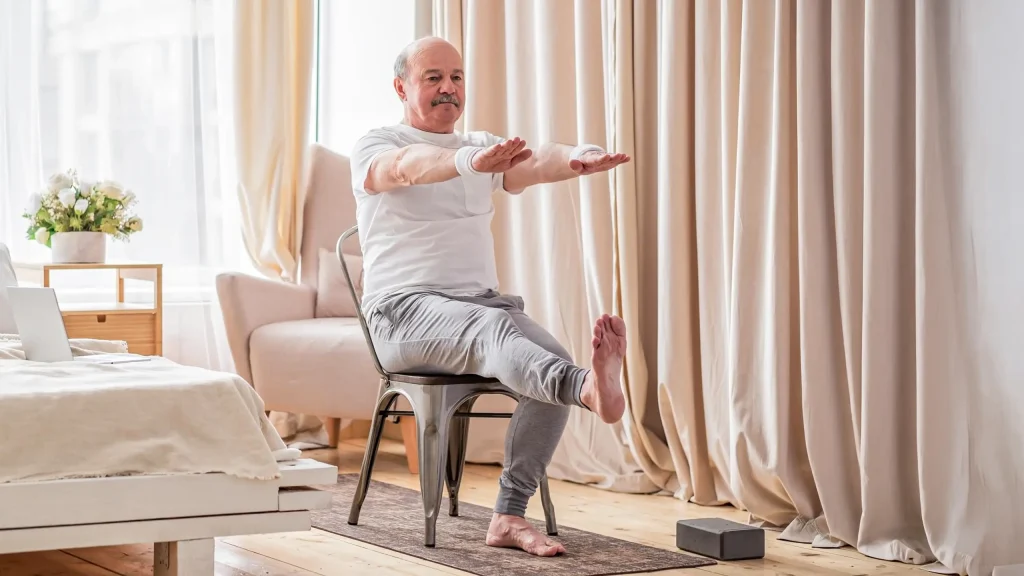
One of the most useful exercises would be squats. When you sit down or stand up out of a chair, you are squatting. This movement also builds strong legs, hips, and core, all of which are critical in everyday autonomy.
A hard chair behind you will make it seniors-friendly. Keep your feet at a shoulder distance. Gradually squat down to the chair, gently lean on it, and return to your feet without necessarily sitting. In case that is difficult, just sit and stand in a regular rhythm.
Chair dips enhance stability and decrease lower-body muscle strength. They are also effective in preventing knee and hip problems, as the muscles supporting them are strengthened. Well-developed legs imply the ease of movement during the day. Squats are also one of the most effective calisthenics for seniors, because they use your own body weight to build strength without equipment.
Standing on One Foot
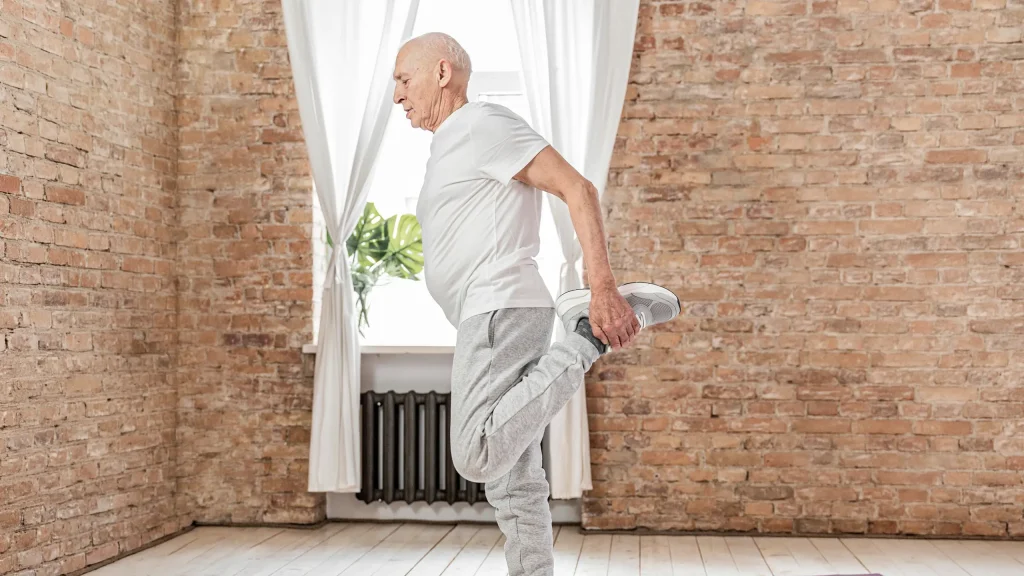
Everything is about balance as we grow older. Even minor changes in balance will lead to a drastic decrease in the risk of falls.
Stand straight on a solid surface, such as a chair or a counter. Hold on to the chair or counter, raise one foot, and hold the position for 10-30 seconds. Switch sides. Do 3 sets every day.
This is a simple exercise that will engage your core, tighten the stabilizing muscles in your legs and ankles, and improve your coordination. Eventually, you will be confident that you can walk on a mismatched surface or use stairs.
Balance movements like this are often recommended as a safe exercise for seniors over 60 who want to improve stability and reduce the risk of falls.Many bodyweight exercises for grandparents focus on improving balance and coordination, making everyday movements safer and more comfortable.
Calf Raises to Toe Lifts
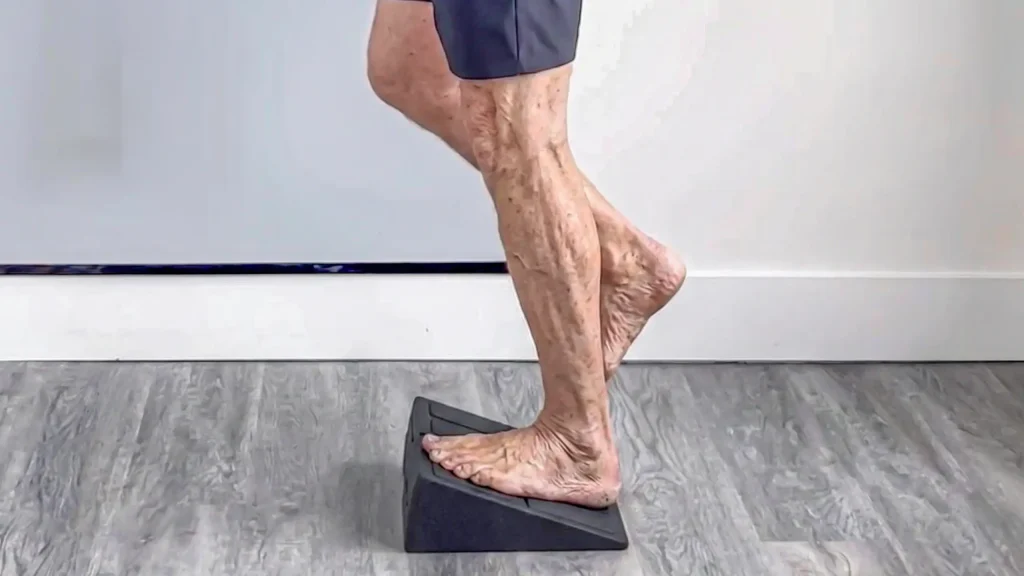
The calves are important for walking, climbing stairs, and maintaining balance.
Stand straight with the help of a counter or chair. Gradually place your heels up in the air in order to stand on your toes. Stop for 5 seconds, and bring your heels down again. Additionally, to make it more difficult, raise your toes and keep your heels flat.
This combination strengthens the lower legs, front, and back. Good calves enhance walking stamina and allow one to avoid the feeling that one’s legs are heavy at the end of the day.
Countertop Pushups
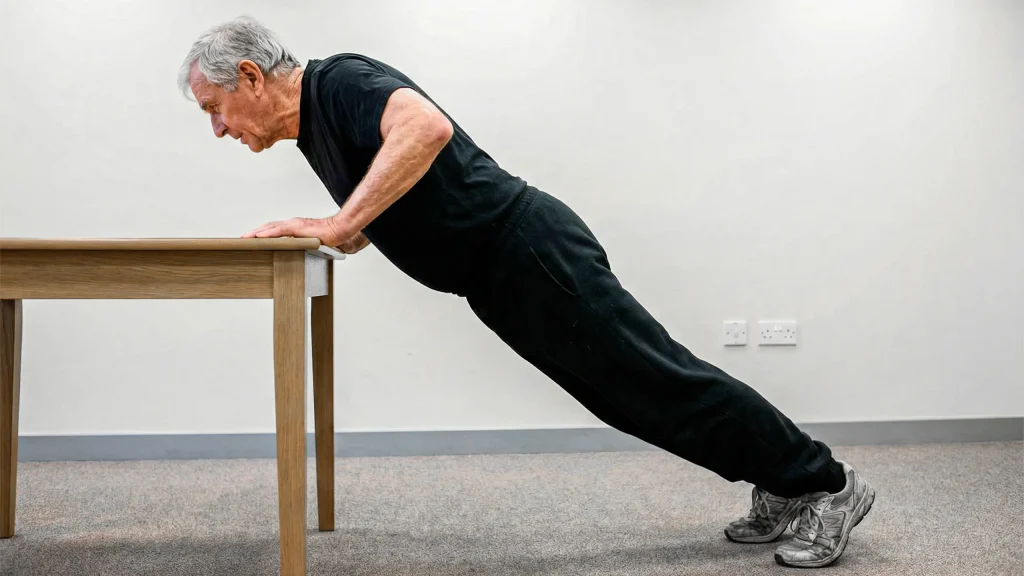
Push-ups do not necessarily have to be done on the floor. A great strength training exercise is the countertop push-up, which is safe.
Facing a kitchen counter or a hard surface. Your hands are to be placed on the counter at shoulder-width apart. Draw back your feet a little, but do not bend your body. Bend your arms to move your chest down to the counter, then push it up. Do 10 push-ups, take a 1-minute break, then repeat 3 times.
It is a workout that builds your chest, shoulders, and arms. It also works best for your core and your posture. Daily tasks such as transporting groceries or opening heavy doors would be made easier with stronger upper-body muscles.
Movements like this exercise act as a gentle introduction to weight training for seniors over 70, helping build upper-body strength safely without lifting heavy weights. If you’re wondering what experts recommend for bodyweight exercises for someone over 60, low-impact movements like countertop push-ups, chair squats, and balance exercises are often excellent starting points.
Arm Circles
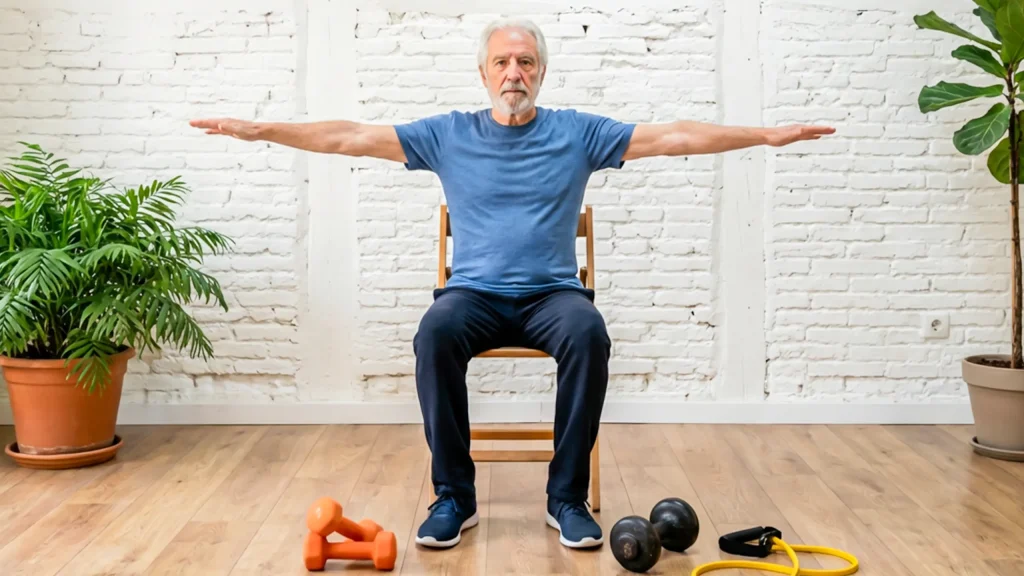
Arm circles are easy and a very good exercise for endurance and shoulder mobility.
Stand or sit straight with your arms stretched out to your sides. Draw little circles forward for 20 seconds and turn backwards for 20 seconds, and repeat 3 sets.
This flow enhances shoulder flexibility, improves circulation, and increases range of motion. It comes in particularly handy when one has to stay in good physical shape to reach overheads.
Back Turns
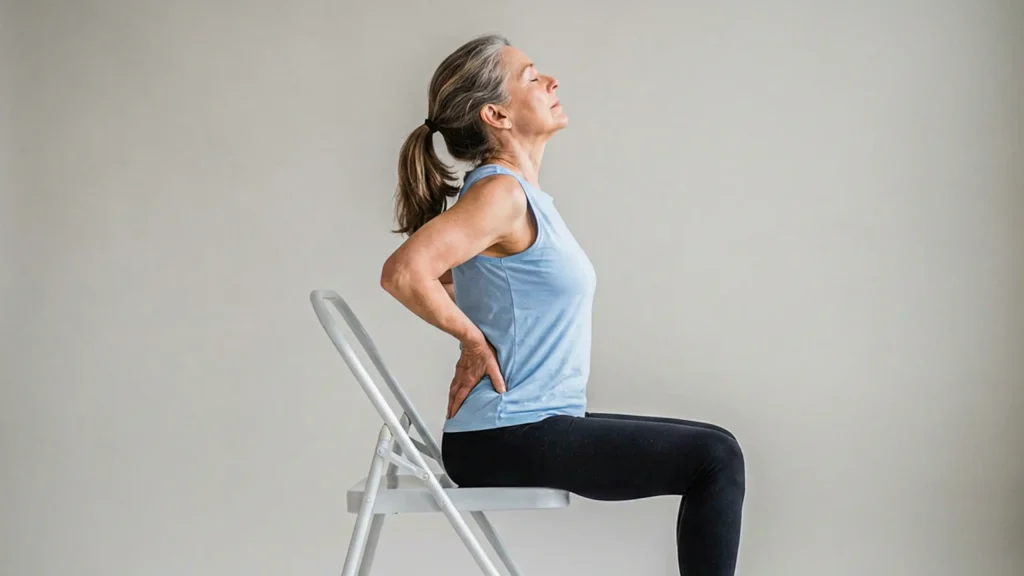
Comfort and ease of movement require that the spine be mobile.
Sit on the chair keeping your feet straight to the floor. Turn your upper body softly to one side, keeping the back of the chair slightly in place. Wait a few seconds and go back to the centre and change sides.
Back turns enhance the flexibility of the spine and make it less stiff. They assist with day-to-day activities, such as swiveling to see the back of a table.
Side Bends
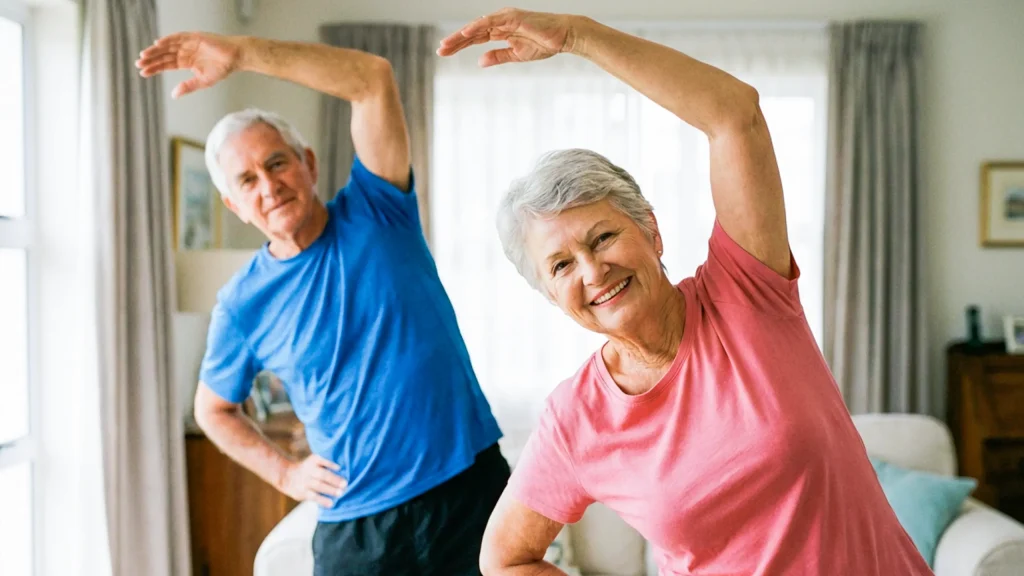
Side bends maintain your torso’s flexibility and build your oblique muscles.
Stand or sit tall. Bend your upper body sideways without leaning forward. Go back to the center and start over on the other side. Repeat it for 10 minutes every day.
This movement aids in improved positioning and lower back pain. Being flexible on the sides results in effortless and more comfortable reaching and bending.
Lateral Steps
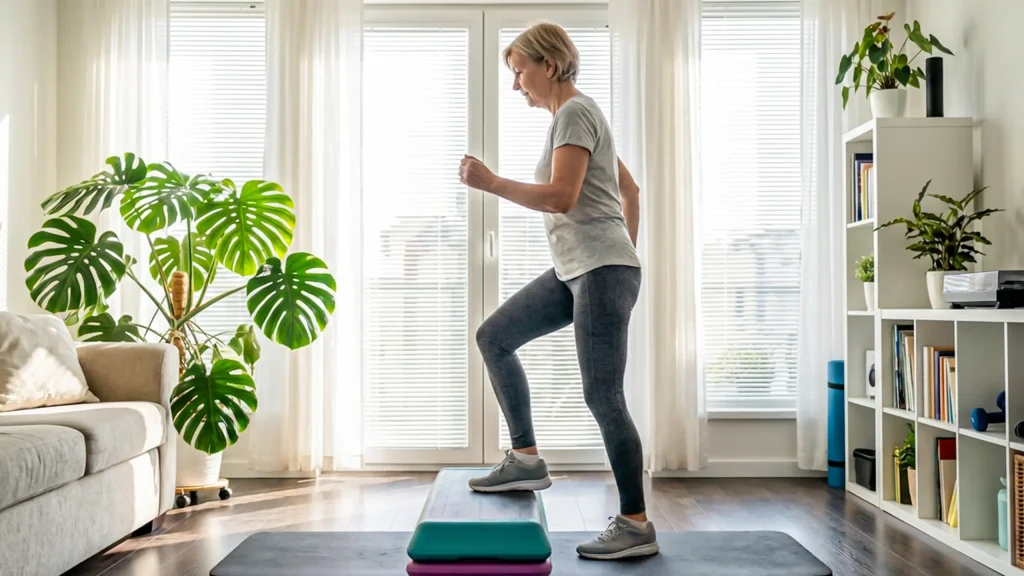
The side-to-side movement is often neglected yet extremely important for balance and agility.
Stand straight with your two feet together. Step one foot (left) to your side in a sideways motion and bring your other foot (right) to meet the first moved foot (left). Repeat this 3 times and move to the other side. Do 5 sets every day.
Lateral movements firm up the hips and outer thighs. They are also used to enhance coordination and to minimize the chances of sideways falls, which are usually dangerous.
Chair Stand
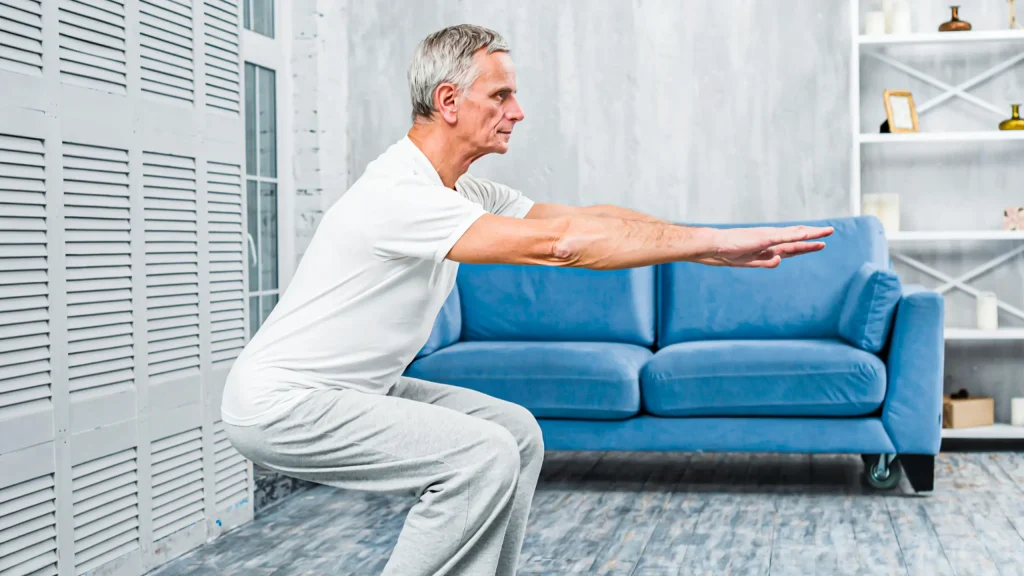
A chair stand is a direct indicator of the lower body strength.
Sit upright in a sturdy chair. Keep your arms crossed over your chest. Get to your feet, then slowly get down from the chair and stand still in control.
This workout develops power in the thighs and butt region. It has a direct positive effect on the rise of seated positions without support. The greater the here you are, the more independent you are.
Side Leg Raise
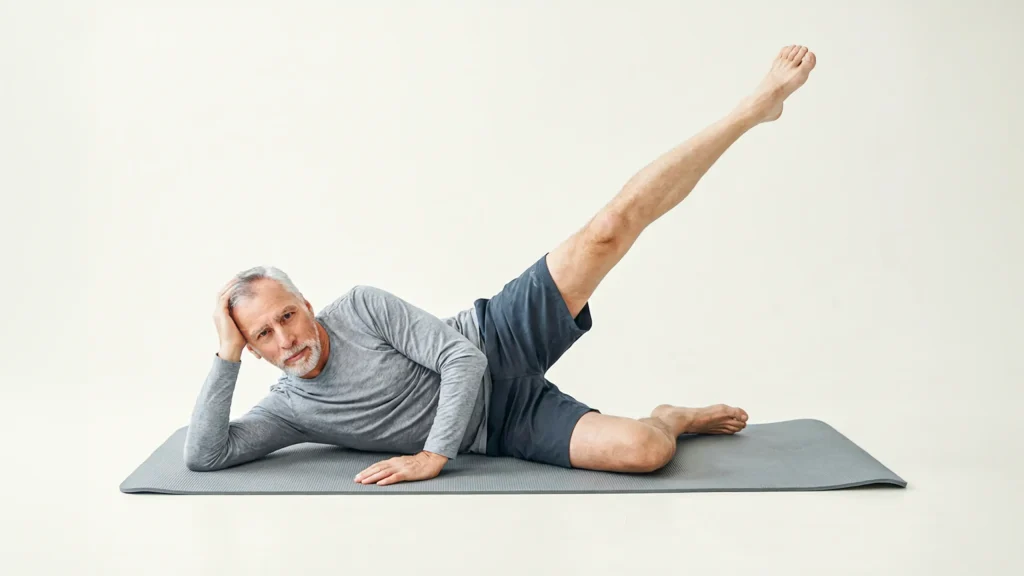
Good hips are needed for stability.
Lean against the back of a chair and support it with a hand, or balance your hand against a wall. It is the lifting of one leg to the side without leaning the body. Reduce it gradually, then repeat it and switch the legs.
Side leg raises strengthen your hip abductors. These muscles make a significant contribution to walking and avoiding hip pain.
Tennis Ball Abs
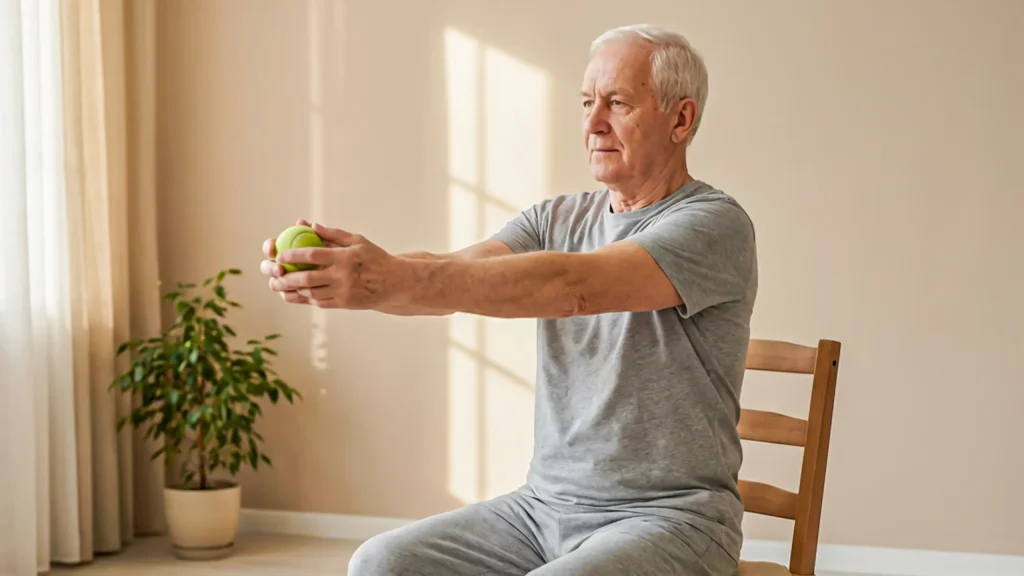
Core strength does not necessarily imply crunches with the floor.
Sit upright in a chair. Take a tennis ball and put it between your hands, and stretch your arms forward. Rotate your torso slowly on a side-to-side axis, keeping your hips still.
This motion uses the abdominal muscles in the most gentle manner and enhances rotational strength. A combination of a particular core helps to maintain better posture and decrease back strain. Do it for 10 minutes.
Heel-to-Toe Walk
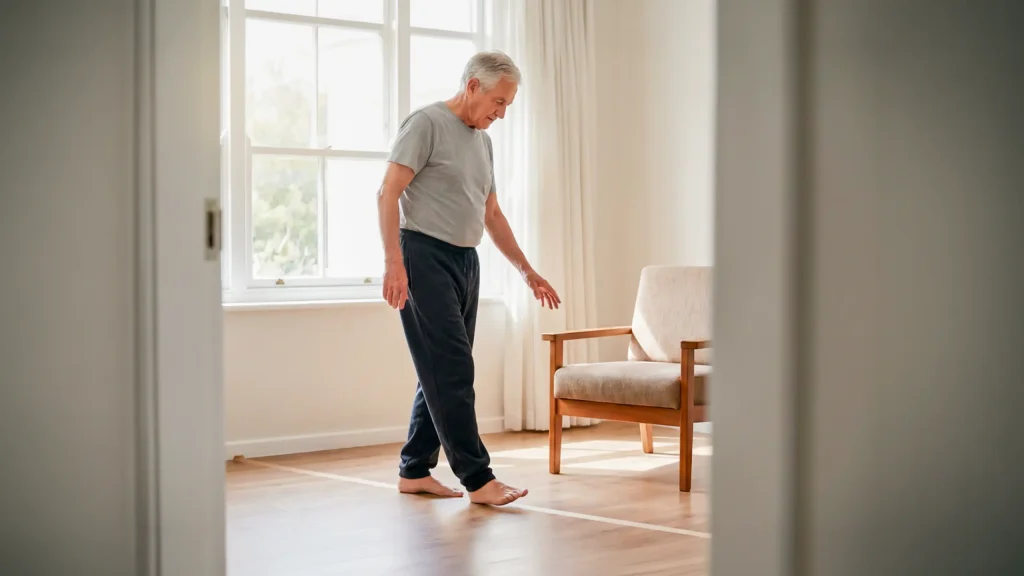
The best exercises seniors can engage in include walking and heel-to-toe walking, which can enhance balance and coordination.
Stand in an open area. Stand on one foot in front of the other, but with the heel of the front foot lightly touching the heel of the back foot. Keep on walking straight along this path gradually. Hold on to one with a wall or chair in case of necessity.
This exercise strengthens the muscles that support balance and coordination. Doing heel-to-toe walking exercises can help the elderly walk more confidently and reduce the risk of falling or feeling unbalanced.
Seated Knee Lifts
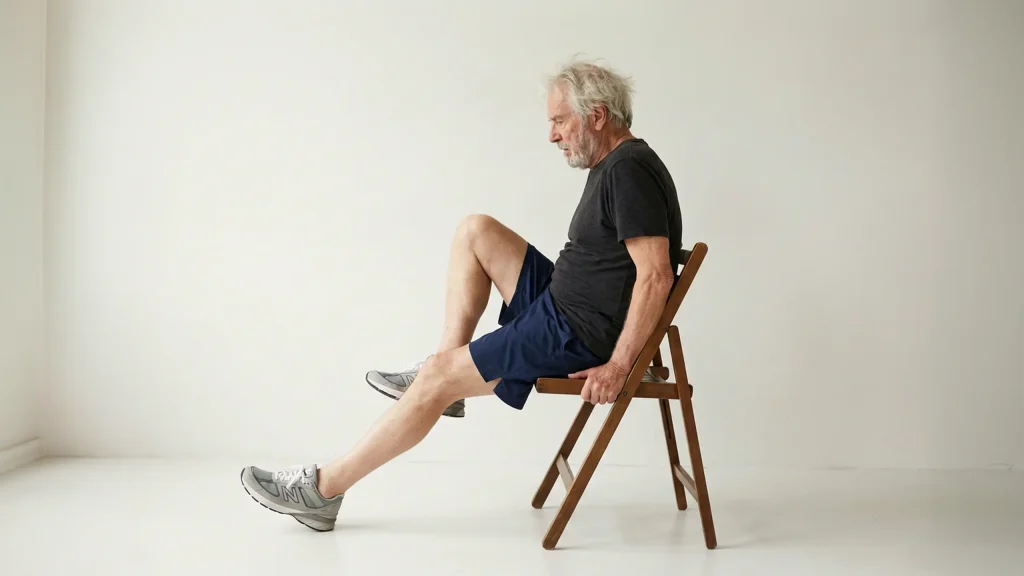
Knee lifts are a very mild and efficient method that strengthens the core and enhances hip movements.
Sit straight in a hard chair with your feet on the floor. With your straight back, lift one knee slowly up to the chest. Hold the position for 2 seconds, then bring your leg down again. Repeat the movement using the other leg.
This is what makes the hip and the lower abdominal muscles stronger. Firmer hips and core muscles will allow normal walking, climbing the stairs, and getting out of a chair more easily.
Wall Sit
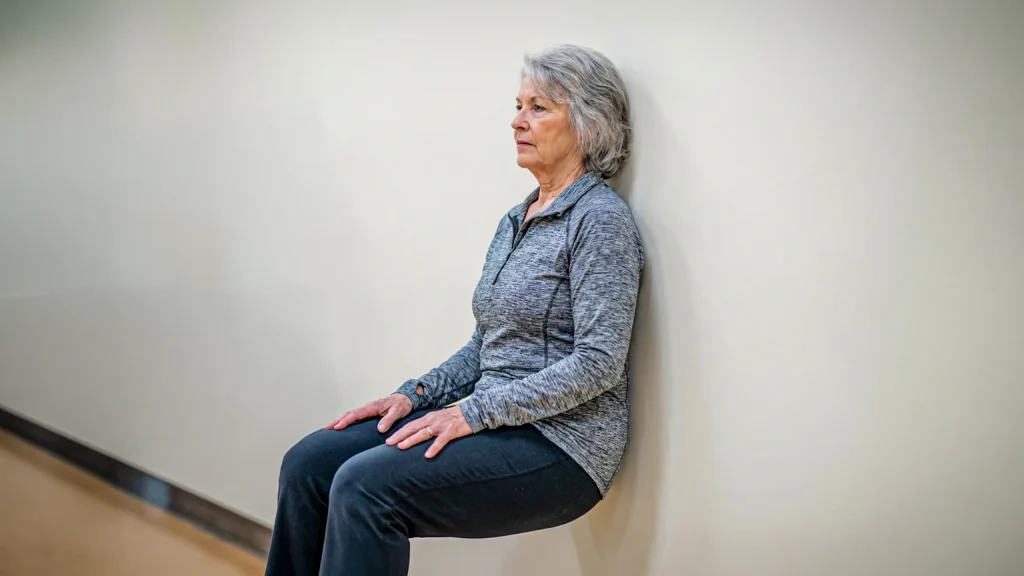
Wall sit is a very basic and effective exercise that strengthens the legs and endurance.
Lean your back against a wall and slowly slide down until you feel you are sitting on an imaginary chair. Stay in position for 10-20 seconds, then slowly stand up.
The muscles that are worked in this exercise are the thighs, glutes, and calves. Well-developed leg muscles enhance balance and reduce knee strain during daily tasks.
Shoulder Blade Squeeze
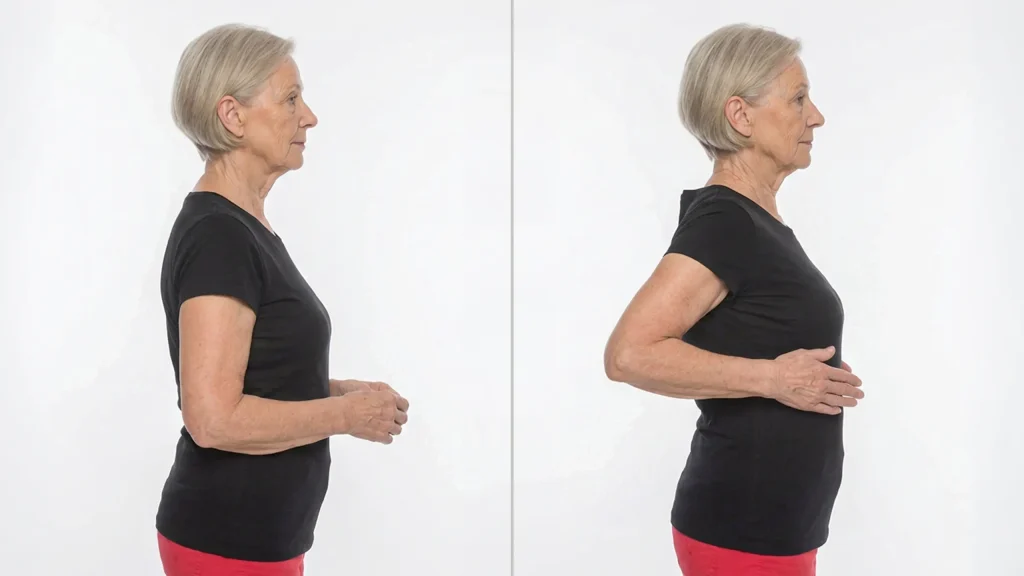
Posture is significant for ensuring mobility and avoiding discomfort.
Sit or stand straight and hold your arms loosely close to your body. Squeeze your shoulder blades slowly, like you are going to squeeze a pencil between. Periods of squeeze should be five seconds, followed by relaxation.
This exercise tightens the back muscles and enhances posture. With time, it will relieve tension in the shoulders and enable one to hold oneself upright and confident.
Seated Marching
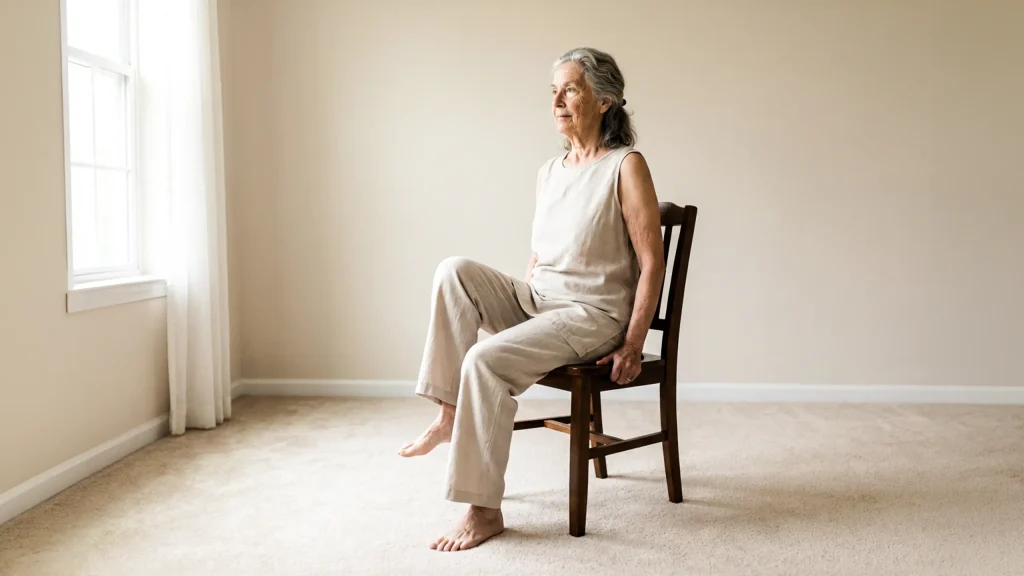
Sitting marching is a simple activity that enhances circulation and builds leg strength.
Take the seat of a chair with feet up. Stride on, up, one knee, and down, and up, the other knee. Keep on swapping legs at a slow pace.
The exercise engages the muscles in the hips and enhances blood flow in the legs. It can be particularly useful for the elderly who sit down during the day.
Ankle Rotations
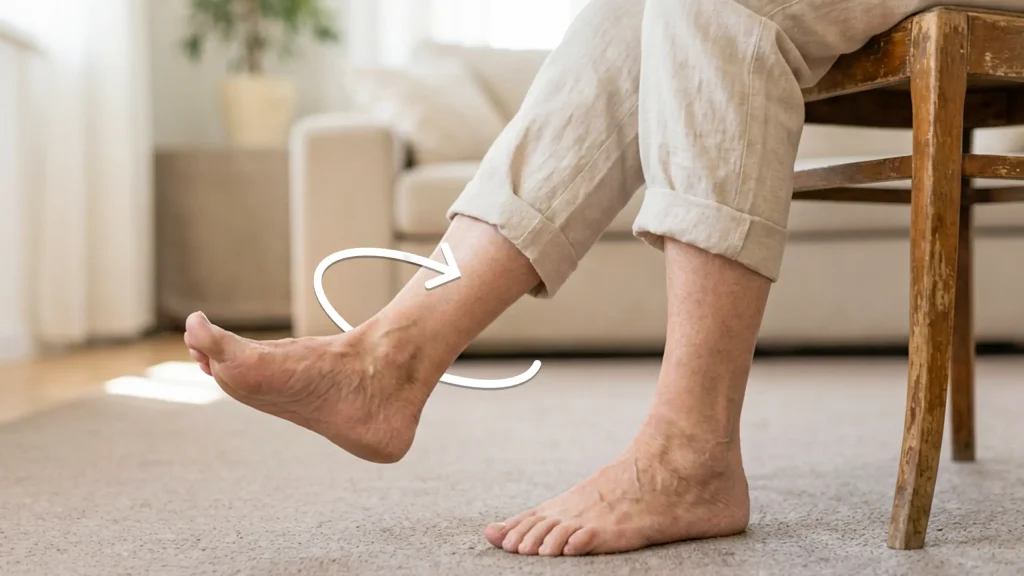
Healthy ankles are essential for walking stability and fall prevention.
Sit in the chair with one foot slightly lifted from the floor. Rotate your ankle slowly in a circular motion for 10-15 seconds, and do the same in the opposite direction. Do the same activity with the other foot.
Ankle rotations help enhance joint flexibility and strengthen the muscles around the ankle. Bendable ankles ensure that walking and stepping are more stable and controlled.
Gentle Neck Stretches
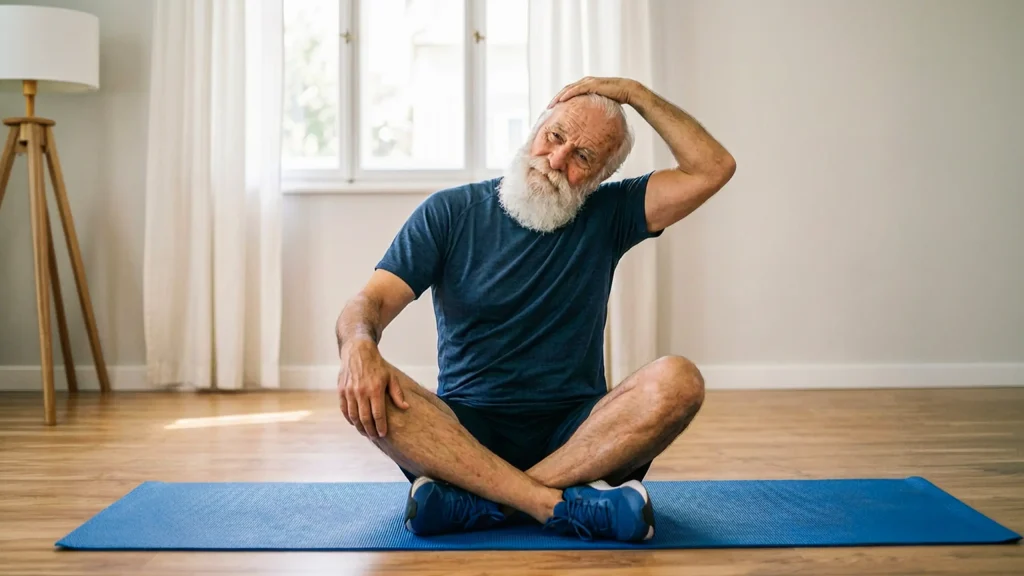
Age-related neck stiffness is quite common; the elderly who read or watch television often experience it.
Sit or stand upright. Tilt your head slowly toward one of your shoulders and maintain this position for several seconds. Go back to the center and do the same on the other side. Then softly look down at your feet and come back.
These mild stretches work on the neck to loosen the tension. This is because a loose neck will enable the head to move smoothly and will make it less rigid in our daily lives.
Seated Forward Reach
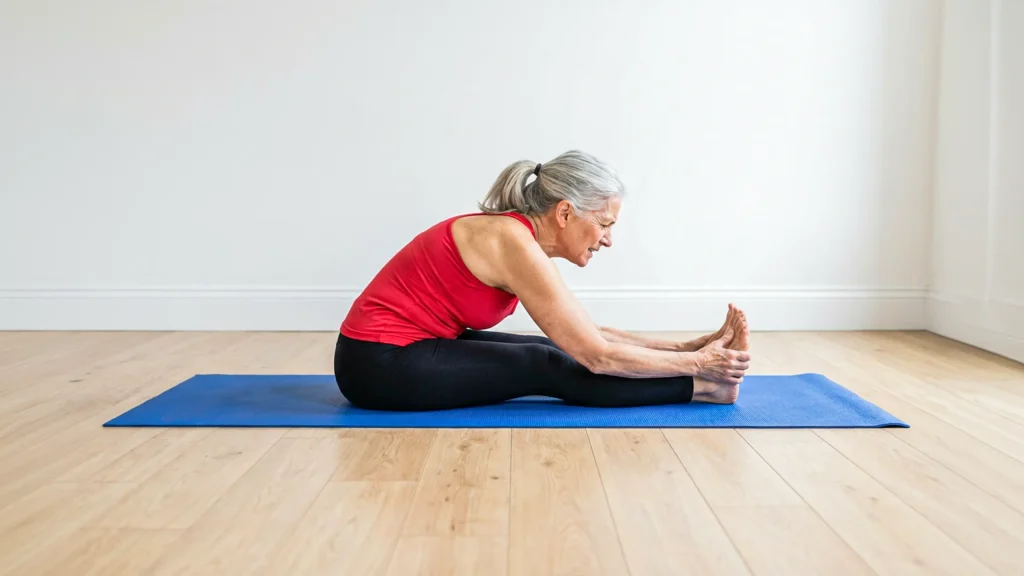
This exercise enhances flexibility in the back and shoulders.
You sit on the chair with your feet on the floor. Reach forward with each arm, and only bend slowly towards your knees or even your shins, keeping the back in a comfortable, relaxed position. Maintain the pose for a little while, then return to the standing pose.
The seated forward reach stretches the back muscles and enhances flexibility. It also helps reduce mild stiffness in the spine and shoulders.
Standing Hip Circles
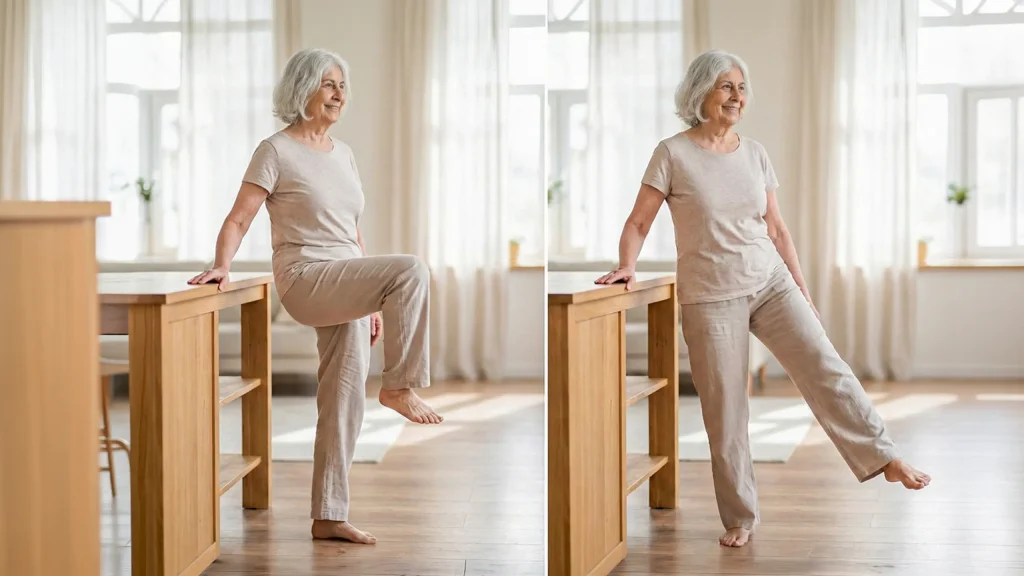
Hip movement is significant for comfortable walking and maintaining balance.
Kneel with a chair or counter to support oneself. Slowly raise one of your knees and move it in a soft, circular motion. Make circles in each of directions about five times, and then change directions and repeat with the other leg.
Hip circles enhance hip joints and mobility. The lower back of the back is strained less, and it is easier to walk with flexible hips.
These bodyweight exercises for grandparents are gentle enough for beginners while still helping build the strength needed for daily activities like climbing stairs and walking confidently.
Gentle Step-Ups
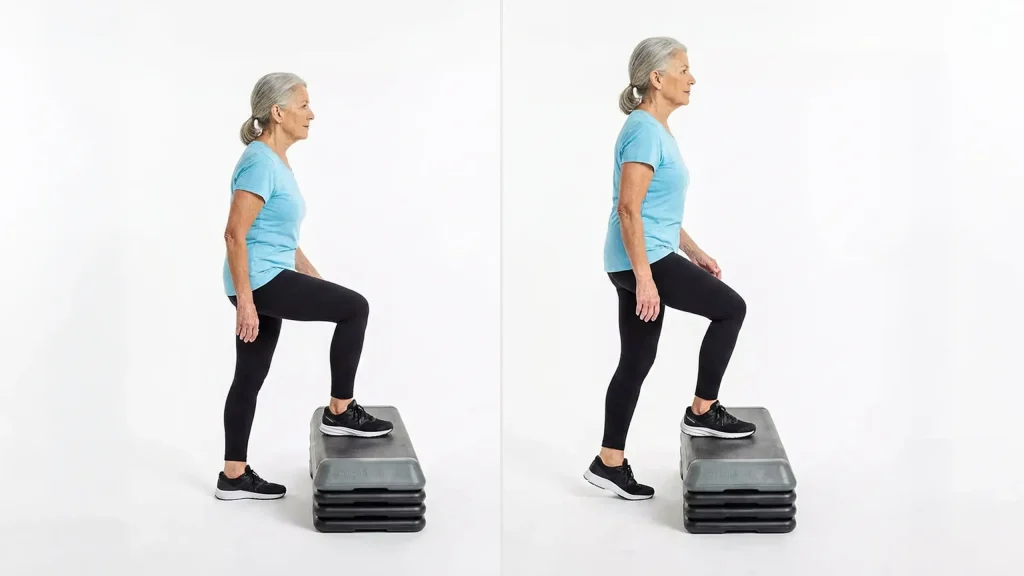
Step-ups are also good for developing leg strength and enhancing coordination.
Get in front of a small step or a big platform. Take one foot forward, then step back slowly as the other foot brings it forward to join it. Switch the foot that is ahead every time.
This workout strengthens and stabilizes the legs for climbing stairs. Daily motions may become less challenging and more regulated with training.Practicing bodyweight exercises for retirees consistently can help maintain independence, reduce the risk of falls, and make everyday activities feel easier over time.
Remember! Exercise is not only beneficial but also necessary to stay strong, well-balanced, and healthy after the age of 50. But more isn’t always better. Overdoing even bodyweight exercises for seniors can lead to injuries, fatigue, and setbacks that hinder progress rather than facilitate it.
Healthcare professionals often recommend bodyweight exercises for someone over 60 because they strengthen muscles, improve mobility, and reduce joint strain without requiring expensive equipment.
It is a matter of consistency rather than intensity. Pay attention to your body, rest when necessary, and consider bodyweight exercises for seniors that can help you stay mobile and independent. Movement, when properly performed, does not exhaust you; it makes you feel strong, alert, and firmly in charge of your health day after day.