
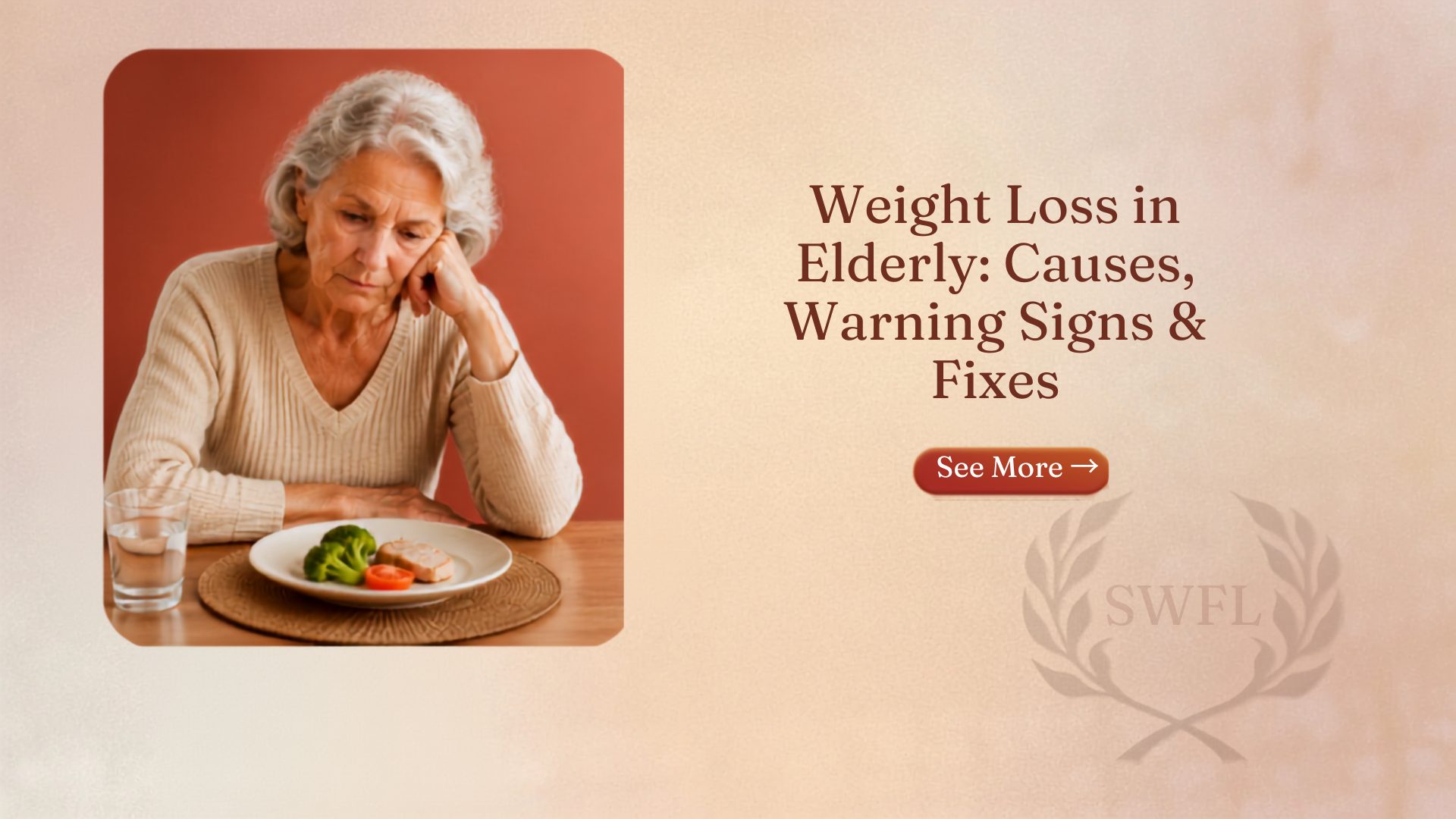
“She says she’s eating just fine… so why has she lost 15 pounds?” At first, it hardly seems noticeable.
Maybe their clothes fit a little looser. Perhaps they pass on dessert more often. Perhaps they say they just aren’t as hungry anymore.
One day, though, you notice the difference between an old family photograph and the person sitting before you.
Unexplained weight loss in older adults is not just a matter of appearance; it can silently decrease muscle strength, impair immune function, increase the chance of falls, slow healing, impact memory, and even shorten life expectancy.
The difficult part?
Many older adults do not complain. In some cases, they do not even know they have lost weight until it is severe.
Even if a few pounds may not be concerning, unexplained weight loss can signal that something else is going on. It could be a health condition, side effects of medications, emotional issues, problems with their teeth, or simply age-related changes that change the body’s processing of nutrients.
But the good news is…
Most causes of weight loss in elderly adults can be diagnosed and managed when detected early.
In this guide, we will look at why elderly adults lose weight, warning signs that families should never ignore, and methods to ensure they remain healthy.
Why Weight Matters More as We Age
When younger adults lose weight, it’s often celebrated.
When older adults lose weight without trying, healthcare professionals become concerned.
That’s because aging naturally changes body composition. After age 60, muscle mass begins declining more rapidly, and muscle loss (known as sarcopenia) affects balance, mobility, metabolism, and overall health.
Every pound lost isn’t necessarily fat.
In many cases, seniors lose valuable muscle first.
This creates a dangerous cycle:
- Fewer muscles reduce strength.
- Reduced strength limits physical activity.
- Lower activity accelerates further muscle loss.
- Poor mobility increases the risk of falls and fractures.
- Recovery becomes slower and more difficult.
Maintaining a healthy weight in older adulthood is less about looking thinner and more about preserving independence.
Is Weight Loss a Normal Part of Aging?
Many families wonder whether gradual weight loss is simply part of getting older.
The answer is both yes and no.
Some minor changes are expected because metabolism slows with age. Appetite may decrease slightly, taste buds become less sensitive, and physical activity often declines.
However, unintentional weight loss is not considered a normal part of aging.
Healthcare providers generally recommend evaluation if an older adult loses:
- More than 5% of body weight within six to twelve months
- Around 10 pounds without trying
- Weight accompanied by weakness, fatigue, or reduced appetite
Even if someone appears healthy, unexplained weight loss deserves medical attention.
Why Do the Elderly Lose Weight?
One of the most common questions caregivers ask is, “Why do the elderly lose weight?”
There isn’t a single answer. Instead, several physical, emotional, and lifestyle factors often overlap.
Let’s explore the most common reasons.
1. Appetite Naturally Changes with Age
As people age, hormonal signals that regulate hunger shift. Many seniors simply don’t feel hungry as often.
Smaller portions become satisfying, and meals that once seemed enjoyable may feel overwhelming.
Additional contributors include:
- Reduced sense of smell
- Changes in taste perception
- Slower digestion
- Earlier feelings of fullness
These gradual changes can significantly reduce daily calorie intake.
2. Medical Conditions
Many chronic illnesses contribute to weight loss in elderly adults.
Examples include:
- Diabetes
- Heart failure
- COPD
- Kidney disease
- Liver disease
- Parkinson’s disease
- Alzheimer’s disease
- Thyroid disorders
- Certain cancers
Some illnesses increase calorie demands, while others reduce appetite or interfere with nutrient absorption.
Unexpected weight loss is sometimes the earliest warning sign of disease.
3. Medication Side Effects
Older adults often take multiple medications.
Many prescriptions can affect nutrition by causing:
- Dry mouth
- Nausea
- Constipation
- Altered taste
- Reduced appetite
- Difficulty swallowing
- Stomach discomfort
Never stop medications without consulting a physician, but discussing unexplained weight loss with healthcare providers is important.
4. Dental Problems
Eating becomes difficult when chewing hurts.
Common dental issues include:
- Loose dentures
- Missing teeth
- Gum disease
- Tooth pain
- Mouth sores
As a result, seniors may avoid nutritious foods like fruits, vegetables, meats, and whole grains because they’re harder to chew.
Instead, they may rely on softer, less nutritious foods.
5. Difficulty Swallowing
Conditions such as stroke, Parkinson’s disease, or neurological disorders can make swallowing uncomfortable or even dangerous.
People may begin avoiding meals because eating feels stressful.
Signs include:
- Frequent coughing during meals
- Taking an unusually long time to eat
- Food remaining in the mouth
- Choking episodes
- Wet or gurgly voice after swallowing
Speech-language pathologists can evaluate swallowing difficulties and recommend safer eating strategies.
6. Depression and Loneliness
Emotional health strongly influences nutrition. Older adults who live alone often lose motivation to cook.
Some skip meals simply because eating alone feels depressing.
Depression may cause:
- Loss of appetite
- Reduced energy
- Lack of interest in cooking
- Sleeping more
- Social withdrawal
This is one of the most overlooked reasons for weight loss in elderly individuals.
7. Memory Problems
People living with dementia may:
- Forget they already skipped meals
- Forget how to prepare food
- Lose interest in eating
- Become distracted during meals
- Forgot to grocery shop
Over time, poor nutrition contributes to rapid weight decline.
8. Digestive Disorders
Several digestive problems interfere with nutrient absorption.
These include:
- Acid reflux
- Stomach ulcers
- Celiac disease
- Pancreatic disorders
- Chronic diarrhea
- Inflammatory bowel disease
Even when seniors eat normally, their bodies may not absorb nutrients efficiently.
9. Financial Challenges
Healthy food can be expensive.
Some older adults stretch groceries by purchasing inexpensive processed foods that lack sufficient protein and nutrients.
Others reduce portion sizes to save money.
Financial stress often goes unnoticed by family members.
10. Reduced Mobility
Cooking isn’t easy when standing becomes painful.
Mobility limitations can make grocery shopping, meal preparation, and even carrying food to the table exhausting.
As a result, seniors may eat less simply because meals require too much effort.
Weight Loss in the Elderly With Good Appetite: Should You Be Concerned?
One confusing situation occurs when someone experiences weight loss in the elderly with a good appetite.
If they’re eating well, why is the scale dropping?
Possible explanations include:
- Hyperthyroidism
- Diabetes
- Cancer
- Digestive disorders affecting absorption
- Increased metabolic demands
- Chronic infections
- Medication interactions
Even if appetite remains excellent, ongoing unexplained weight loss should always be evaluated by a healthcare professional.
The body may not be processing nutrients effectively despite adequate food intake.
Warning Signs Families Should Never Ignore
Weight loss often appears gradually.
Watch for changes such as:
- Clothing is becoming noticeably loose
- Rings slipping off fingers
- Reduced strength
- Fatigue
- Frequent falls
- Difficulty climbing stairs
- Loss of interest in meals
- Meals left unfinished
- Increased infections
- Slow wound healing
- Muscle wasting in the arms and legs
Early intervention can prevent hospitalization and long-term complications.
Health Risks Associated with Weight Loss in Seniors
Persistent weight loss affects nearly every body system.
Potential complications include:
- Muscle loss (sarcopenia)
- Increased fall risk
- Osteoporosis
- Poor immune function
- Slower recovery after illness
- Pressure injuries
- Nutritional deficiencies
- Frailty
- Reduced quality of life
- Higher hospitalization rates
The combination of low weight and muscle loss significantly increases health risks.
How Doctors Evaluate Weight Loss
Healthcare providers typically investigate several possible causes.
Evaluation may include:
- Medical history
- Medication review
- Blood tests
- Thyroid testing
- Diabetes screening
- Nutritional assessment
- Dental examination
- Depression screening
- Cognitive assessment
- Imaging studies if needed
Finding the underlying cause is the first step toward effective treatment.
How to Prevent Weight Loss in Elderly Adults
Preventing weight loss starts with maintaining consistent nutrition rather than waiting until significant weight loss has already occurred.
Prioritize Protein
Protein helps preserve muscle mass.
Excellent options include:
- Eggs
- Greek yogurt
- Chicken
- Fish
- Cottage cheese
- Beans
- Lentils
- Tofu
- Lean beef
Including protein at every meal supports healthy aging.
Offer Smaller, More Frequent Meals
Large meals may feel overwhelming.
Instead of three heavy meals, consider:
- Three smaller meals
- Two or three nutritious snacks
This approach often increases total calorie intake without making eating feel like a chore.
Add Healthy Calories
Focus on nutrient-dense foods rather than empty calories.
Examples include:
- Avocados
- Nuts
- Nut butters
- Olive oil
- Cheese
- Whole milk yogurt
- Seeds
Small additions can substantially increase calorie intake.
Stay Hydrated
Dehydration reduces appetite.
Encourage fluids throughout the day, including:
- Water
- Milk
- Herbal tea
- Soup
- Smoothies
Avoid filling up on sugary beverages before meals.
Make Meals More Appealing
Taste changes with age.
Enhance flavor using:
- Fresh herbs
- Garlic
- Lemon juice
- Mild spices
- Colorful vegetables
A visually appealing plate often encourages better eating.
Encourage Physical Activity
Exercise stimulates appetite while preserving muscle.
Good options include:
- Walking
- Chair exercises
- Resistance bands
- Water aerobics
- Tai Chi
Strength training is particularly effective for maintaining muscle mass.
Address Dental Issues Quickly
Routine dental care can dramatically improve eating ability.
Properly fitted dentures and healthy teeth make nutritious foods easier to enjoy.
Reduce Social Isolation
Eating together encourages better nutrition.
Simple strategies include:
- Family dinners
- Community dining programs
- Senior center lunches
- Group meals at retirement communities
Food often tastes better when shared.
Nutrition Tips for Caregivers
Caregivers play an important role in maintaining a healthy weight.
Helpful strategies include:
- Keep your favorite healthy snacks easily accessible.
- Serve meals on a regular schedule.
- Monitor weekly weight changes.
- Avoid forcing meals, which may create anxiety around eating.
- Include protein in breakfast, lunch, dinner, and snacks.
- Offer smoothies when chewing becomes difficult.
- Celebrate small improvements rather than expecting overnight changes.
Consistency matters more than perfection.
When Should Families Seek Medical Help?
Schedule a medical evaluation if an older adult:
- Loses more than 5% of body weight within six months
- Eats significantly less for several days
- Has difficulty swallowing
- Experiences persistent vomiting
- Develops chronic diarrhea
- Shows signs of depression
- Appears unusually weak
- Has unexplained fatigue
- Experiences confusion along with weight loss
- Continues losing weight despite eating normally
Prompt evaluation often leads to better outcomes.
How Senior Living Communities Help Prevent Weight Loss
Maintaining proper nutrition can become increasingly difficult for seniors living alone.
Many senior living communities support healthier aging by providing:
- Chef-prepared nutritious meals
- Personalized dietary planning
- Regular wellness monitoring
- Assistance with eating when needed
- Social dining experiences
- Medication management
- Fitness programs
- Access to healthcare professionals
These services not only improve nutrition but also reduce isolation, which can positively influence appetite and overall well-being.
Final Thoughts
Weight loss is never just about the number on the scale.
For older adults, it often reflects changes happening beneath the surface, declining muscle, hidden illness, emotional struggles, or practical challenges that make eating well more difficult than it once was.
Fortunately, most cases of weight loss in elderly adults can be managed when identified early. Paying attention to subtle warning signs, scheduling regular health checkups, encouraging balanced nutrition, and fostering an active, socially connected lifestyle can make a meaningful difference.
Growing older doesn’t have to mean becoming weaker. With the right support, seniors can maintain a healthy weight, preserve their independence, and continue enjoying a vibrant, fulfilling life for years to come.