
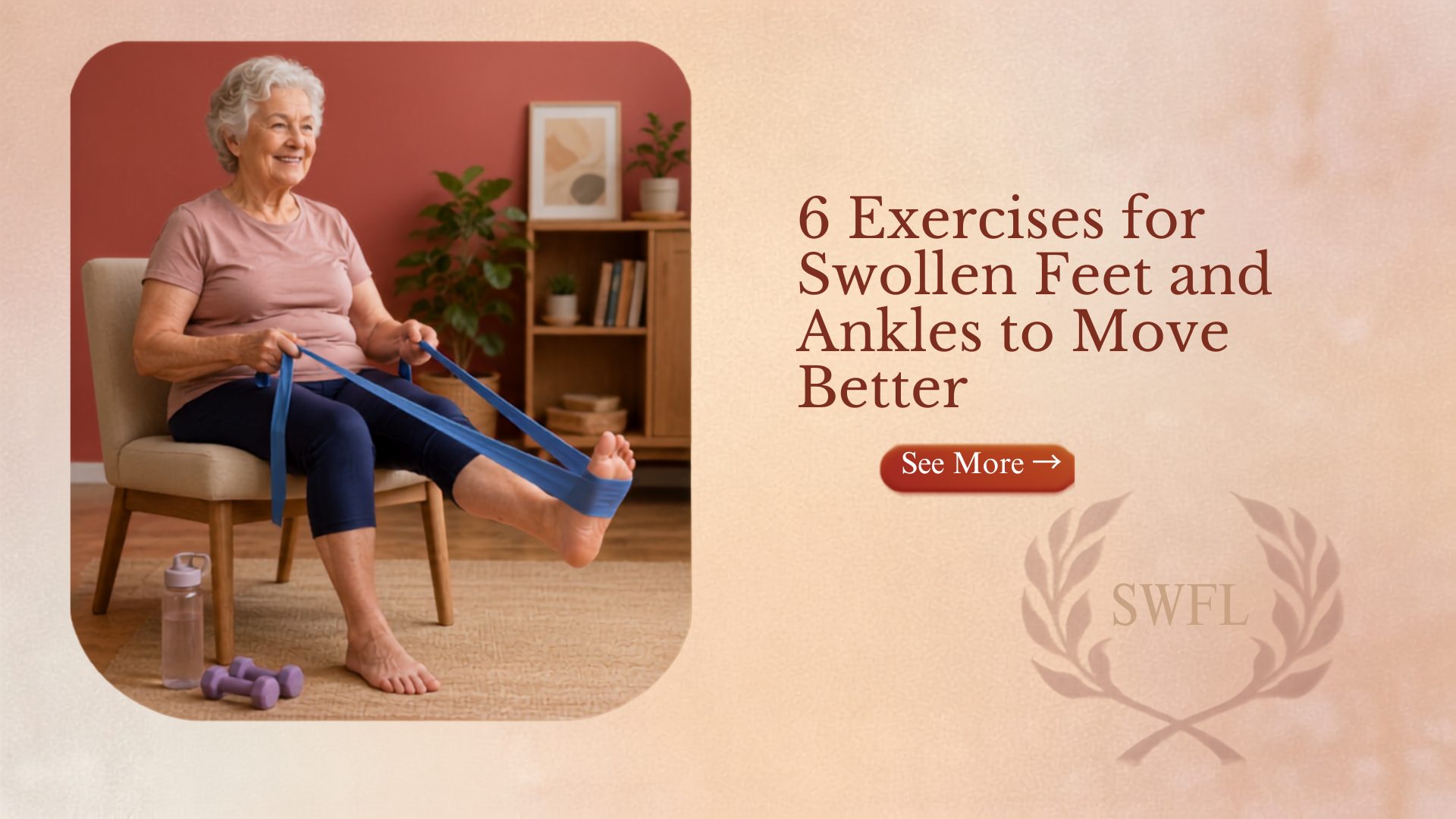
Swollen feet and ankles can lead to tight feeling in your shoes, heavy feeling in your legs, and difficulty moving around in your home. Sitting and standing for a long time is one of the common reasons for swelling, and sometimes, exercising can help in improving circulation.
However, not all swelling is harmless. Sudden and serious swelling requires discovering the reason behind it before you start exercising.
Why Do Feet and Ankles Swell?
Swelling in the feet and ankles usually results from an excessive accumulation of fluid in your tissues. Gravity tends to pull fluids to lower parts of your body, and that is why the swelling can become obvious in your ankles if you sit or stand in one place for hours.
The calf muscles support in the process of pumping the blood to your heart. Whenever you walk and move your ankles, your muscles contract and facilitate the process of blood circulation. Sitting still does not allow your muscles to work properly.
The causes of foot and ankle swelling may be:
- Remaining seated or standing for a long time
- Traveling a long distance
- Injury
- A diet rich in sodium content
- Pregnancy
- Medications
- Problems with veins/circulation
- Heart, kidney or liver diseases
If swelling persists repeatedly or without apparent reason, consult a health care provider instead of attributing the swelling only to inactivity.
6 Exercises for Swollen Feet and Ankles
The following exercises are simple exercises that can assist you in the case of swelling caused by inactivity and long periods of sitting. Make sure to perform the exercises slowly and if you experience any kind of discomfort or pain.
- Ankle Pumps
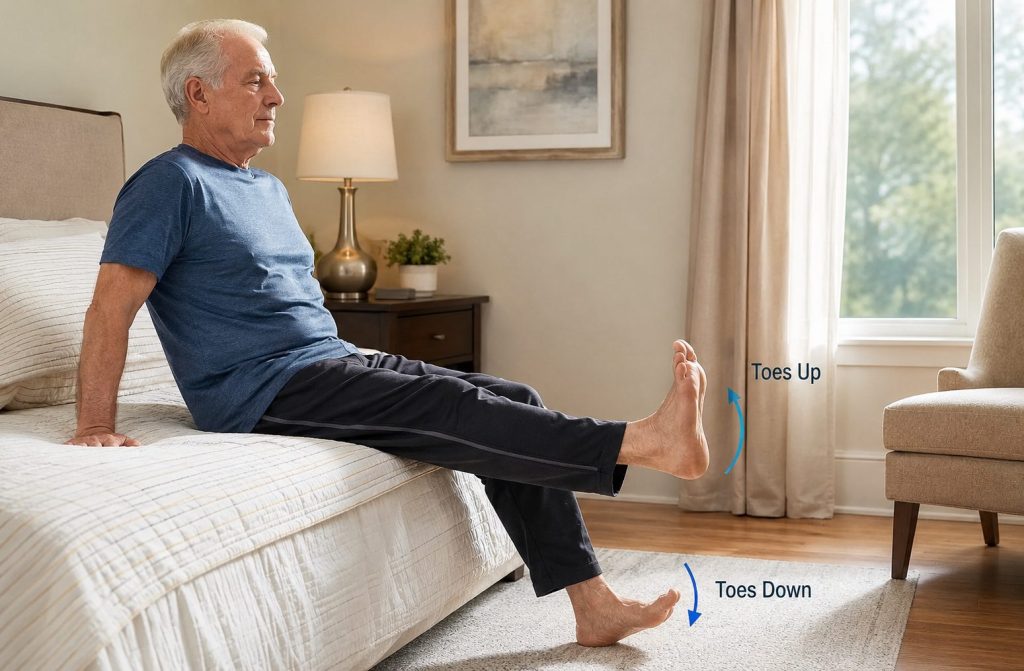
Ankle pumps are one of the simplest ways to treat swollen ankles because you can do them everywhere, even at your desk.
How to do them:
- Sit or lay down comfortably with your legs straightened.
- Extend your toes forward.
- Start pulling your toes towards you slowly.
- Keep alternating between extending and bending your feet.
- Repeat 10 to 20 times.
Your muscles will get activated during the process while performing a full range of motion with your joints.
If you have been sitting for quite some time, a few reps of ankle pumps will help you move a bit without standing up.
- Ankle Circles
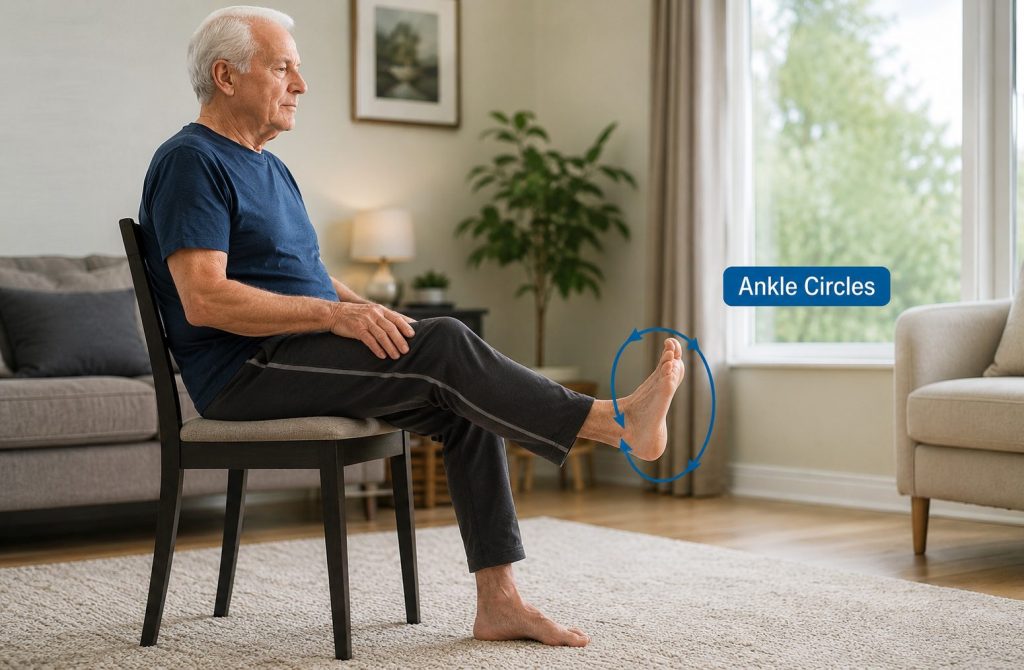
Ankle circles will work on all directions of the ankle and will be particularly useful for loosening tight ankles after periods of inactivity.
How to do them:
- Sitting down, raise one of your feet slightly.
- Rotate the ankle clockwise 10 times.
- Change direction and do another 10 circles.
- Repeat with the other foot.
Try to keep the rotations slow and controlled without going for the biggest circles possible. You shouldn’t experience any discomfort.
This exercise will be especially handy during periods of sitting and can be done while working, watching TV, and even traveling when it is appropriate to do so.
- Seated Heel Raises
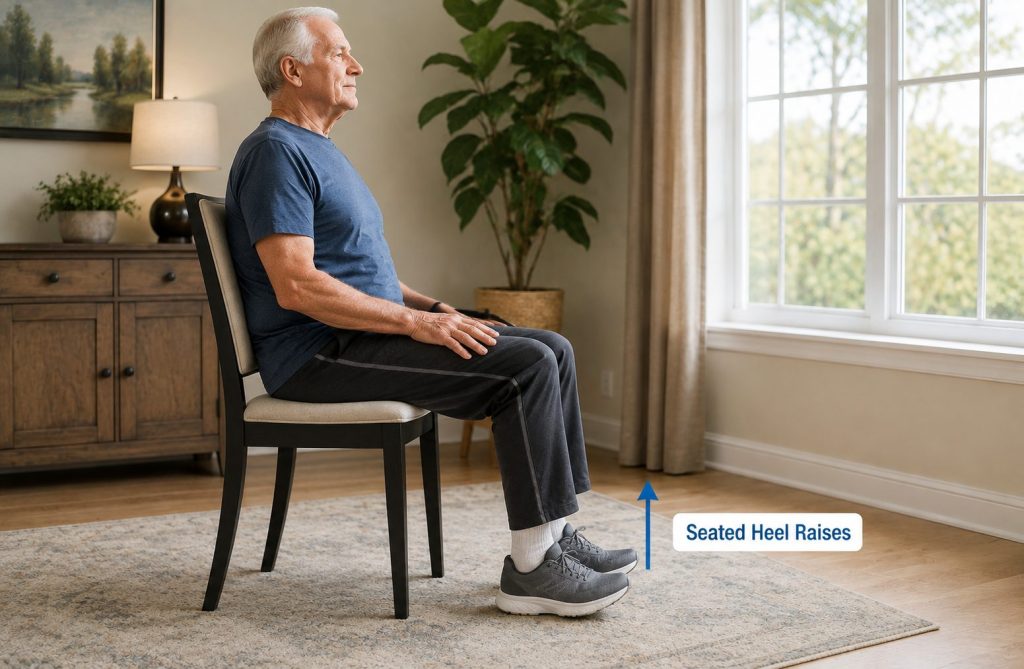
You don’t need to stand up to perform calf exercises. Seated heel raises are an easy alternative in case standing poses are painful or you have poor balance.
How to do them:
- Sit straight in a strong chair.
- Place your feet firmly on the floor.
- Lift your heels slowly while your toes remain on the floor.
- Take a brief pause.
- Return your heels to the starting position slowly.
- Repeat 10 to 15 times.
In each repetition, you will feel your calf muscles contracting when you lift your heels. Seated heel raises are an easy alternative in case standing poses are painful or you have poor balance.
- Seated Marching
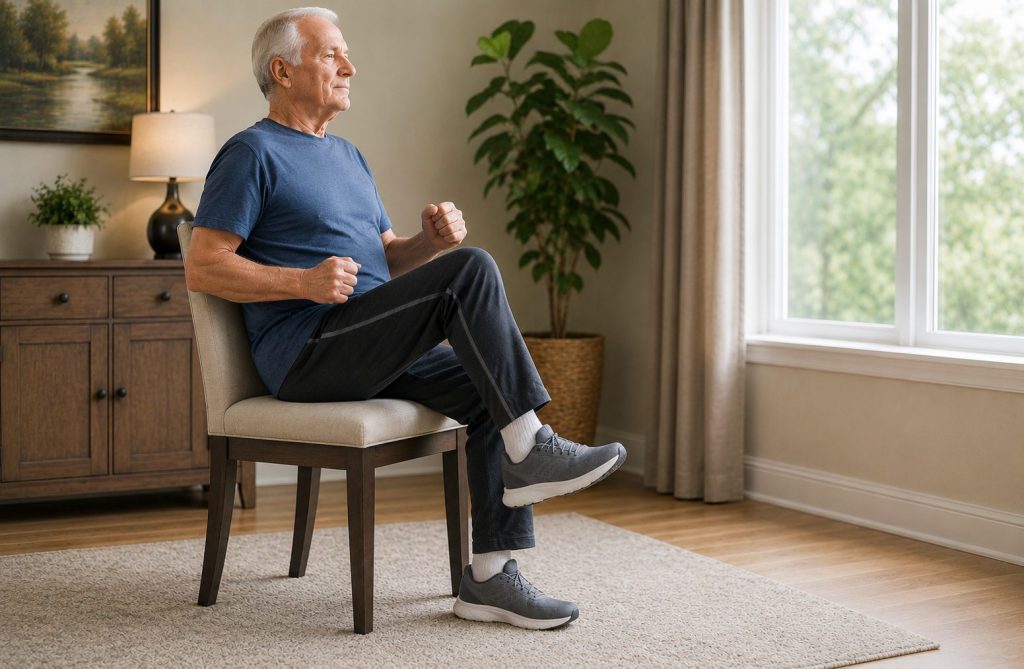
Seated marching makes you use your leg muscles without needing to stand up or put any pressure on your feet.
Sit straight in a chair and have your feet firmly planted on the ground. Raise one knee several inches, bring it down, then raise the other knee.
Continue doing this for about 30-60 seconds.
Do it slowly and gently. You do not need to raise your knees too high if it is hard for you to do.
The exercise can also be helpful for preventing swelling. Do not wait until your ankles get really swollen; take some breaks and move a bit.
- Standing Calf Raises
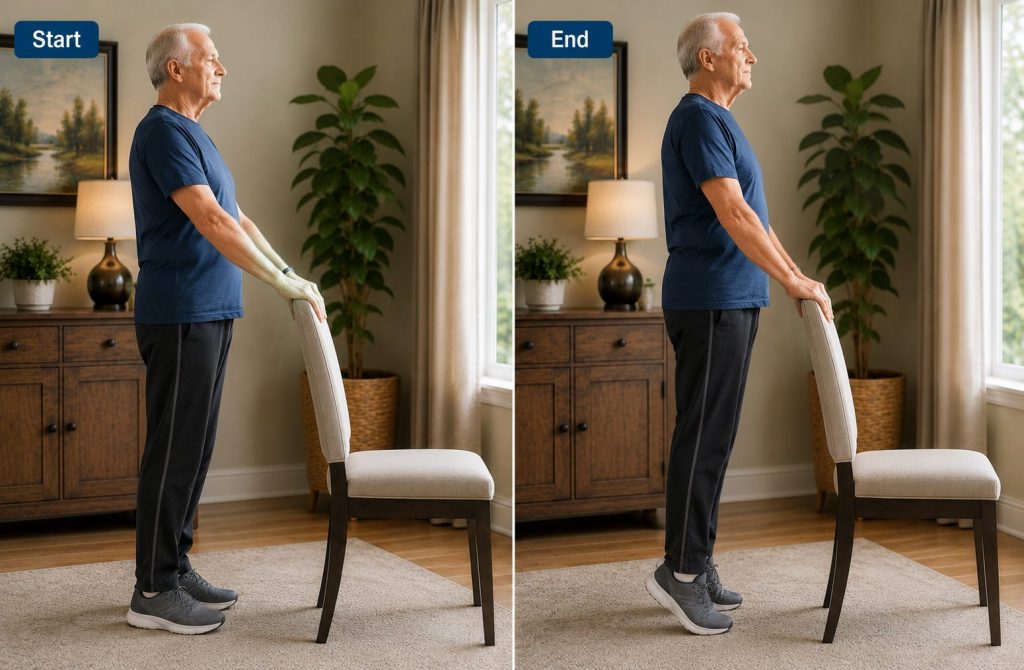
In case you can remain on your feet in a secure manner, you will get some additional stimulation of your calf muscles while performing standing calf raises.
Stand behind a stable chair or a countertop.
To complete the exercise:
- Take a standing position and keep your feet at the hip width distance from each other.
- Use the support.
- Lift your heels slowly.
- Hold for a few seconds.
- Release your heels and return to the initial position.
- Repeat 8 to 15 times.
It is important not to rush or bounce while exercising.
In case you have problems with maintaining balance, severe foot or ankle pain, or you recently got injured, seated heel raises would be a safer option for you.
- Gentle Walking
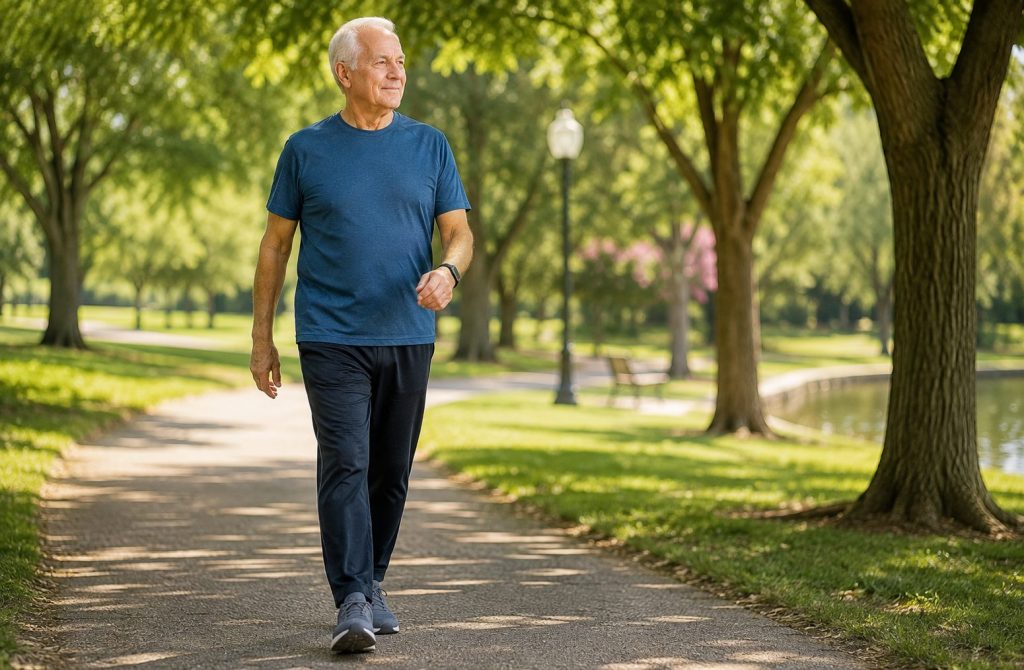
Sometimes, simplicity is the best approach.
Taking a walk involves many muscle groups in the legs and will help you leave a fixed position. A quick walk inside your home may be helpful if you have been sitting for a while.
You should start small and not overexert yourself by trying to walk great distances.
You can choose to walk in your home, go for a short walk outdoors, or walk around the office when you take breaks.
This practice is not about turning the treatment into a vigorous exercise but about moving your legs.
In case walking increases the swelling or causes pain, then you should discontinue and consult a professional.
A Simple Routine for Swollen Ankles
You don’t have to perform all six exercises every time your feet feel puffy.
Try out the following simple exercise plan:
- Ankle pumps: 10-20 repetitions
- Ankle circles: 10 repetitions in each direction
- Seated heel raises: 10-15 repetitions
- Seated marching: 30-60 seconds
- Walking: A few comfortable minutes of walking
If you are comfortable standing, you can include standing calf raises.
More importantly, the aim should be consistent. It might be easier to devote a few minutes here and there during the day, rather than one big exercise routine followed by hours of sitting.
How to Reduce Swelling in Legs Quickly
If your legs feel swollen after sitting or standing for a long time, exercise isn’t the only thing that may help.
Elevate your legs
When you rest, put your legs on pillows with your feet elevated. Raising your legs could offset some gravity effects, thus helping fluid drain out of your legs.
Make sure to take movement breaks
Avoid staying in one position all day long.
If you are working at a desk, it will be helpful to get up and move once in a while. If you sit all day long, perform leg exercises like foot pumps or circles.
Movement breaks could make a great difference in terms of how you feel in the course of the day.
Pay attention to sodium
High amounts of salt in a meal could result in temporary fluid retention. Restaurant meals, ready-made foods and processed foods may be higher in sodium than you think.
Instead of worrying about one meal only, focus on your overall diet and sodium intake, according to your doctor’s recommendations.
Choose comfortable shoes
Your feet may become more painful when wearing tight shoes as they will put extra pressure on your feet.
Make sure the shoes you choose leave enough space for your toes and feet. If your feet usually swell while wearing shoes, try to pick those that fit well even with the swelling.
How to Get Rid of Swollen Ankles Fast
When your ankles unexpectedly start to appear puffy, it is natural to look for a quick fix. However, there is no single way to treat every kind of swelling.
The explanation is very simple; swelling is just a symptom rather than a disease itself.
In case your ankles swell after you sat for eight hours behind the desk, moving about and elevating your legs might work.
Nevertheless, in case your ankles swell due to injuries, medicine, vein disorders, or any other diseases, then the cure will be totally different.
Instead of asking how to quickly get rid of swollen ankles, you should ask why there is such swelling and does it occur on a regular basis.
Persistent or unexplained swelling deserves medical attention.
When Should You Avoid Exercise?
Gentle exercise may assist with swelling, but don’t automatically exercise through new or worsening swelling.
Contact your physician or health care provider in case of:
- Abrupt development of swelling
- Severe or rapid swelling
- Swelling of the single leg without a clear reason
- Pain, heat sensation, redness
- Constant reappearance without a clear reason
- Does not go away
- Limits your ability to walk
It is necessary to contact a physician in case you have leg swelling along with chest pain, difficulty breathing, fainting, or shortness of breath.
These symptoms suggest a medical problem which needs professional treatment, not exercise at home.
What About Swollen Feet in Older Adults?
Swollen feet and ankles can become more common with age, this does not necessarily mean that swelling is a normal occurrence due to aging.
In fact, older individuals may suffer from certain drugs, limited mobility, poor circulation, or other health issues that can result in swelling.
For those older adults who have trouble standing or keeping balance, some of the simple exercises to start with might include ankle pumps, ankle circles, heel lifts while sitting, and seated marching.
In case an older individual experiences swelling of unknown origin, it would be better to talk to his or her physician prior to engaging in exercise.
The Bottom Line
Mild swelling after prolonged sitting or standing may improve when you get your legs moving.
Exercises for swollen feet and ankles include ankle pumps, ankle circles, heel raises while sitting, seated marching, calf raises while standing, and walking.
Elevation of the legs, taking periodic movement breaks, wearing comfy shoes, and being mindful of your sodium intake can also help.
However, do not pay too much attention on how you can make the swelling disappear quickly. Be aware of the reasons for the swelling.
If the swelling is sudden, severe, one-sided, painful, persistent, or accompanied by breathing difficulties and chest pain requires immediate medical attention and will definitely not be addressed by any exercises.
For occasional puffy ankles, however, sometimes your feet just need to do one thing: move more often.