
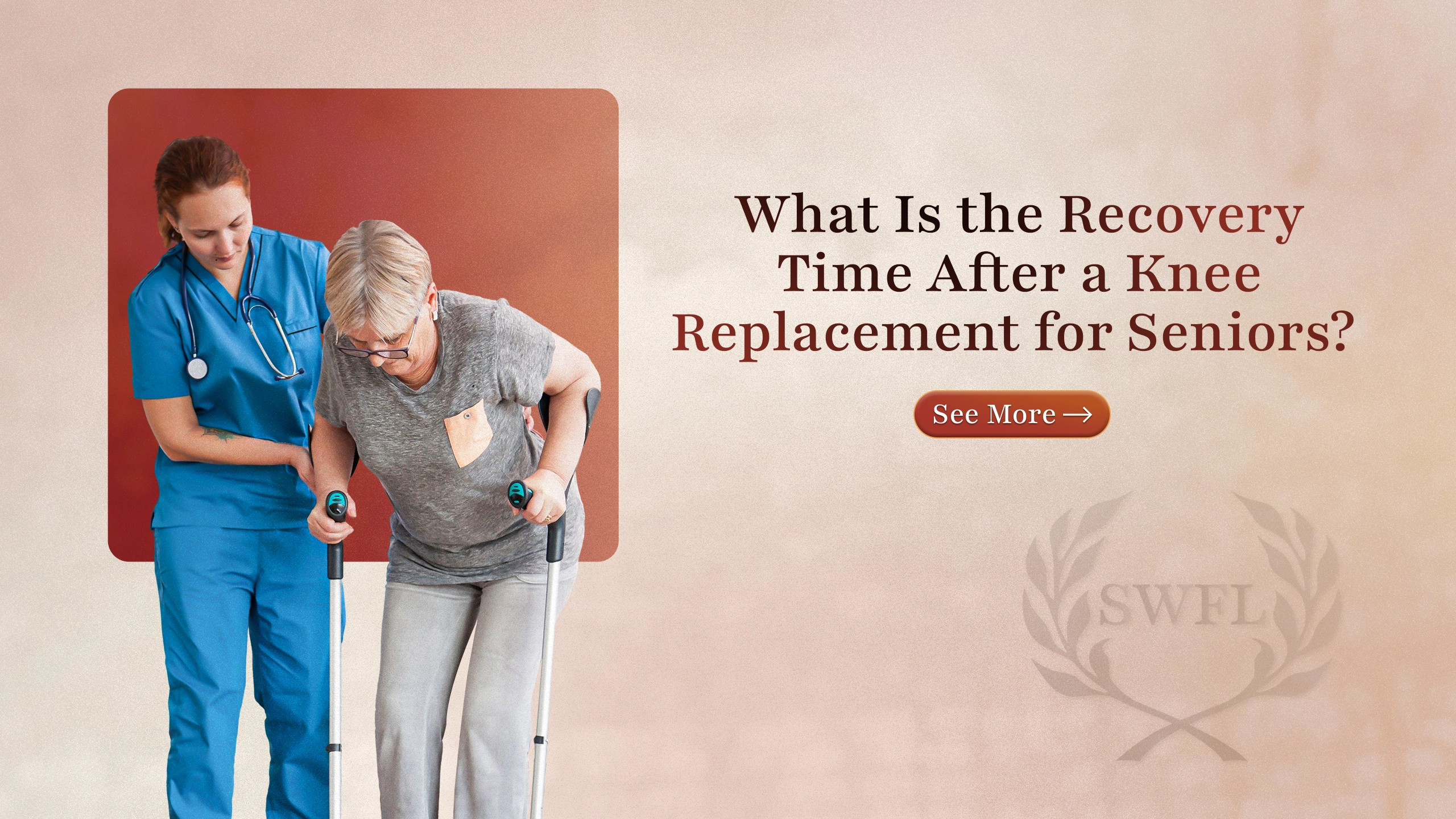
Let’s be real, knee pain isn’t just uncomfortable; it can completely change how you live your day-to-day life. Simple things like walking to the kitchen, getting out of a chair, or taking a short stroll outside can start to feel like a chore.
For many seniors, there comes a point where pain management, therapy, and medications just don’t cut it anymore. That’s when knee replacement surgery enters the conversation.
Naturally, one of the first questions people ask is about knee replacement recovery time for the elderly. How long does it actually take to get back on your feet? Will life go back to normal, or even better than before?.
The good news is that while recovery takes time and effort, most seniors experience a major improvement in mobility and quality of life.
The knee surgery is not the end of life; it is a new beginning. The real transformation of life happens during the recovery time. And while it may feel like a long way, with the right support, we can manage this road.
When Does A Doctor Suggest Knee Replacement?
Doctors don’t just jump to surgery; it’s more like a last card to play when everything else stops working.
Before even bringing up surgery, most doctors will try a mix of treatments, pain medications, physical therapy, lifestyle changes, and sometimes even injections. The goal is always to manage the pain without going under the knife. But when those options stop delivering results, that’s when the conversation shifts.
We’re talking about situations where the knee joint is worn down, usually from arthritis. The cushioning called cartilage is gone, and now it’s basically bone rubbing on bone. Not exactly a smooth ride.
And it’s not just about pain, it’s about what that pain takes away from you. Maybe you’ve stopped going for walks. Maybe the stairs feel like a mountain. Maybe even getting out of bed takes effort. That loss of independence is often the biggest red flag.
At that point, pain isn’t just occasional, it’s constant. Walking hurts. Standing hurts. Sometimes even resting hurts. That’s when doctors say, “Alright, it’s time to fix this.”
You might also notice stiffness that doesn’t go away, swelling that keeps coming back, or a knee that just doesn’t move the way it used to. Some people even start changing how they walk to avoid pain, which can lead to other issues in the hips or back.
The goal isn’t just pain relief. It’s about getting your lifestyle back, plain and simple. Being able to move freely, stay active, and not think twice about every step, that’s what surgery is really aiming for.
How Long Is the Procedure for a Knee Replacement Surgery?
Most people ask, “How long does knee replacement surgery take?” The whole surgery takes 1 to 2 hours.
But let’s zoom out for a second. From the moment you’re prepped for surgery to when you’re moved into recovery, the whole process takes a bit longer. There’s anesthesia, monitoring, and post-surgery care to make sure everything went smoothly.
During the procedure, the surgeon removes the damaged parts of the knee joint and replaces them with artificial components made out of metal and medical-grade plastic. These parts are designed to move smoothly and mimic the natural motion of your knee.
Of course, you’ll spend more time at the hospital for prep and recovery. Most seniors stay for one to three days, depending on how quickly they can stand and move safely.
And here’s something that surprises a lot of people. You’re not stuck in bed for days. In most cases, you’ll be encouraged to stand and take a few steps within 24 hours. Early movement is a big part of preventing stiffness and speeding up recovery.
Think of it like this: the surgery is the easy part. The real work and real results come after.
Knee Replacement Recovery Time
Alright, here’s what you really want to know: how long to recover from knee replacement?
Short answer: around 3 to 6 months for most seniors.
Long answer: It depends on the senior. Your health, your consistency with therapy, and how seriously you take recovery all play a role.
This isn’t a “quick fix.” It’s more like leveling up over time. Some days you’ll feel great, but other days, not so much. Totally normal.
There might be mornings when your knee feels stiff, or days when progress feels slow. But here’s the thing: those ups and downs are part of the process. Healing isn’t linear.
What really makes a difference is consistency. Showing up for your therapy, doing your exercises, and not skipping the small stuff, that’s what moves the needle.
Stick with it, and you’ll get there. And when you do, most seniors say the same thing: they wish they had done it sooner. This answers your question, “How long does it take to recover from knee surgery?”
The First Few Days After Surgery
Here’s where things get real.
Within 24 hours, you’ll actually be standing and taking a few steps. Sounds incredible, right? Early movement is key; it helps prevent stiffness and gets your blood flowing.
You’ll have support, walkers, therapists, and nurses guiding you through it. You’re not doing this solo.
Yeah, there’s pain and swelling. No way around that. But it’s managed with meds, ice, and rest. This phase is a bit rough, but it is all worth it in the end.
The recovery time for knee replacement in elderly adults often begins with these early mobility exercises, which play an important role in reducing stiffness and supporting long-term recovery.
1 – 3 Weeks: Strength and Mobility
Now is the time to go for physical therapy.You’ll be doing exercises every day, bending, stretching, and strengthening. It might feel repetitive, but this is where progress starts stacking up.
You’re still using support like a walker or cane, but walking gets easier each day. Little wins start showing up.
If you’re tracking knee surgery recovery time, this is where things shift from “just survived surgery” to “okay, I’m improving.”
4 – 6 Weeks: Regaining Independence
This is where things start clicking.
You’re moving better. Daily tasks feel easier. Maybe you’re cooking again, walking around more confidently, and relying less on support.
Physical therapy steps up a bit, more strength, more balance work. But here’s the catch. Feeling better doesn’t mean you’re fully healed. Don’t rush it.
Stay consistent, and you’ll keep moving forward without setbacks.
2 – 3 Months: Returning to Active Life
Now we’re talking.
At this stage, most seniors feel a big difference. Walking feels natural again. Pain is way down. Confidence is back.
You might start low-impact activities like swimming or cycling. Nothing complicated, just enough to build strength without stressing the joint.
This is usually when people say, “Okay, this was worth it.”
If you’re wondering how long it takes to recover from knee surgery, this is where life starts feeling normal again.
3 – 6 Months: Full Recovery
By now, you’re in a really good place.
Walking? Smooth. Daily activities? No problem. Life? Way easier than before surgery. Some stiffness might still pop up here and there, but it fades over time.
For most seniors, this is the sweet spot, the point where they feel like themselves again.
That’s your realistic knee replacement recovery time for the elderly, not overnight, but absolutely achievable.
Factors That Affect Recovery Time in Seniors
Not everyone heals at the same speed, and that’s completely fine. As with a knee replacement, the recovery time for a 70-year-old woman is longer than for a 50-year-old.
Your overall health matters. So does your weight, activity level, and any existing conditions. But here’s the biggest one: effort.
If you stay consistent with therapy, you’ll recover faster. Skip it, and you’ll feel it.
Also, having support, family, caregivers, or even a good community makes a huge difference. Recovery isn’t just physical, it’s mental too.
Tips for a Smoother Recovery
Let’s keep this simple and real:
- Don’t skip therapy – this is non-negotiable
- Manage swelling – ice and elevate regularly
- Eat well – your body needs fuel to heal
- Stay patient – progress takes time
- Keep moving – but don’t overdo it
Think of recovery like a marathon, not a sprint.
Some days will feel slow, but every step forward counts. And before you know it, you’re walking easier, moving better, and living without that constant knee pain holding you back. These small lifestyle habits can significantly improve recovery from knee replacement surgery for elderly patients.
Common Types of Knee Surgery
Knee surgeries come in many forms, but there are three common types that improve seniors’ mobility.Regardless of the type of procedure performed, the recovery time for knee replacement in elderly patients depends largely on rehabilitation, overall health, and ongoing physical activity after surgery.
- Total Knee Replacement (TKR): The replacement of the whole joint surface, which is a severe form of arthritis in older adults over 50-60 years and lasts for 10+ years.
- Partial Knee Replacement (PKR): The replacement of a single compartment, like medial, lateral, or patellofemoral, is ideal for early-stage issues in active seniors and preserves the knee in the early stage.
- Bilateral Knee Replacement: The replacement of both knees, either in the same surgery or different surgeries. It is common for seniors with arthritis to damage both sides of their bodies.
Conclusion
Knee replacement surgeries are designed to improve your knee joint so that you can get back to living your life as you did before your injury. While the rehabilitation process may seem long and difficult, it is much like rebuilding a home or car. Each day brings new opportunities and challenges, but over time, they become easier, smoother, and simpler.
Think of recovery as a long road where you build momentum at your own pace and eventually find yourself running at full speed.
You will feel better physically and mentally every time you complete a physical task, no matter how small, and that will motivate you to do even more.
Most seniors who go through it will tell you the same thing: it’s a game-changer. Less pain, more freedom, and a chance to get back to doing the things you enjoy without thinking twice.
So if knee pain has been holding you back, this could be the reset button you’ve been waiting for.