
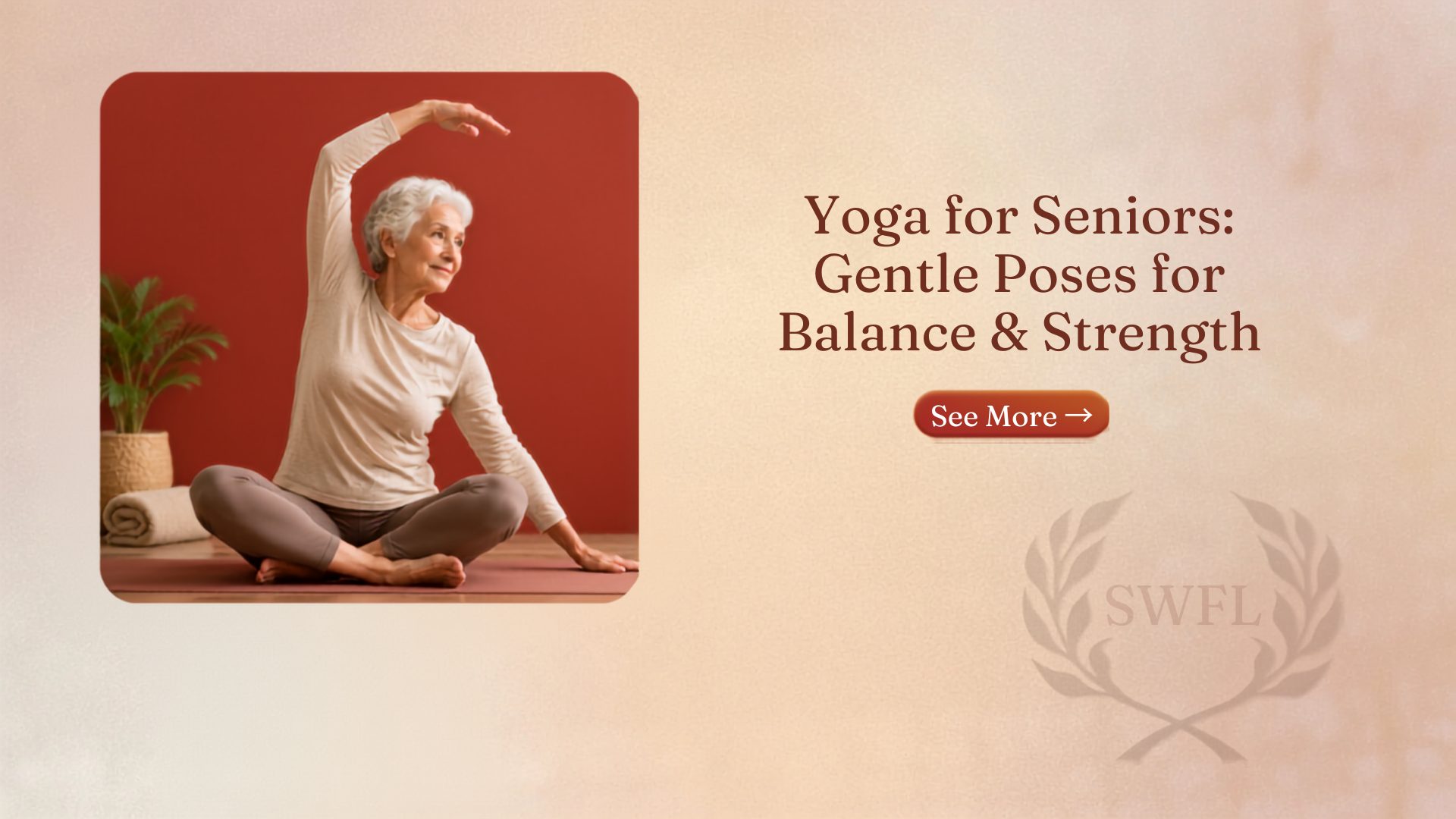
Growing older often comes with an unspoken fear, not of aging itself, but of slowly losing the freedom to do the things you love. Climbing stairs becomes more difficult. It is hard to get up after sitting in a chair. Just taking a walk in the neighborhood may cause your joints to ache. Little by little, these difficulties will wear down your confidence, making everyday life more restricted than it has to be.
However, there is no need to think that remaining physically active means doing exercises involving weights and vigorous movements. In some cases, the best solution consists of moving at a slow and measured pace.
That is why yoga for seniors became so popular among people of this age group. This kind of sport combines stretches, breathing control, movements and balancing exercises which help maintain and improve the fitness level of both the body and mind.
If you want to reduce your joint stiffness, improve your flexibility, restore balance, and increase energy levels, then yoga is exactly the sport for you. Even though you are not used to attending yoga classes, it is never too late to start practicing.
Is Yoga Really Safe for Older Adults?
One of the biggest myths related to yoga is the need to contort yourself into various complex postures or that you have to be very flexible. In fact, yoga is very flexible and can be adapted to almost any fitness level.
It is not uncommon for instructors to use chairs, yoga blocks, straps, pads, or the wall in order to give extra support. This is what makes Yoga for Elderly Beginners possible for people dealing with arthritis, osteoporosis, joint replacement surgery, or lack of mobility.
Is Yoga Good for Seniors?
Absolutely, and not simply because it keeps the body moving.
Yoga requires various body systems to work in coordination. In addition to strengthening the muscles, yoga makes joints flexible, facilitates deep breathing, helps improve posture, and brings the nervous system into a relaxed state.
Contrary to exercises aimed at strength training or cardiovascular exercise, yoga is beneficial for physical, psychological, and emotional health all at once.
Among other things, older individuals will experience:
- Ease of movement when performing various everyday tasks
- Improved balance while walking
- Decreased stiffness after waking up
- Increased self-confidence
- Improved sleep
- Decreased stress and anxiety
- Sharpened mind
More than anything else, yoga promotes regularity. The movements are gentle and easy enough to perform on a consistent basis.
The Remarkable Benefits of Yoga for Seniors
The benefits of yoga for seniors go far beyond improving flexibility. Not only does it have a great influence on the physical and psychological condition of the trainees, but it also provides them with opportunities for independent living, and therefore, it is one of the best workouts that seniors can engage in.
Better Balance and Fall Prevention
Through the course of the classes, yoga increases the muscle strength responsible for maintaining balance and improves body coordination. As a result, it becomes possible to prevent falls and ensure safe performance of basic everyday activities like walking and going up the stairs.
Improved Flexibility
Gentle stretches will not hurt your body while making it more flexible and allowing you to perform different kinds of movement that you cannot do easily due to muscle tension and stiffness.
Healthier Joints
Joints receive full-range movements combined with the strengthening of muscles around them in yoga exercises for elderly people.
Greater Everyday Strength
Many yoga postures help build body strength through your body weight, thus simplifying the performance of everyday activities. Some of the things you will be able to perform better include:
- Getting out of your chair
- Carrying groceries
- Stair climbing
- Maintaining good posture
- Performing household tasks
- Good Posture
Through yoga, the core and back muscles are strengthened by stretches on some of the tense parts of your body, reducing back pain and promoting good posture.
Improved Breathing
Through breathing exercises in yoga, slow and deep breathing is encouraged, thus enhancing relaxation, oxygen flow, and overall increased energy levels.
Reduced Stress
Yoga involves body movements in a peaceful way, along with breathing exercises that help to relax one’s mind, reducing stress levels.
What Is the Best Type of Yoga for Seniors?
Not every style of yoga is considered safe for older adults. Some fast-paced classes may prove too challenging for newbies, while more gentle ones represent the perfect combination of exercise and safety.
The following yoga styles seem to be among the best-suited options:
Chair Yoga
Chair yoga is usually the most appropriate choice for individuals with reduced mobility. In this type, many poses are done sitting or using a chair as an aid without compromising on flexibility and circulation improvement.
Gentle Hatha Yoga
In Hatha yoga classes, slow and controlled movements are combined with breathing exercises and right postures.
This yoga style is especially good for seniors over 60 since it guarantees safety and body awareness.
Restorative Yoga
Unlike other types of yoga that emphasize physical effort, this one is aimed at achieving deep relaxation. The body is supported with cushions, blankets, and bolsters while muscles get released from stress.
This form is especially recommended for elderly people suffering from chronic pain, fatigue, and stress.
Yin Yoga
As for Yin yoga, it includes long-term gentle stretching that helps increase the flexibility of the joints and connective tissues.
For older adults, poses should always be modified appropriately and performed under professional guidance when beginning.
Simple Yoga Poses Every Beginner Can Start With
One of the greatest advantages of yoga for elderly beginners is the design of the initial poses. The point is not to perform the poses perfectly; instead, it will allow your body to learn how to move in a comfortable manner while gaining confidence.
In the following part, you will find out about suitable yoga poses for beginners, mistakes to avoid, and helpful tips to make sure your yoga routine will help you stay healthy even in your 70s.
1. Mountain Pose (Tadasana)
Although it appears simple, Mountain Pose will lay the foundation for good posture and balance.
Start the pose standing up straight with your feet hip-width apart and your hands at your sides. Relax your shoulders and keep your gaze forward while balancing on both feet and breathing deeply.
The main benefits of this pose include improved posture and leg strength, as well as increased body awareness, which is important to prevent falls.
2. Chair Pose
This version involves the use of a strong chair which is good for the elderly above 70 years or even for those with poor balance skills.
Place yourself behind a chair and hold the backrest of the chair lightly. Bend your knees while slowly lowering your body as if you want to sit down and get back to standing position.
This exercise improves the muscles of the thighs, hips, and core.
3. Cat-Cow Stretch
In old age, the spine loses its flexibility and becomes rigid.
Start by lying on your back on a chair or going down on all fours. Inhale and raise your chest up while arching your back (Cow Position). Exhale and make your spine rounded while bringing your head towards your chest (Cat Position).
4. Seated Forward Fold
Sit comfortably in a solid chair with your feet firmly planted on the ground. With your back straight, gently bend forward from your hip region, creating a comfortable stretch down the back of your legs and lower back.
No effort is required to touch your toes. Instead, find your own comfortable position.
This posture will keep your hamstrings and lower back flexible, while at the same time relieving any tension in the muscles.
5. Tree Pose (Supported)
It goes without saying that balance decreases as we grow older; however, it also has the ability to be improved through practice.
Stand near a wall or next to a chair, then place your leg lightly on your other ankle or calf area. Do not put pressure directly on the knee joint. Fix your gaze on an object.
This posture helps strengthen stabilizer muscles.
6. Seated Twist
Twisting movements help maintain spinal mobility while encouraging better posture.
Sit in a chair and gently twist your upper body to the side. You can use your chair as support if necessary. Repeat the exercise on the other side.
It increases the flexibility of the spine and helps to relieve tension due to sitting too long.
7. Legs-Up-the-Wall Pose
The pose is quite effortless but highly relaxing.
Lie comfortably on your back and bend your legs upwards towards a wall. If the pose seems uncomfortable for you, you may simply put your legs up to a couch or ottoman.
Many seniors prefer this pose since it helps circulation, relieves swelling in the legs, and brings relaxation.
8. Corpse Pose (Savasana)
Every yoga session ends with relaxation.
Rest comfortably on your back or stay in a sitting position if you find it difficult to lie down. Close your eyes and concentrate on your natural breathing for some time.
Though it looks inactive, this pose allows your body to digest the practice and bring peace to your mind.
Common Mistakes Seniors Should Avoid
Yoga works best if you have patience instead of ambition. Attempting to compete with younger trainees or trying to push yourself despite the feeling of pain increases the chances of getting injured.
Don’t make the following mistakes:
- Skipping the warming-up period before stretching
- Breath-holding during movement
- Comparing your flexibility to other people’s flexibility
- Disregarding the signals of pain and dizziness
- Transitioning from one pose to another too quickly
- Performing poses without adequate support, in case you lack balance
- Expecting fast results
Improvement in yoga comes with a sense of well-being, not with your skill in performing certain poses.
Building a Routine You Can Actually Maintain
The main reason why people give up physical activity is that they start to exercise with unrealistic ambitions. An achievable routine is way better than an ambitious one that turns into stress after only a week of workouts.
For most people, yoga three to five times a week is quite a realistic target. Your practice doesn’t have to take an hour in order to benefit from it. As little as 20 to 30 minutes of mindful movements per session will work just fine.
Why Yoga Is More Than Just Exercise
While many people begin yoga hoping to reduce stiffness or improve flexibility, they usually stick with it for quite different purposes.
Yoga promotes patience amid frustration. Yoga cultivates mindfulness and does not involve hurried action. It is a way for senior individuals to remember that mobility is still an option – even when movement appears dissimilar to how it was before.
The most impressive change does not lie in physical improvement. It is about gaining the self-assurance that one can keep on learning, changing, and growing despite age.
Such an approach allows seniors to become much more engaged in their daily activities, take part in their hobbies, travel, spend time with family members, and be independent.
Embracing Yoga in Your 70s and Beyond
It’s never too late to begin moving with intention.
Many people think they have lost their chance at getting healthier by not exercising when they were young. The good news is that the body still reacts well to regular movement at any age.
If you’re trying out yoga for seniors 60+ for the first time, or if you are looking for yoga for senior citizens over 70 years old, just keep in mind that change does not depend on perfection. Any tiny steps you take, such as standing up straighter, walking further, sleeping better, can make a difference in the long run.
You do not have to learn difficult postures. You just have to live your life more comfortably.
Conclusion
Aging doesn’t have to mean giving up the activities that bring joy and independence. While physical changes are inevitable, losing strength, balance, and mobility isn’t something you simply have to accept.
Yoga exercises can help improve one’s flexibility and balance, ease joint pain and arthritis, increase muscle strength, benefit mental well-being, and even decrease the probability of falling.
What sets yoga apart is its adaptability, as there is a version of yoga for everyone, regardless of the current level of fitness. Whether it is an active senior citizen, a person with injuries or disabilities, or even someone who has never engaged in any physical activity before, yoga classes provide everything to become healthier.
In general, yoga classes provide all of the benefits that healthy aging needs to make sure that one keeps enjoying independence. After all, yoga is not about touching the toes; it is about preserving the ability to do it.