
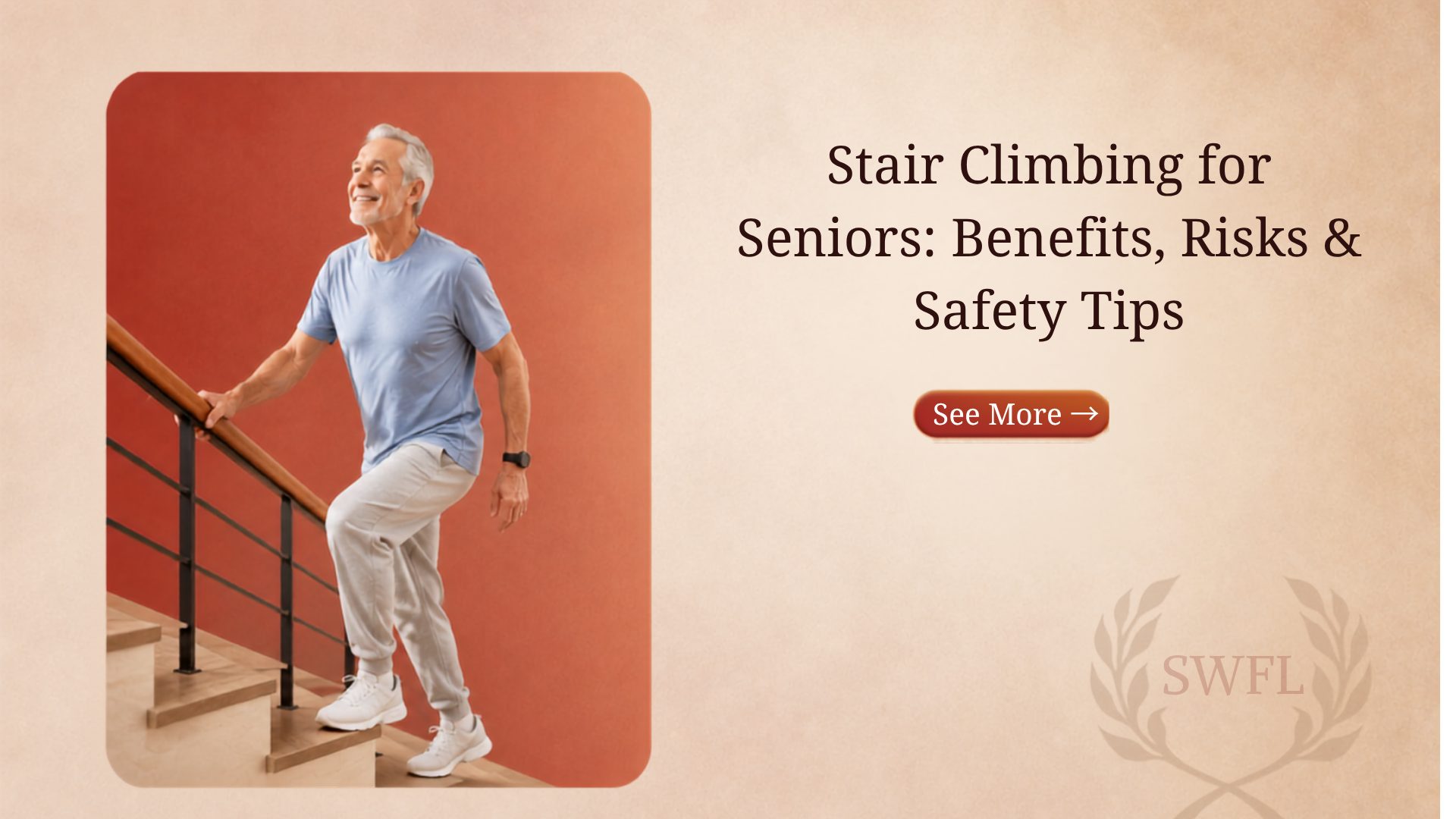
A staircase is something most people stop noticing after a while. Stairs become simply something to climb when going upstairs or reaching the porch. To many elderly people, however, stairs end up becoming much more than just that. Stairs may symbolize anything from empowerment to fear, and even limitation.
This kind of transformation often happens silently.
Suddenly, climbing stairs becomes a slightly difficult task. The knees hurt a little bit more. The process of holding the railings turns into an instinct rather than an option. Breathing becomes heavy halfway up the staircase. Soon enough, most elderly people start to avoid using the stairs whenever possible.
But here’s the interesting part. When done right, stair climbing can be one of the best activities for maintaining mobility and balance as well as overall physical health.
It’s not about turning seniors into athletes. It merely means that they can keep moving freely and independently.
Unlike many popular fitness programs, stair climbing corresponds with real-life movements. The muscles used in this activity are those needed in daily life. The coordination improves without additional effort. Above all else, this exercise motivates people to remain independent.
However, it cannot be denied that there is yet another perspective which should not be ignored by anyone. The matter is that stairs may be potentially dangerous due to mobility loss or inappropriate house design, as well as some medical issues.
This is exactly why it is important to examine not only the pros but also the cons associated with this physical activity.
Why Stair Climbing Becomes More Important With Age
As the body ages, there is a decline in muscle mass, slowing of balance reactions, joint stiffness, and endurance. All these physical changes influence nearly all the movements that senior citizens perform daily.
Even simple activities such as rising from a chair, entering a car, and walking on an uneven surface suddenly become more difficult.
All the muscles involved in these movements become challenged when going upstairs.
During stair climbing, senior citizens use their thigh muscles, calves, hip muscles, buttocks, and the core at once. Unlike when walking on a horizontal surface, stair climbing demands that seniors fight against gravity, which increases muscle engagement and consequently helps to build muscles.
It is this additional physical effort that makes stair climbing beneficial for elderly people.
Unlike other forms of physical activity that require access to expensive gyms, complicated instructions, and lengthy training sessions, stair climbing is easy and affordable. Seniors do not have to be physically fit to start exercising by climbing stairs. A few climbs every day are enough to maintain mobility.
Mobility, in turn, is closely associated with independence.
The better and stronger the body, the greater the chances of seniors leading an independent life.
Is Stair Climbing a Good Exercise for Seniors?
Many families ask the same question: Is stair climbing a good exercise for seniors?
It can be answered positively in many cases, provided it is done cautiously and considering the physical capabilities of seniors.
Stair climbing combines several types of exercises. It builds muscles, develops cardiovascular endurance, tests balance, and enhances coordination. Not many exercises incorporate such variety so effectively.
One reason why stair climbing is effective for seniors is that it contributes to functional fitness, which is what specialists refer to in most cases. Simply put, it is about exercises aimed at increasing the body’s functionality.
As opposed to workouts that develop isolated muscle groups, stair climbing makes the body ready for practical movements.
These include:
- Moving around the house confidently
- Crossing curbs and sidewalks
- Lifting light objects
- Standing for long periods
- Maintaining stability when moving
All these abilities matter much more for seniors than developing strength.
Nevertheless, stair climbing must not become a workout forced on the senior. Every senior has a different level of mobility, a specific medical condition, and limitations.
What works fine for one person might be too hard and even dangerous for someone else. That’s why pacing and proper safety measures matter so much.
Many people ask, at what age should you stop climbing stairs? There isn’t a specific age. Instead, the decision depends on an individual’s strength, balance, overall health, and ability to climb stairs safely.
Understanding the advantages and disadvantages of climbing stairs helps seniors and caregivers make informed decisions about whether stair climbing is an appropriate part of a daily routine.
The Physical Benefits of Stair Climbing for Seniors
One of the greatest benefits of stair climbing is its ability to strengthen the lower body in a very natural manner.
The legs are responsible for supporting the body when making any movements at all during the day. With weak leg muscles, balance will also suffer. This will increase the risk of falling, getting tired easily, and losing mobility.
Stair climbing will work the big muscles in the legs and hips, which will help seniors stay strong in places where it is needed the most.
Over time, this will lead to an easier experience with everyday activities.
Seniors have also reported an increase in their endurance levels. Stair climbing is much more effective than simple walking in increasing heart rate and improving cardiovascular health.
This means that no high-intensity aerobic exercise is necessary. Even short stair sessions can gradually improve stamina and circulation.
There is another benefit related to bone health that isn’t as well-known. Weight-bearing exercises help promote bone formation and become particularly crucial as bone mass begins to decrease as a result of aging. Although stair climbing is not a substitute for any medical treatment and/or strength training program, it can help maintain one’s bone health through exercise.
Balance and coordination are also improved.
With each step, your body has to shift its weight and remain stable. This improves muscle-brain interaction, especially in older adults who take their time when walking up stairs.
In many cases, the benefits go further than the physical.
The Emotional Impact of Staying Physically Capable
Mobility affects far more than the body.
For many elderly people, feeling less confident about moving around can lead to emotional stress that others cannot understand. For instance, fear of falling makes many elderly people avoid activities that they used to love. There are those who stop using stairs. Others refrain from any social engagement or going out due to the risk of imbalance.
Confidence is very important when it comes to maintaining independence and mental health.
The ability to use stairs successfully and with ease may mean little to many young people. However, for the elderly, such an activity boosts their confidence. They gain the impression that they are still physically able.
It is a psychological impact that one cannot underestimate.
Moving usually leads to momentum. The elderly who are physically capable are likely to continue being physically active and social.
Understanding the Disadvantages of Climbing Stairs
While stair climbing provides a lot of advantages, it is crucial to understand the drawbacks of stair climbing among older people.
Not paying attention to risks will not make them disappear.
The likelihood of getting injured while climbing increases because even a slight misstep can result in a fracture, a head injury, or a prolonged period of recovery. People with poor balance, weak muscles, visual impairments, or dizziness are especially prone to accidents at home if they live in houses with poorly designed staircases.
Joint strain is another critical consideration.
Stair climbing puts more stress on the knee and hip joints than walking around on a flat surface. For patients with severe arthritis or any other joint disease, stair climbing might increase their pain.
Respiratory distress may occur as well.
For people who have issues with their heart or lungs, climbing stairs quickly can cause shortness of breath, dizziness, or fatigue.
There is also the matter of the environment.
Most houses are not designed with senior citizens’ health and safety in mind. Such factors as bad lighting, slippery floors, loose carpets, narrow steps, and the absence of railings increase accident risks
This is why safe design matters just as much as physical ability.
What Makes Safe Stairs for Elderly Adults?
Not all staircases are equally safe.
Well-designed stairs may increase self-confidence and help prevent falls, while badly designed ones may pose dangers even to healthy individuals.
The stairs that can be considered safe for older people must seem steady, visible, and easy to use without any second thoughts.
Proper lighting is one of the most important elements. Older people should easily see each step, especially at night or early morning when visibility is low. Motion sensor lights are often used because they don’t require locating the switch in dark rooms.
Handrails are equally essential.
Stairs with handrails on both sides are preferable. Elderly people are safer when they feel comfortable about stabilizing themselves during the entire process of going up and down the stairs.
Slip resistance also plays a significant role.
Smooth and polished stair surfaces may be hazardous, particularly when older people are wearing socks or slippers. It is necessary to install special textured stair treads or anti-slip strips in order to minimize the risk of slipping.
Contrasting visual cues are also useful in terms of safety.
As aging affects one’s vision, the ability to distinguish one step from another becomes more difficult. Contrasting steps can be helpful in judging depth while climbing.
And perhaps most importantly, stairs should remain clutter-free at all times.
Even small objects left on stairs create unnecessary dangers.
How Seniors Can Climb Stairs More Comfortably
A common myth is that stair climbing should involve quickness and athleticism in order to be successful.
It doesn’t.
Actually, it might be more dangerous and less effective for elderly individuals to climb stairs quickly. It is all right to take one step at a time. Some older people feel steadier when both feet touch the floor of each step before moving up further. There is no need to hurry.
Another way to increase safety is to always use the handrails. This applies even to physically healthy seniors, who do not necessarily need such assistance.
The choice of footwear plays an important role as well.
Slippery and ill-fitting shoes make falling more likely. Comfortable and supportive shoes with nonslip soles provide better stability and footing when climbing stairs.
Moreover, elderly people should refrain from carrying any burdensome objects while climbing stairs. Carrying something bulky impedes visibility and balance.
Last but not least, older individuals should pay attention to their bodies’ sensations.
Any discomfort, dizziness, or unusual tiredness should be regarded as warning signs.
When Stair Climbing May Not Be the Right Choice
Rather than asking at what age should you stop climbing stairs, it’s more helpful to ask whether climbing stairs remains safe and comfortable based on your current health and mobility.While stair climbing works for many elderly people, it might not work for everyone.
Those who have severe arthritis, osteoporosis, neurological problems, recent surgical procedures, and serious balance problems should consider other ways of exercising rather than stair climbing.
For some patients, physical therapy under professional supervision or low-impact exercises will be better choices of keeping fit without additional risks.
That is why individual consultation makes sense.
Healthcare professionals can evaluate whether stair climbing is suitable for a particular patient.
Why Senior Living Communities Focus So Much on Stair Safety
Modern senior living communities pay close attention to mobility-focused connections for a reason.
They realize that movement confidence goes hand-in-hand with independence.
Senior living communities today feature:
- Wider staircases
- Better lighting systems
- Slip-resistant flooring
- Dual handrails
- Elevator access
- Emergency support features
All of these elements might be minor at face value, but they have an impact on senior residents’ lives.
Seniors who feel safe in their surroundings will have no reason to stay put and inactive.
The Real Issue Isn’t Stairs, But Independence
The debate about whether or not stairs are good can become rather trivial.
Movement is what really matters.
The effects on the body are rapid when there is a lack of physical activity. The muscles become weak. Balance deteriorates. One loses confidence. Activities that used to seem easy become difficult.
Stair climbing turns out to be one practical way to continue moving.
For some seniors, stair climbing proves to be a good exercise that helps to retain strength, endurance, and independence. For others, adjustments are needed to ensure safety.
There is no single answer that applies to all. What is important is to continue moving in a safe manner. Aging in a healthy manner does not mean ceasing any movement at all.
Healthy aging means maintaining one’s mobility and confidence in movement as long as possible.
Looking at both the advantages and disadvantages of climbing stairs allows older adults to enjoy the health benefits while taking the right precautions to reduce potential risks.
Final Thoughts
Stair climbing for seniors can offer far more than physical exercise. It enhances balance, strengthens the lower body muscles, builds endurance, and makes older people feel confident about themselves and their abilities.
It is also necessary to pay attention to the negative sides of stair climbing. The issue of safety is the main one, especially in regard to older people who may have joint pain, balance problems, and other health conditions that make walking difficult for them.
Under certain conditions, however, stairs do not need to be feared by the seniors.
Quite the contrary, they can be used as an easy way to stay physically active, healthy, and independent.